iGaming Platform Scalability: The Engineering Leader’s Playbook
A platform that can’t handle 10x its average transaction volume during the Cheltenham Festival or a Champions League final isn’t a platform with a scalability problem. It’s a platform with a revenue problem. This piece breaks down the architectural decisions, cloud infrastructure trade-offs, cost models, and compliance constraints that determine whether your iGaming platform scales under pressure or buckles under it.










Peak load isn’t a theoretical concern. It’s a quarterly event. The Grand National generates bet volumes that dwarf a typical Tuesday evening by orders of magnitude. A World Cup knockout match can push concurrent user sessions into territory that would flatten most monolithic architectures. And the commercial impact of downtime during these windows is immediate: lost bets, abandoned sessions, regulatory scrutiny, and reputational damage that takes months to recover from.
But peak load handling is only one dimension. The business case for scalability extends into three other areas that tend to hit the CTO’s desk simultaneously.
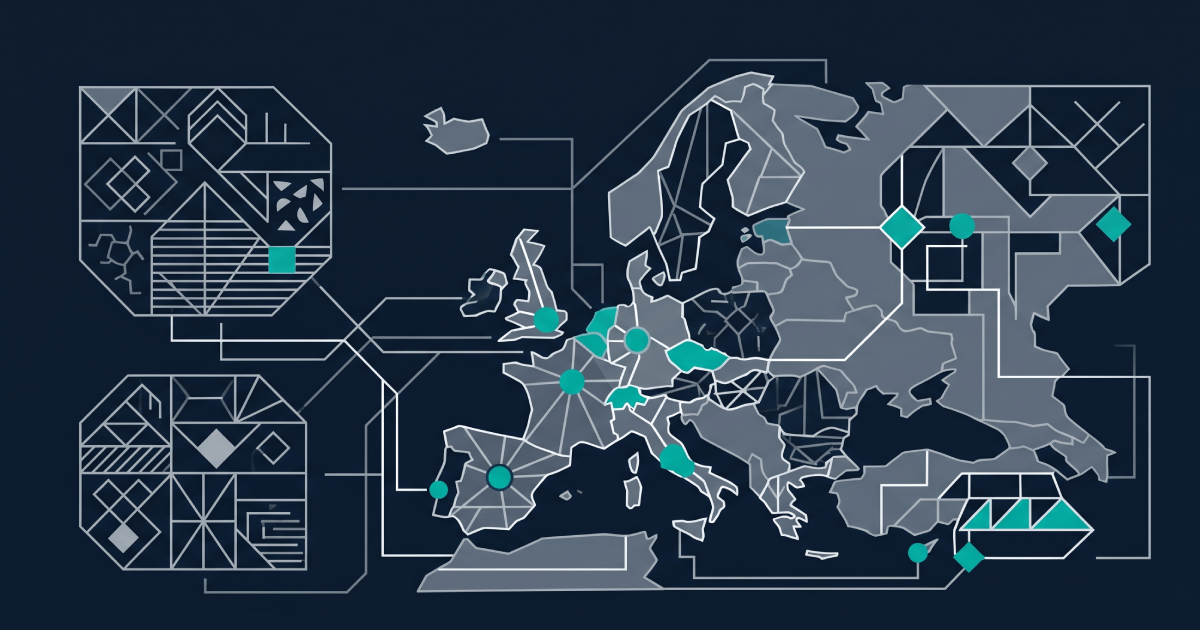
First, multi-jurisdiction expansion. Entering a new regulated market (say, moving from MGA into a US state or a LatAm jurisdiction) isn’t just a licensing exercise. It demands isolated data residency, jurisdiction-specific responsible gaming controls, localised payment routing, and tax reporting. If your platform requires a full re-architecture for each new market, your expansion timeline stretches from months to years.
Second, product vertical expansion. An operator running casino-only that wants to add sportsbook, or vice versa, shouldn’t need to rebuild the wallet, player account management (PAM), or KYC layers. Scalable platforms treat these as composable services that new verticals plug into.
Third, player experience under load. Latency spikes during peak periods directly erode retention. Players don’t file support tickets when a bet slip takes three seconds to process. They leave. And they don’t come back.
The commercial question isn’t whether you can afford to build for scale. It’s whether you can afford the compounding revenue loss of not doing so.
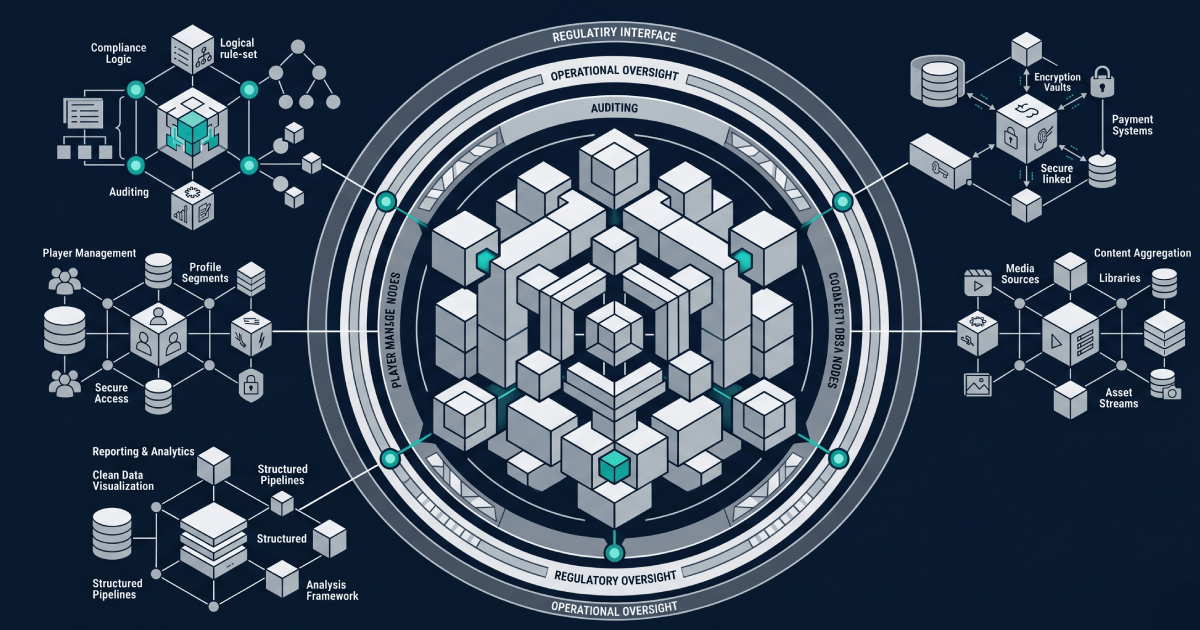
The argument for microservices in iGaming isn’t abstract. It’s grounded in a specific operational reality: different parts of your platform have radically different scaling profiles.
Your wallet service needs to handle burst transaction volumes with sub-millisecond consistency guarantees. Your bonus engine needs to evaluate complex rule sets across player segments. Your game aggregator integration layer needs to maintain persistent connections with dozens of third-party providers, each with their own API quirks. Your responsible gaming service needs to run affordability checks and session-time calculations without adding perceptible latency to the player journey.
In a monolith, these are all coupled. Scaling the wallet means scaling everything. Deploying a bonus rule change means redeploying the entire application, with the associated risk window. A memory leak in the game aggregator layer can degrade wallet performance.
Microservices decouple these concerns. Each service scales independently based on its own demand profile. The wallet service can auto-scale horizontally during peak events while the CMS remains at baseline capacity. Deployments become isolated: shipping a new bonus type doesn’t require touching the PAM service.
Container orchestration through Kubernetes has become the default runtime for this pattern, and for good reason. It handles service discovery, health checking, rolling deployments, and auto-scaling natively. But Kubernetes isn’t free. It demands operational maturity. We’ve seen operators adopt it prematurely, ending up with a distributed system they can’t debug and an infrastructure team that’s overwhelmed by cluster management. Managed Kubernetes services (EKS, AKS, GKE) reduce the ops burden, but they don’t eliminate it.
The honest trade-off: microservices increase architectural complexity, operational overhead, and the difficulty of distributed tracing and debugging. They are worth it when your platform has genuinely distinct scaling domains and your engineering team has the maturity to manage service boundaries, inter-service communication, and distributed data consistency. For smaller operators running a single brand in a single jurisdiction, a well-structured modular monolith with clear internal boundaries may be the more pragmatic starting point.
Results Are Designed, Not Hoped For
Clear Objectives. Tangible Outcomes.
Well engineered software is only part of the equation. True impact comes from aligning technology with commercial intent from the outset.
We define success early, measure consistently and refine continuously to ensure every product delivers meaningful and sustained value.

Database Architecture for High-Transaction Environments
The database layer is where scalability ambitions most frequently collide with reality. A platform can have a beautifully designed microservices topology and still fall over because the wallet database can’t sustain the write throughput during peak.
Start with the workload classification. Financial transactions (bets, deposits, withdrawals, bonus credits) demand ACID compliance. There’s no eventual consistency option for a player’s balance. PostgreSQL with synchronous replication, or Amazon Aurora PostgreSQL, handles this well. Aurora’s storage auto-scaling and read replica architecture let you separate read-heavy workloads (balance checks, transaction history) from the write path. For operators processing thousands of transactions per second during peak, Aurora’s ability to scale to 15 read replicas and its storage layer that grows automatically up to 128TB removes some of the manual sharding complexity.
Sharding becomes necessary when single-instance write throughput hits its ceiling. The sharding key matters enormously. Sharding by player ID is the most common approach, but it creates hot-shard risks during promotional events when a disproportionate number of new players cluster on the same shard. Time-based sharding can help for historical data but complicates real-time queries. There’s no clean answer here, only trade-offs that depend on your specific traffic patterns.
NoSQL databases serve different use cases. Player session data, game round logs, clickstream data for analytics, and personalisation feature stores all benefit from the schema flexibility and horizontal write scaling of databases like DynamoDB or MongoDB. DynamoDB’s on-demand capacity mode is particularly useful for iGaming: you pay per request rather than provisioning capacity, which maps naturally to the spiky traffic profile.
The mistake we see most often: operators treating database selection as a one-time architectural decision rather than a per-service decision. Your wallet service and your player activity logging service have fundamentally different data access patterns. They should almost certainly use different database technologies.
Vertical scaling (adding CPU, RAM, or faster storage to an existing instance) is simpler to implement and doesn’t require application-level changes. For a single database instance or a compute-heavy batch processing job, it’s often the right first move. The ceiling is real, though. The largest cloud instances max out, and you’re left with a single point of failure regardless of how powerful that instance is.
Horizontal scaling (adding more instances behind a load balancer) is where iGaming platforms need to operate for any service that faces player traffic. This requires stateless application design. If your application server holds player session state in local memory, you can’t route requests to an arbitrary instance. Session state needs to move to a shared store (Redis or ElastiCache), or you need sticky sessions (which undermine the load distribution benefits).
Auto-scaling policies deserve careful tuning. Scaling on CPU utilisation alone is too blunt for iGaming workloads. A bet placement service might hit memory pressure before CPU pressure, or it might exhaust database connection pools while CPU sits at 40%. Custom CloudWatch metrics (or their Azure/GCP equivalents) that track application-level signals, like queue depth, active database connections, or pending bet count, produce better scaling decisions.
Load balancing strategy also matters more than most teams initially appreciate. Layer 7 (application-level) load balancing lets you route WebSocket connections for live betting differently from REST API traffic for account management. This is particularly relevant when your live betting service has long-lived connections that shouldn’t be disrupted by a scaling event on the REST API tier.
Vertical scaling (adding CPU, RAM, or faster storage to an existing instance) is simpler to implement and doesn’t require application-level changes. For a single database instance or a compute-heavy batch processing job, it’s often the right first move. The ceiling is real, though. The largest cloud instances max out, and you’re left with a single point of failure regardless of how powerful that instance is.
Horizontal scaling (adding more instances behind a load balancer) is where iGaming platforms need to operate for any service that faces player traffic. This requires stateless application design. If your application server holds player session state in local memory, you can’t route requests to an arbitrary instance. Session state needs to move to a shared store (Redis or ElastiCache), or you need sticky sessions (which undermine the load distribution benefits).
Auto-scaling policies deserve careful tuning. Scaling on CPU utilisation alone is too blunt for iGaming workloads. A bet placement service might hit memory pressure before CPU pressure, or it might exhaust database connection pools while CPU sits at 40%. Custom CloudWatch metrics (or their Azure/GCP equivalents) that track application-level signals, like queue depth, active database connections, or pending bet count, produce better scaling decisions.
Load balancing strategy also matters more than most teams initially appreciate. Layer 7 (application-level) load balancing lets you route WebSocket connections for live betting differently from REST API traffic for account management. This is particularly relevant when your live betting service has long-lived connections that shouldn’t be disrupted by a scaling event on the REST API tier.
Reactive auto-scaling (responding to current load) has a latency problem. Spinning up new instances takes time, typically 2-5 minutes for containers, longer for instances that require warm-up (database connection establishment, cache priming). During a sudden traffic spike, like a last-minute goal in a major football match, reactive scaling leaves you short for the critical first minutes.
Predictive scaling uses historical traffic data to anticipate demand before it arrives. AWS offers predictive scaling policies natively for Auto Scaling Groups, using machine learning models trained on your own traffic history. The models identify recurring patterns (Saturday afternoon football, evening casino peaks, major event calendars) and pre-provision capacity.
But the real value of ML in scalability management goes beyond auto-scaling. Anomaly detection models can identify unusual traffic patterns that might indicate a DDoS attack, a bot network, or a promotional campaign that’s performing far beyond projections. Each of these requires a different operational response.
Here’s the prerequisite that ML vendors often gloss over: predictive models require clean, structured, time-series data from your infrastructure and application layers. If your monitoring is fragmented across tools, if your metrics aren’t consistently tagged, or if you don’t have at least 6-12 months of historical data with event annotations, the models won’t produce useful predictions. The data infrastructure work has to come first. At Jadex Consulting, we’ve seen teams invest in ML-driven operations tooling only to discover their observability foundations aren’t solid enough to feed the models.
From Theory to Practice: Engineering for Tier-One Operators
Scalability is an architectural decision made early and paid for continuously. The patterns discussed here (microservices decomposition, cloud-native infrastructure, polyglot persistence, predictive scaling, compliance-aware architecture, API-first design) are not independent choices. They interact, constrain, and reinforce each other.
The sequence matters. You can’t bolt on horizontal scaling to a stateful monolith. You can’t retrofit data residency compliance into a globally replicated database. You can’t add predictive scaling without observability foundations. Each decision opens or closes doors for subsequent ones.
At Jadex Consulting, we’ve applied these principles in practice for operators like Rank Group and DAZN, where the stakes of getting architecture wrong are measured in millions of pounds of revenue and regulatory standing. The work is specific to each operator’s traffic profile, jurisdiction portfolio, technical team maturity, and commercial timeline.
The decision you’re making this quarter isn’t really about microservices versus monoliths or AWS versus Azure. It’s about whether your platform architecture will be a constraint on your business growth for the next three to five years, or an enabler of it. That’s an engineering decision with board-level consequences, and it deserves engineering-depth analysis rather than vendor slide decks.
Latest from our blog
Insights & Perspectives
Our insights explore the intersection of technology, commercial strategy and disciplined execution across complex digital environments.