Casino Game Development Partners: An Operator’s Technical Vetting Guide
Most operators start their search for a game development partner by looking at game catalogues. They compare RTP ranges, volatility models, visual polish, and branded IP. That’s backwards.
The game content itself is more commoditised. There are hundreds of studios producing thousands of slots annually. The differentiator isn’t whether your partner can build a compelling bonus round. It’s whether their output integrates cleanly into your platform architecture, whether their game logic passes muster under your target jurisdiction’s certification regime, and whether their client framework doesn’t introduce performance regressions that tank your mobile conversion rates.










Rather than ranking studios, here’s the framework we use when advising operators on partner selection.
Regulatory Expertise
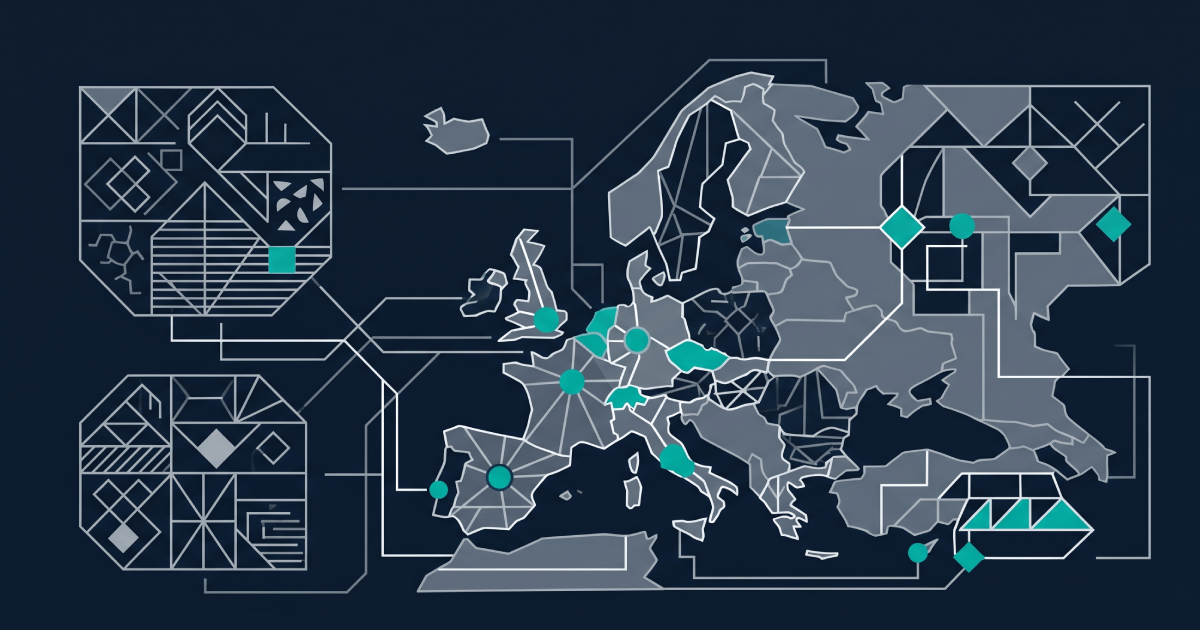
Ask for the partner’s certification history. Not marketing claims about “operating in 20+ jurisdictions,” but specifics: which test houses have certified their RNG? In which jurisdictions have their games received type approval? Do they maintain active certifications, or did they certify once and assume ongoing compliance? UKGC‘s Licence Conditions and Codes of Practice (LCCP) change regularly, and MGA‘s technical standards were updated in 2024. A partner whose compliance posture is static is a liability.
Technical Acumen
Request their API documentation before signing anything. Evaluate their authentication model, error handling patterns, and whether they support asynchronous wallet calls. If their RGS expects synchronous wallet responses and your platform operates on an event-driven architecture with eventual consistency, you have an integration problem that no amount of middleware will solve cleanly.
Integration Capability
How do they handle multi-wallet scenarios? Can their game client operate within an iframe that respects your domain’s CSP (Content Security Policy) headers? Do they support the Game Aggregation Protocol (GAP), OpenGaming’s standard, or a proprietary protocol? Proprietary isn’t automatically bad, but it increases your switching costs.
Commercial Model Transparency
Revenue share versus fixed licensing versus hybrid models all have downstream implications. Revenue share ties your costs to GGR, which aligns incentives but erodes margin as you scale. Fixed licensing gives cost predictability but requires volume to justify the outlay. Ask for the full cost model including certification fees, per-jurisdiction surcharges, minimum guarantees, and penalty clauses.
Track Record Under Pressure
Ask for references from operators of similar scale and regulatory profile. Specifically ask about incident response: what happens when their RGS goes down during peak traffic? What’s their SLA? Is it contractual or aspirational?
Modern casino games overwhelmingly run on HTML5, typically using PixiJS or Phaser for rendering, with game logic executed server-side. The browser-based client handles presentation; the RGS handles state management, outcome generation, and wallet transactions. This split is non-negotiable for regulatory compliance since game outcomes cannot be determined client-side.
The choice of game engine on the client side affects performance more than most operators realise. A poorly optimised PixiJS implementation that loads 40MB of assets on mobile will directly impact your bounce rate. We’ve measured the difference: mobile game load times above 3 seconds correlate with measurable drops in session starts. If your development partner doesn’t profile their game clients against real device benchmarks (not just Chrome DevTools on a MacBook Pro), push back.
Server-side, the architectural split is between monolithic RGS deployments and microservice-based approaches. A monolithic RGS is simpler to reason about, easier to certify (one codebase, one test), and performs well at moderate scale. But it creates deployment coupling: a bug fix in one game requires redeploying the entire server. Microservice architectures allow independent game deployments and scaling, but they introduce distributed systems complexity, including service discovery, distributed tracing, and the need for strong circuit breakers when your wallet service is temporarily unavailable.
The API-first question matters here. If a partner’s games are designed as tightly coupled components of their own platform, extracting them into your architecture will be painful. You want games that expose clean, versioned APIs, that treat the operator’s platform as the system of record for player state, and that don’t maintain their own session management outside your PAM.
Technical debt in game content isn’t discussed enough. A partner who shipped games on Flash and migrated them to HTML5 may carry legacy patterns: polling instead of WebSocket connections, blocking asset loads, non-responsive layouts shoehorned into mobile viewports. Ask about their technical debt management process. If they can’t articulate one, their oldest titles will be your worst-performing integrations.
Compliance isn’t a feature you bolt on. It’s an architectural constraint that should shape your integration decisions from the start.
UKGC‘s requirements hit the engineering layer directly. Game logic must be auditable, meaning your development partner needs to maintain deterministic game state that can be reconstructed from logs. The Gambling Commission expects operators to demonstrate that game outcomes are generated by certified RNGs and that the game client faithfully represents those outcomes. If your partner’s game client interpolates animations that could mislead players about near-misses, that’s a compliance finding, not a UX issue.
MGA‘s technical compliance framework specifies requirements for player session management, including inactivity timeouts and reality checks that must interrupt gameplay. These aren’t optional UI elements. They’re mandatory interrupts that your game client must implement correctly. A game provider whose client doesn’t support operator-triggered session interrupts forces you to implement compliance controls at the platform layer, adding integration complexity.
GGC (Gibraltar Gambling Commissioner) requirements overlap with UKGC in many areas but have distinct reporting obligations. Multi-jurisdiction operators need game content that can be configured per-regulatory-domain: different RTP ranges, different responsible gambling trigger thresholds, different data retention policies.
RNG certification through GLI or BMM typically costs £15,000 to £40,000 per game or game family, depending on complexity and the number of jurisdictions. This isn’t a one-time cost. Regulatory updates trigger recertification. If your development partner updates game math, you recertify. Factor this into your TCO model.
GDPR intersects with game development at the player data layer. If a game provider’s RGS logs player behaviour data (spin history, session duration, bet sizing), that’s personal data processing. You need a clear data processing agreement, and the partner needs to support data subject access requests and right-to-erasure across their infrastructure.
Results Are Designed, Not Hoped For
Clear Objectives. Tangible Outcomes.
Well engineered software is only part of the equation. True impact comes from aligning technology with commercial intent from the outset.
We define success early, measure consistently and refine continuously to ensure every product delivers meaningful and sustained value.

Player Engagement: The Intersection of Design and Data
Game mechanics drive short-term engagement. Data-informed iteration drives long-term LTV.
The design layer matters: volatility tuning, bonus frequency, visual feedback loops, and sound design all affect session length and return rates. But these are the game developer’s domain. Your concern as an operator is whether the data generated by player interaction with those mechanics flows back into your analytics infrastructure in a usable form.
Specifically: does the game provider emit granular event data? Not just “spin completed” and “win amount,” but bet type, feature triggers, bonus round entries, free spin awards, and session context. This event granularity is what enables your analytics team to identify which game features correlate with player retention, which bonus mechanics drive redeposit behaviour, and where players disengage.
If your game provider only sends aggregated round-level data to your platform, you’re blind to the in-game behaviour that drives your commercial KPIs. Ask for their event taxonomy during technical due diligence. Evaluate whether their events map to your data warehouse schema or require transformation.
Game balancing is an ongoing process. A slot that launched with a 96.5% RTP and medium volatility may need adjustment based on player segment performance. If your development partner treats game math as fixed at launch, you lose the ability to optimise engagement over the game’s lifecycle. The best partners provide configurable math models (within certified parameters) that allow operators to A/B test volatility profiles across player segments.
Personalisation based on this data creates compounding returns. Recommending high-volatility games to players whose session data shows preference for large-win, low-frequency patterns increases conversion on game launches. But it requires the data pipeline, the model, and the game content metadata to work together. If your game provider can’t tag their content with structured metadata (volatility band, theme, mechanic type, max win multiple), your recommendation engine has nothing useful to work with.
Beyond Game Content: Why Your Platform Is the Real Product
Game content is table stakes. Every operator has access to roughly the same catalogue from the same providers through the same aggregators. What separates operators who grow margin from those who don’t is the platform underneath.
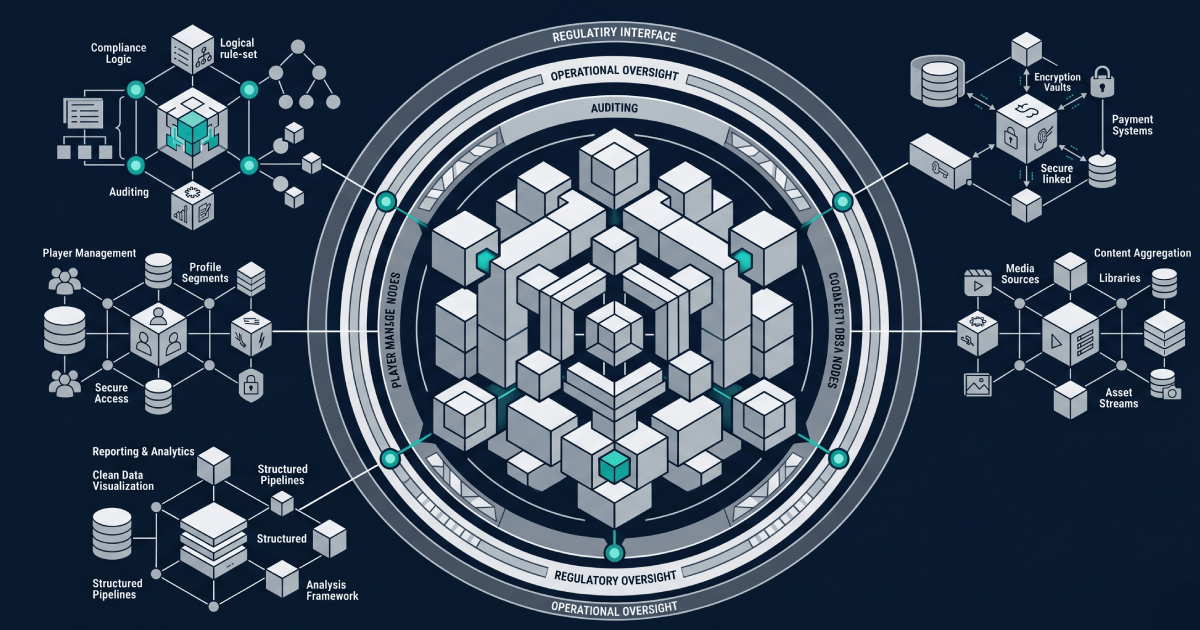
A well-architected platform enables multi-jurisdiction deployment without forking your codebase. It allows you to swap game providers without re-engineering your wallet service. It supports real-time event streaming that powers both compliance monitoring (AML, responsible gambling triggers) and commercial optimisation (personalisation, dynamic game recommendations). It gives you independence from any single vendor’s roadmap.
At Jadex Consulting, we build the platform layer that makes game content work. That means wallet services designed for real-time fraud detection and AML monitoring. It means PAM architectures that support multi-brand, multi-jurisdiction deployment from a single backend. It means aggregator integration patterns that give you content flexibility without sacrificing performance or compliance control.
The question we encourage every CTO to ask isn’t “which game developer should we partner with?” It’s “does our platform architecture allow us to partner with any game developer efficiently?” If the answer is no, if every new provider requires a bespoke integration effort, if your wallet can’t handle the transaction patterns of a new game mechanic, if your compliance layer can’t adapt to a new jurisdiction’s requirements without a platform release, then the game content decision is premature.
Fix the platform first. The content decisions become straightforward once your architecture supports them.
Latest from our blog
Insights & Perspectives
Our insights explore the intersection of technology, commercial strategy and disciplined execution across complex digital environments.