Building a Sportsbook Platform: A Technical Guide for iGaming Operators
Most sportsbook platform decisions made today will be regretted within three years. Not because the technology was wrong, but because the decision framework was. This article breaks down the architectural, regulatory, and commercial trade-offs involved in building, buying, or hybridising a sportsbook platform, with enough specificity that you can pressure-test your current approach against it.










The question is rarely “should we have a sportsbook?” It’s “should we own the technology underneath it?”
For operators already running on a white-label or turnkey solution, the trigger for this conversation is almost always the same: a commercial or regulatory requirement that the platform can’t accommodate without the vendor’s involvement. You need a new market. You need a compliance change shipped in weeks, not quarters. You need margin data piped into your own BI stack. And every time, you’re waiting on someone else’s roadmap.
Revenue share is the obvious cost. Less obvious is the compounding opportunity cost. When your platform vendor controls feature velocity, you lose the ability to differentiate on product. You end up competing on marketing spend alone, which is the most expensive lever in the iGaming industry.
Technical debt accumulates differently depending on ownership. With a custom platform, you own it and can address it. With a vendor platform, you inherit debt you can’t see, can’t quantify, and can’t fix. You discover it when an integration fails, when a UKGC compliance change takes six months to implement, or when your live betting latency makes your product uncompetitive.
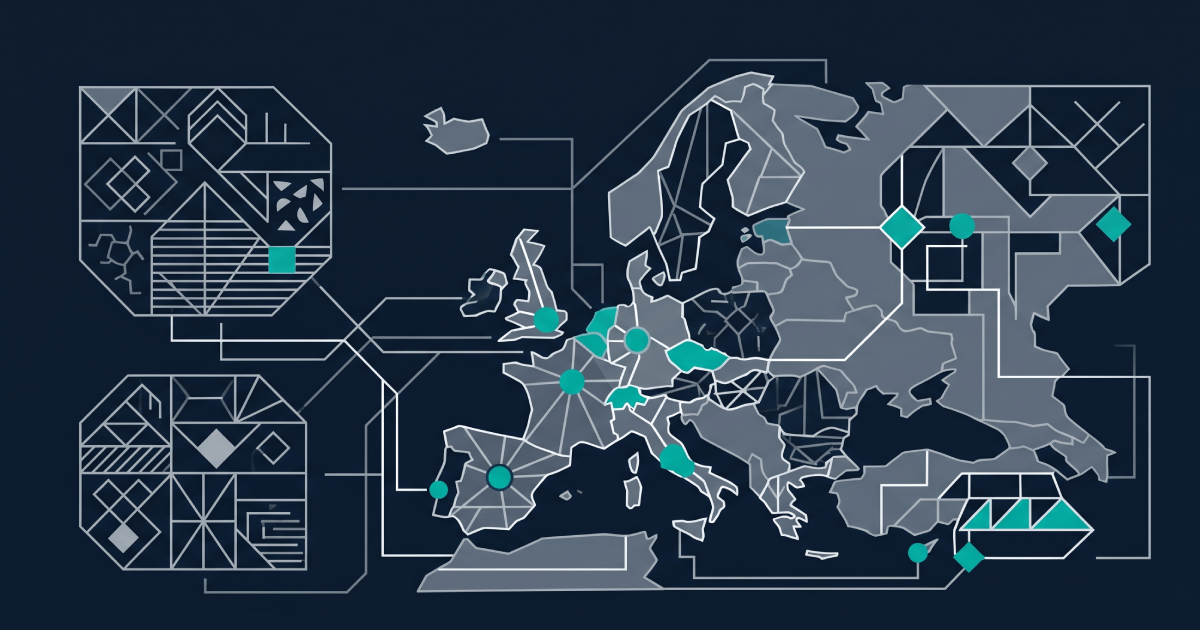
Building custom isn’t the right answer for everyone. But if you’re operating across multiple jurisdictions, managing multiple brands, or generating enough GGR that the revenue share model costs you more than a dedicated engineering team would, the economics shift. The question then becomes how to build, not whether to.
A sportsbook has one of the most extreme load profiles in consumer software. Baseline traffic might be 10,000 concurrent users on a Tuesday afternoon. During a World Cup final, it could be 500,000 or more, with bet placement spikes measured in tens of thousands of requests per second, concentrated in the seconds before kick-off and around goals.
Auto-scaling helps, but it’s not magic. Cloud instances take time to spin up. You need to pre-scale for known peaks (major fixtures are predictable), use connection pooling aggressively, and design your bet placement pipeline to degrade gracefully under load. That means separating bet acceptance (which must be synchronous and fast) from bet settlement (which can be eventual). Message queues between these stages let you absorb spikes without dropping bets.
Security architecture in iGaming has specific requirements beyond standard web application security. Transaction integrity is important: you cannot lose, duplicate, or misattribute a bet. This means idempotency keys on every transaction, distributed transaction management if your services span multiple databases, and audit logging that captures every state change with timestamps and actor IDs. UKGC and MGA both require full audit trails. If your architecture can’t produce them, you have a licensing problem.
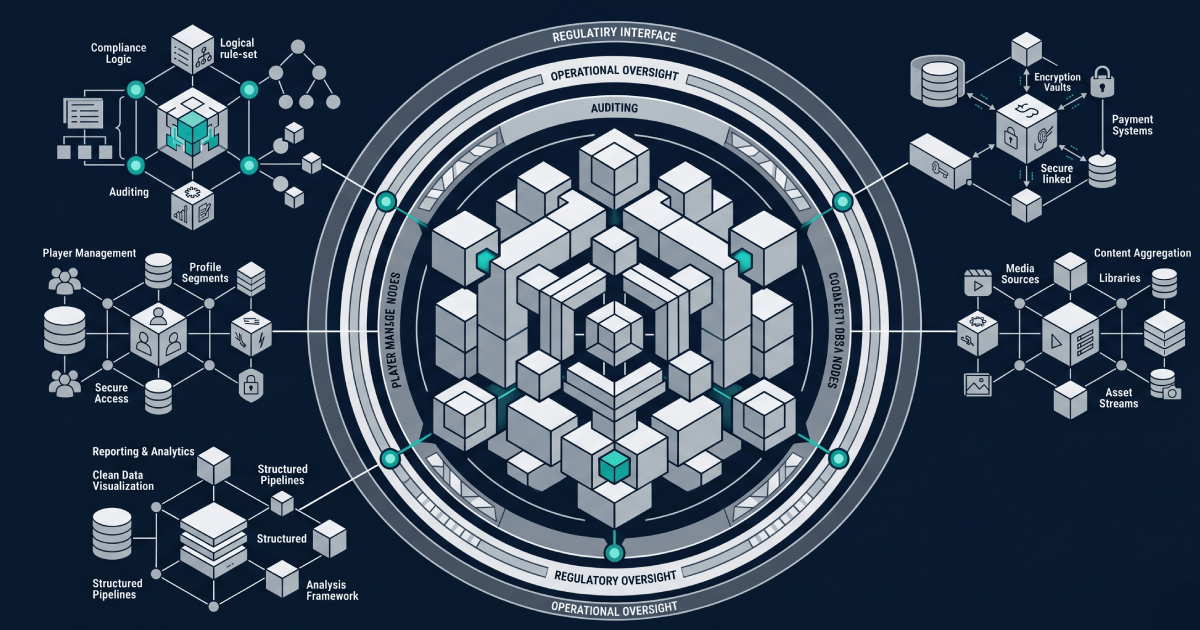
Compliance is an architectural concern, not a feature. Build it in from the start. Your platform must support per-jurisdiction configuration of deposit limits, session time controls, responsible gambling interventions, KYC trigger points, and AML monitoring rules. If you hardcode UK-specific rules into your betting engine, you’ll rewrite them when you launch in Malta. Use a rules engine or policy service that externalises these configurations.
Data residency matters too. Some jurisdictions require player data to be stored within specific geographic boundaries. Your cloud architecture needs to accommodate this without fragmenting your operational capability.
A sportsbook has one of the most extreme load profiles in consumer software. Baseline traffic might be 10,000 concurrent users on a Tuesday afternoon. During a World Cup final, it could be 500,000 or more, with bet placement spikes measured in tens of thousands of requests per second, concentrated in the seconds before kick-off and around goals.
Auto-scaling helps, but it’s not magic. Cloud instances take time to spin up. You need to pre-scale for known peaks (major fixtures are predictable), use connection pooling aggressively, and design your bet placement pipeline to degrade gracefully under load. That means separating bet acceptance (which must be synchronous and fast) from bet settlement (which can be eventual). Message queues between these stages let you absorb spikes without dropping bets.
Security architecture in iGaming has specific requirements beyond standard web application security. Transaction integrity is important: you cannot lose, duplicate, or misattribute a bet. This means idempotency keys on every transaction, distributed transaction management if your services span multiple databases, and audit logging that captures every state change with timestamps and actor IDs. UKGC and MGA both require full audit trails. If your architecture can’t produce them, you have a licensing problem.
Compliance is an architectural concern, not a feature. Build it in from the start. Your platform must support per-jurisdiction configuration of deposit limits, session time controls, responsible gambling interventions, KYC trigger points, and AML monitoring rules. If you hardcode UK-specific rules into your betting engine, you’ll rewrite them when you launch in Malta. Use a rules engine or policy service that externalises these configurations.
Data residency matters too. Some jurisdictions require player data to be stored within specific geographic boundaries. Your cloud architecture needs to accommodate this without fragmenting your operational capability.
Results Are Designed, Not Hoped For
Clear Objectives. Tangible Outcomes.
Well engineered software is only part of the equation. True impact comes from aligning technology with commercial intent from the outset.
We define success early, measure consistently and refine continuously to ensure every product delivers meaningful and sustained value.

Integrating Advanced Capabilities: AI, ML, and Personalisation
Here’s the honest version of this topic.
AI and ML have real, proven applications in sportsbook operations. Fraud detection models that identify suspicious betting patterns (correlated accounts, arbitrage exploitation, late-side betting) work well when trained on sufficient historical data. Player risk scoring for AML purposes benefits from ML models that can identify patterns human analysts would miss. Personalised promotion engines that optimise offer targeting based on player behaviour can improve promotional ROI measurably.
What doesn’t work: deploying ML models without the data infrastructure to support them. If your player data is fragmented across a white-label PAM, a separate CRM, and a third-party analytics tool, you don’t have a “single customer view,” and you can’t train models effectively. The prerequisite for useful ML is a clean, unified data layer, and that’s an engineering project that takes 6 to 12 months on its own.
Be sceptical of vendors offering “AI-powered” anything without asking: what data does it train on? How is the model validated? What’s the feedback loop? How does it handle concept drift (player behaviour changes over time)? If the answers are vague, the product is vague.
Blockchain in sportsbook platforms is, for now, a niche application. Provably fair betting has appeal in specific markets, and crypto payment rails can reduce transaction costs and settlement times. But no major UKGC or MGA regulated operator has moved to blockchain-native architecture, and the regulatory frameworks haven’t been designed to accommodate it. Watch this space, but don’t architect around it today.
Your Roadmap for a Successful Platform Launch
A sportsbook platform build is a multi-year commitment. The decisions you make in the first three months (architecture, technology stack, build vs. buy boundaries) constrain everything that follows.
Start with the commercial model. Define your target jurisdictions, your differentiation strategy, and your three-year GGR trajectory. These inputs determine the build’s scope and the development path.
Then map your compliance requirements. Before a single line of code, document the specific technical requirements of each target jurisdiction’s regulator. These requirements shape your data model, your event processing pipeline, and your integration architecture.
Choose your build vs. buy boundaries based on where you need control and where you need speed. Own the systems that differentiate you. License the systems that are commoditised.
Architect for change. Regulations tighten. New jurisdictions open. Player expectations shift. Your platform’s ability to absorb change over a five-year horizon matters more than its feature set at launch.
Build your team around domain expertise, not just technical skill. Engineers who understand betting markets, trading operations, and regulatory compliance will make better architectural decisions than brilliant generalists who’ve never worked in iGaming.
Plan for 18 months to first production traffic. Anyone telling you six months for a custom sportsbook platform is either cutting corners or redefining “custom.” Budget accordingly, build in contingency, and keep your existing platform running while you build the next one. Migration under live operations is its own discipline, and it deserves its own plan.
The operators who get this right build platforms that last a decade. The ones who don’t spend that decade migrating between vendors.
Frequently Asked Questions
Latest from our blog
Insights & Perspectives
Our insights explore the intersection of technology, commercial strategy and disciplined execution across complex digital environments.