Sportsbook Software Solutions: A Technical Comparison for Operators
Every sportsbook operator eventually faces the same reckoning: the platform that got you to market is now the thing holding you back. Maybe it’s a white-label deal where the revenue share looked reasonable at launch but now consumes margin you need for player acquisition. Maybe it’s a legacy monolith where a single regulatory change in your UKGC licence conditions triggers a six-month re-engineering project. Maybe it’s the growing realisation that your “partner” vendor’s product roadmap has nothing to do with your commercial priorities.
This is the decision that determines your competitive ceiling. Not which markets you enter, not your marketing spend, not even your content deals. The platform architecture underneath everything dictates how fast you can move, how much it costs to comply, and whether you actually own the data and player relationships you’re building.
What follows is a structured technical comparison of the solution types available, the architectural considerations that actually matter, and a framework for evaluating total cost of ownership over a three to five year horizon. The goal is to give you a decision-making structure, not a vendor shortlist.










Live in-play betting now represents the majority of handle for most sportsbooks in mature markets. The technical demands of supporting that product are fundamentally different from pre-match.
You’re ingesting odds feeds from providers like Sportradar, Betgenius (Genius Sports), or proprietary feeds, processing market updates that arrive in sub-second intervals during live events, and pushing those updates to a front-end that needs to render them without perceived lag. The pipeline from feed ingestion to player-facing display needs to operate within a latency budget that realistically sits under 500ms for the experience to feel “live.”
The architectural challenge isn’t just speed. It’s consistency under load. During a Premier League Saturday afternoon or a World Cup knockout stage, the volume of market updates multiplies. If your platform processes these synchronously, or if your odds management layer is tightly coupled to your settlement engine, a spike in one area cascades into degradation elsewhere.
Risk management ties directly into this pipeline. Automated liability limits, odds suspension triggers, and trader alert systems all need to consume the same real-time data stream. If your risk engine operates on a separate data path with its own latency characteristics, you get mismatches: a player places a bet at odds that your trader would have suspended two seconds ago. Those two seconds cost money.
The honest reality is that most operators don’t build their own odds compilation from scratch. They take a managed trading service or a data feed and apply their own margin models on top. The technical evaluation question isn’t “who has the best odds” but rather: how much control does the platform give you over margin configuration, market suspension rules, and liability management at the individual event, sport, and competition level? If the answer is “you can adjust overall margin percentage,” that’s a platform designed for operators who don’t want to compete on trading.
Features get the attention. Non-functional requirements determine whether the platform survives contact with reality.
Scalability in a sportsbook context isn’t a smooth, linear growth curve. It’s extreme spikiness. Your platform might handle 5,000 concurrent users on a Tuesday evening and need to handle 200,000 during a major event. The question for any vendor or architecture is: can you scale horizontally, and how quickly?
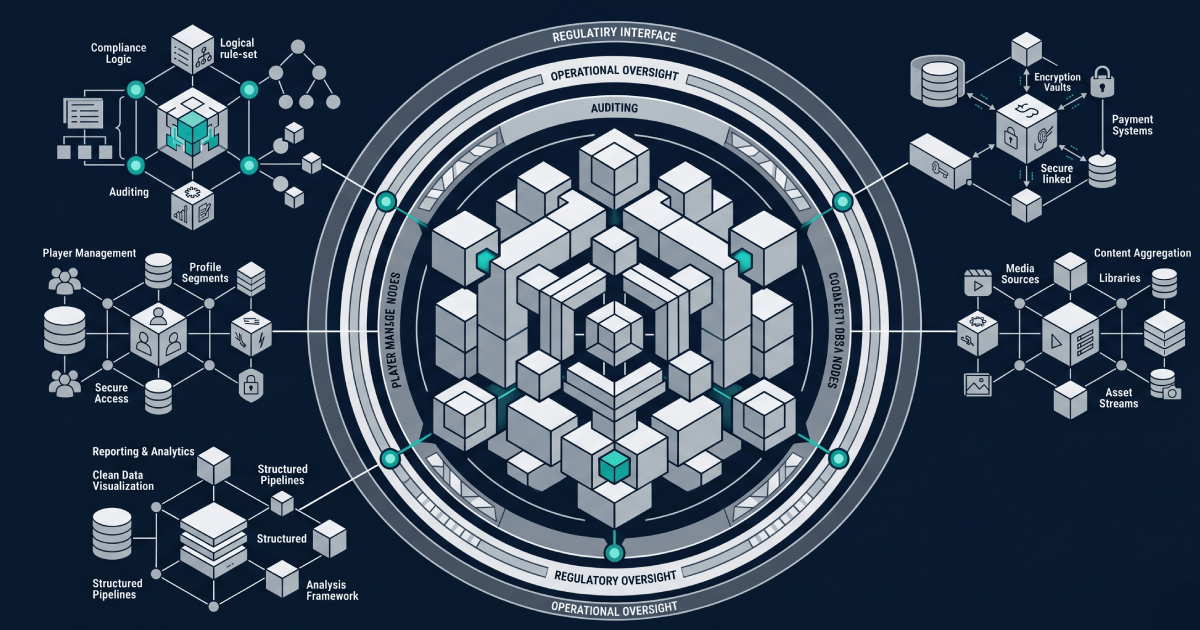
Microservices architectures allow you to scale individual components independently. Your bet placement service can scale separately from your account management service. A monolithic backend forces you to scale everything together, which means you’re either over-provisioned (expensive) or under-provisioned during peaks (broken).
But microservices aren’t free. They introduce distributed system complexity: service discovery, inter-service communication patterns, distributed transaction management, observability overhead. A poorly implemented microservices architecture is worse than a well-built monolith. The right question isn’t “is it microservices?” but “can the trading and bet placement paths scale independently from lower-throughput services like registration and KYC?”
Security requirements in regulated gambling go well beyond standard web application security. You need encryption at rest and in transit for all player data. You need audit trails that are immutable and available for regulatory inspection. You need DDoS mitigation that doesn’t add latency to the betting experience. You need penetration testing cycles that align with your licensing conditions.
PCI DSS compliance applies if you’re handling card data directly. GDPR applies to all player data in European jurisdictions. The architectural implication is that player data storage, access controls, and data retention policies need to be designed in from the start, not bolted on after a compliance audit flags issues.
Regulatory compliance is an engineering problem that happens to have legal consequences.
UKGC licence conditions now include specific requirements around customer interaction, affordability checks, marketing restrictions, and self-exclusion. These aren’t policies you paste into a terms page. They’re workflows that your platform must enforce programmatically. When the UKGC requires that a customer who hits a net loss threshold receives an interaction within a specific timeframe, your platform needs real-time loss tracking per player, configurable thresholds, automated trigger events, and auditable records of the interaction.
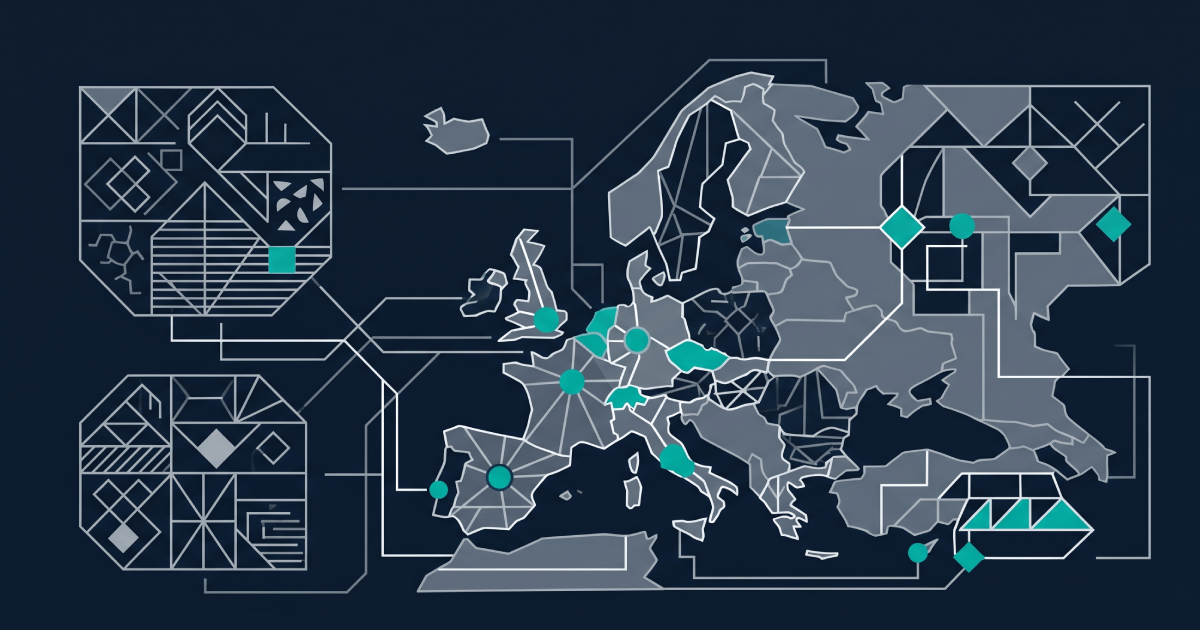
MGA requirements differ in specifics but share the structural demand: the platform must enforce jurisdiction-specific rules at the code level. If you operate across multiple jurisdictions, you need a configuration layer that can apply different rules per jurisdiction without forking your codebase. Multi-tenancy at the regulatory level, not just the branding level.
Geo-location verification is table stakes in US state-regulated markets. The platform needs to integrate with approved geo-location providers (GeoComply is the standard in most US states), verify player location at login and periodically during sessions, and block bet placement if verification fails. This isn’t a feature you add later. It’s a core platform concern that touches authentication, session management, and the bet placement flow.
Self-exclusion systems (GAMSTOP in the UK, state-level registries in the US) require real-time integration. When a player self-excludes, the platform must immediately prevent login, void any open bonus eligibility, and in some jurisdictions, return any stakes from unsettled bets. If your platform architecture can’t handle this as a synchronous, cross-service operation, you have a compliance gap.
Audit trail requirements deserve specific attention. Regulators expect to see complete, timestamped records of every transaction, every odds change presented to a player at the point of bet placement, every responsible gambling interaction. If your architecture doesn’t capture this data in an immutable, queryable format, you’re building a regulatory risk that compounds over time.
Results Are Designed, Not Hoped For
Clear Objectives. Tangible Outcomes.
Well engineered software is only part of the equation. True impact comes from aligning technology with commercial intent from the outset.
We define success early, measure consistently and refine continuously to ensure every product delivers meaningful and sustained value.

Beyond the Hype: Practical Applications of AI and ML
Most vendors will tell you their platform “uses AI.” Press them on specifics.
The practical, value-generating applications of machine learning in sportsbook operations are well-defined but require real data infrastructure to support them.
Fraud and integrity monitoring: ML models trained on historical bet patterns can flag suspicious activity (correlated betting across accounts, unusual staking patterns on low-liquidity markets) faster than rule-based systems. But they need access to a clean, unified data set of bet-level, player-level, and market-level events. If your data is siloed across systems or only available in batch, your “AI-powered fraud detection” is just a batch report.
Personalised player experience: Recommendation engines can surface relevant markets, suggest bet types based on historical preferences, and tailor promotional offers. The prerequisite is a player data model that captures behaviour at sufficient granularity, not just “this player bets on football” but “this player places in-play accumulators on specific leagues, primarily on mobile, during evening hours.” If your PAM doesn’t capture and expose this data, the ML layer has nothing useful to work with.
Responsible gambling: Pattern detection for problem gambling indicators (chasing losses, growing deposit frequency, session length anomalies) is one of the highest-value applications. Regulators are moving toward expecting operators to use algorithmic tools here, not just static thresholds. This is a case where the ML capability and the compliance requirement converge.
Trading and risk: Automated odds adjustment based on liability exposure and market movement is standard in mature trading operations. More advanced applications include predictive models for market liquidity and automated market suspension during data feed disruptions.
The honest assessment: if your platform doesn’t have a clean event pipeline, a data warehouse or lake that captures bet, player, and market events in near real-time, and an infrastructure layer (Kafka, Kinesis, or equivalent) that can feed ML models, then AI features are marketing claims, not production capabilities.
Making the Right Architectural Bet for Your Operation
The right platform model depends on where you are and where you’re going.
If you’re validating a market hypothesis and need to be live in weeks with minimal capital outlay, a white-label can serve as a short-term vehicle. Go in with a clear exit timeline and negotiate data portability terms before signing.
If you’re operating profitably in one or two jurisdictions and need more control without a full rebuild, a turnkey solution with strong API access and contractual guarantees around roadmap input can work. Evaluate the vendor’s track record on regulatory responsiveness, not just their feature list.
If you’re operating at scale across multiple regulated jurisdictions, if you need to own your data, control your roadmap, and build genuine product differentiation, custom development is the architecture that supports that ambition. The upfront investment is higher. The time-to-market is longer. But you end up with a platform that serves your business rather than one where your business serves the platform’s limitations.
The evaluation framework comes down to five questions: Who owns the player data? Who controls the development roadmap? What’s the three-year TCO at your projected volume? How quickly can the platform absorb a regulatory change? And can the architecture scale independently at the component level during peak demand?
Answer those honestly for each option on your shortlist, and the decision will make itself.
Frequently Asked Questions
Latest from our blog
Insights & Perspectives
Our insights explore the intersection of technology, commercial strategy and disciplined execution across complex digital environments.