A CTO’s Guide to Native Android Casino App Development
Most Android casino apps in regulated markets are thin wrappers around a WebView. The operator calls it “native,” the marketing site says “native,” but the player is loading a mobile web page inside an application shell. The result: inconsistent frame rates during slot animations, payment flows that drop sessions, and wallet architectures that can’t support real-time AML monitoring because every transaction round-trips through a web layer that was never designed for it. This article breaks down the architectural decisions, regulatory engineering requirements, cost factors, and performance strategies behind building a genuinely native Android casino application for regulated markets.








The argument for native over cross-platform or hybrid isn’t about ideology. It’s about what real-money gaming actually demands at the rendering and transaction layer.
A slot game running inside a WebView on a mid-range Android device in the UK market will exhibit noticeable input lag during bonus rounds, inconsistent audio sync, and occasional frame drops during high-animation sequences. Players don’t articulate this as a technical problem. They just leave. Session duration drops, deposits per session decline, and your retention curve degrades without a clear diagnostic signal in your analytics.
Native Android development gives you direct access to the GPU pipeline through Vulkan or OpenGL ES, which matters when you’re rendering particle effects and animated reels at 60fps. It gives you direct access to the NDK for computationally intensive operations. And it gives you control over the application lifecycle in ways that matter for real-money transactions: you can guarantee that a deposit confirmation completes before the OS reclaims memory, something a hybrid framework cannot promise with the same reliability.
The player retention argument is real, but it’s the secondary consideration. The primary one is architectural: a native layer gives you the control surface you need to implement compliant wallet operations, real-time fraud scoring, and session management that satisfies UKGC remote technical standards. If your wallet service is sitting behind a WebView bridge, you’re adding latency and failure modes to every financial operation. That’s a compliance risk before it’s a UX problem.
Cross-platform frameworks like Flutter or React Native have improved, and they’re defensible choices for content-light applications. But for a tier-one operator running live casino, slots from multiple aggregators, and a sportsbook integration, the abstraction layer introduces constraints that compound. You’ll hit them in payment gateway callbacks, in push notification handling for responsible gambling interventions, and in biometric authentication flows. Each of those is a point where native access to Android APIs isn’t a nice-to-have.
The backend architecture matters more than the frontend. A native Android app that talks to a poorly designed backend is still a bad product.
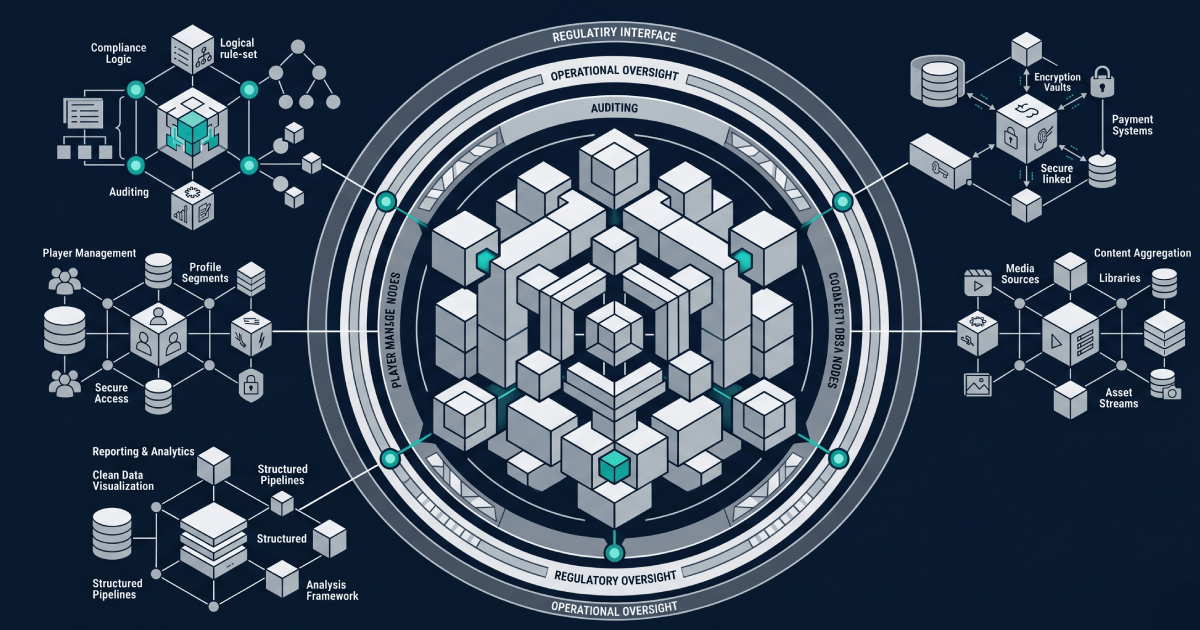
Start with the wallet service. The wallet is the single most important component in a casino platform’s architecture, and it’s the one most often underengineered. A wallet that supports real-time balance updates, concurrent bonus calculations, and transactional integrity across multiple game providers needs to be an independent, horizontally scalable microservice with its own data store. Not a table in a monolithic database. If your wallet can’t process a bet, update the balance, apply a bonus wagering contribution, and emit an event for AML monitoring in under 100ms, your architecture has a bottleneck that will constrain everything downstream.
Payment gateway integration requires PCI DSS Level 1 compliance at the infrastructure layer, but the Android application itself needs to handle tokenized card data correctly. That means no local storage of PANs, proper implementation of 3DS2 flows within the native UI (not a redirect to a browser), and graceful handling of payment processor timeouts. Most operators integrate three to five payment methods at minimum (card, e-wallet, bank transfer, Pay by Mobile), each with its own SDK and callback pattern. The native layer needs to abstract these behind a consistent internal interface.
Game integration typically happens through aggregator APIs (GAN, EveryMatrix, SoftSwiss, or a proprietary solution). The game client loads in a WebView within the native app, which is an acceptable compromise since game providers deliver HTML5 content. The critical work is in the communication bridge between the native wrapper and the game iframe: passing authentication tokens, handling wallet callbacks, managing session state, and intercepting game-round completion events for regulatory reporting.
For the UI layer, Material Design 3 provides the component library, but the real UX work is in the lobby, the cashier, and the responsible gambling intervention flows. Lobby performance matters: players browse hundreds of games, and if your lobby loads thumbnails lazily without proper caching and prefetching, it feels slow. The cashier flow needs to complete a deposit in three taps or fewer. Responsible gambling tools (deposit limits, session reminders, self-exclusion) need to be accessible within two taps from any screen, per UKGC requirements.
Gamification systems (loyalty points, missions, tournaments) should be event-driven on the backend and rendered natively on the client. These systems drive repeat sessions and are a key differentiator for operators who’ve moved off white-label platforms and need to compete on product quality rather than just game library size.
Compliance isn’t a feature you bolt on. It’s a set of constraints that shapes your data model, your API design, and your deployment architecture from day one.
The UKGC‘s Remote Technical Standards (RTS) specify requirements that translate directly into engineering decisions. RTS 2 requires that the outcome of a game is determined before it’s presented to the player and that the presentation accurately reflects the outcome. Your game integration layer needs to verify that game round results from the provider’s RNG are logged and auditable before the client renders the result. This means your backend must store the game round data independently of the game provider’s records.
KYC verification must happen before a player can deposit or play, and the technical implementation involves orchestrating calls to identity verification providers (Onfido, Jumio, GBG) within the native app. The Android implementation needs to handle document capture using the device camera with proper image quality checks, liveness detection for facial verification, and fallback flows for when automated verification fails. This isn’t a simple API call. It’s a multi-step flow with error handling, retry logic, and state management that needs to work across the full range of Android camera hardware.
AML monitoring requires transaction data to flow in real-time to your monitoring system. If your wallet architecture batches transaction events, you can’t detect structuring patterns or velocity anomalies in time to act. The native app needs to emit events (deposits, withdrawals, bet placement, game round completion) that your backend processes through a streaming pipeline, not a nightly batch job.
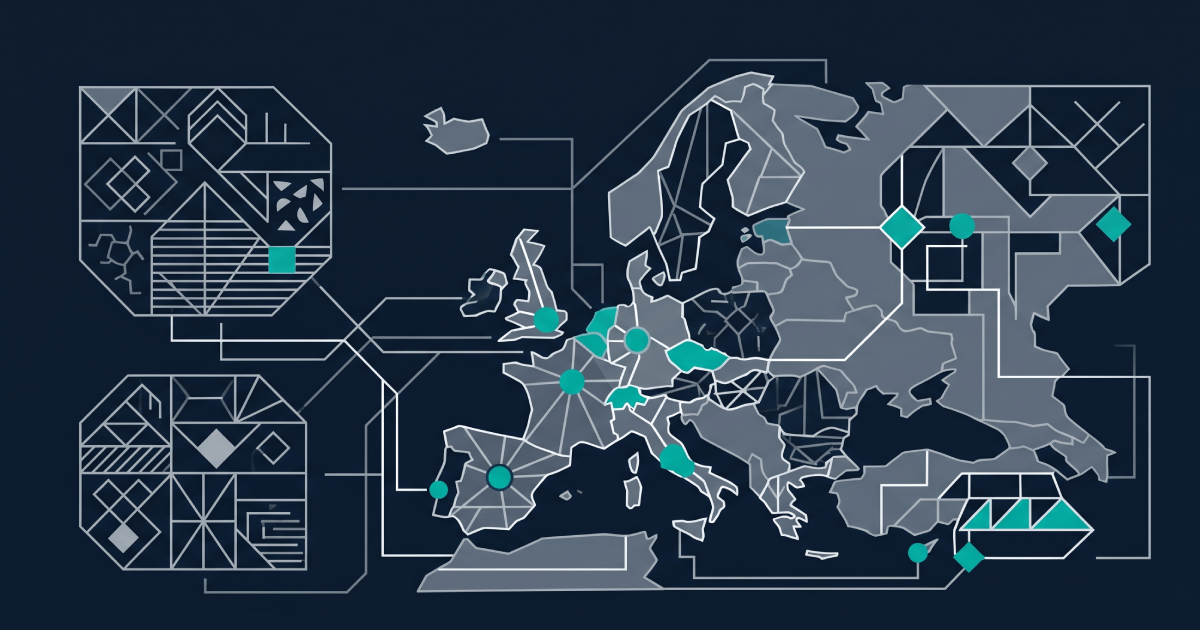
For MGA licensees, the requirements differ in specifics but share the same architectural implication: your platform needs jurisdiction-aware configuration at every layer. Tax calculations, bonus terms, session time limits, and reporting requirements all vary by jurisdiction. A monolithic backend that hardcodes UK-specific logic will become a liability when you need to launch in Malta or a regulated US state. The native Android app needs to consume jurisdiction-specific configuration from the backend and adjust its UI and behaviour accordingly, without requiring a new app binary for each market.
RNG integration is typically handled by the game providers, but the operator’s platform must verify and audit RNG certification. Your backend should validate that every game provider’s RNG holds current certification from an accredited testing house (eCOGRA, BMM, GLI) and that certification status is checked programmatically, not manually reviewed once a year.
Results Are Designed, Not Hoped For
Clear Objectives. Tangible Outcomes.
Well engineered software is only part of the equation. True impact comes from aligning technology with commercial intent from the outset.
We define success early, measure consistently and refine continuously to ensure every product delivers meaningful and sustained value.

The Jadex Development Lifecycle: From Architecture to App Store
The process starts with a technical discovery phase that most development partners skip or compress into a single workshop. For a regulated casino app, discovery needs to answer specific questions: What’s the current wallet architecture, and can it support native mobile clients? Which game aggregators are in use, and what are their mobile SDK requirements? What jurisdictions will the app serve at launch and within 18 months? What’s the existing authentication infrastructure?
Discovery produces two deliverables: a technical architecture document and a regulatory requirements matrix. The architecture document specifies the system design, API contracts, data flows, and integration points. The regulatory matrix maps UKGC, MGA, or other jurisdictional requirements to specific technical implementations, with acceptance criteria.
The design phase focuses on the cashier flow, the game lobby, and the responsible gambling interfaces. These are the three areas where UX directly affects revenue and compliance. Design prototypes are tested on actual Android devices across the fragmentation spectrum (more on that below), not just in emulators.
Development follows a modular approach: wallet integration, game provider integration, payment gateway integration, and compliance tooling can proceed in parallel with the UI layer. Kotlin is the primary language for modern Android development, with Jetpack Compose for the UI layer. The backend services that the Android app depends on are developed and deployed first, with the mobile client consuming versioned APIs.
QA testing for a regulated casino app is heavier than for a standard consumer application. Every game provider integration needs testing across its full game portfolio (or a statistically representative sample). Payment flows need testing with live sandbox environments from each payment provider. Compliance features need testing against the specific RTS requirements, with evidence collected for the regulator’s review. Automated testing covers the regression surface, but manual testing is unavoidable for game rendering quality and payment flow edge cases.
Google Play submission for a real-money gambling app requires a pre-approval process. Google restricts gambling apps to specific markets and requires proof of licensing. The submission process takes longer than a standard app and has specific metadata and content policy requirements. Planning for a four to six week review cycle on the initial submission is realistic.
Transparency on cost requires honesty about what drives the number up.
A native Android casino app for a regulated market, with wallet integration, three to five payment methods, integration with one game aggregator, KYC/AML tooling, and responsible gambling features, typically costs between £400,000 and £800,000 for initial development. That range is wide because the variables are significant.
The biggest cost driver is the number of game provider and aggregator integrations. Each aggregator has its own API, authentication model, and wallet callback mechanism. Adding a second aggregator doesn’t double the cost, but it adds 30-40% to the integration workload.
Payment gateway complexity is the second driver. Integrating Apple Pay (on Android, Google Pay), PayPal, Skrill, Paysafecard, and bank transfer each adds its own SDK, certification requirement, and testing burden. Some payment providers require their own PCI DSS attestation from the integrating application.
UI/UX customization is the third driver. A stock Material Design implementation with a branded colour scheme is cheaper than a fully custom design system with bespoke animations, a custom game lobby with advanced filtering and recommendation, and a personalized home screen. The custom approach performs better in player engagement metrics, but it costs more.
Ongoing costs after launch include Google Play distribution (which is minimal), backend infrastructure, game provider fees, payment processing fees, and platform maintenance. Plan for annual maintenance at 15-20% of the initial build cost. Regulatory changes (UKGC updates its RTS periodically, MGA adjusts its frameworks) generate unplanned development work. Budget a contingency for it.
The ROI calculation depends on your starting point. If you’re migrating from a white-label with a 30-40% revenue share, the payback period on a custom build is typically 18-30 months, assuming your GGR remains stable during the transition. If you’re building from scratch, the ROI timeline is longer and depends entirely on your player acquisition strategy and market.
One cost that operators consistently underestimate: the migration itself. Running a white-label platform and a new custom platform in parallel during migration, with player accounts, balances, and bonus states transferred without disruption, is a project in its own right. It often costs 20-30% of the new build.
Scoping Your Android Platform Strategy
Before engaging any development partner, answer these questions internally:
What is your current wallet architecture, and can it support real-time event emission for AML monitoring and personalization? If the answer is no, the wallet needs to be addressed before or alongside the mobile build.
How many game aggregators do you use, and how many do you need? Consolidating to a single aggregator reduces integration cost but creates vendor dependency. Using three gives you product flexibility but triples the integration surface.
What jurisdictions will this app serve in the next 24 months? If the answer is “UK only,” the architecture can be simpler. If you’re planning MGA, Gibraltar, or US state launches, the app and backend need jurisdiction-aware configuration from day one.
Are you migrating from a white-label, or building net new? Migration is a fundamentally different project from a greenfield build. The former requires parallel running, data migration, and player communication. The latter requires player acquisition strategy and market entry planning.
What’s your internal engineering capacity? A development partner should augment and transfer knowledge, not create a permanent dependency. If you have no internal Android capability, plan for how you’ll maintain the app after the partner engagement ends.
These questions shape the scope, timeline, and cost of the project. Getting clear answers before writing an RFP will save months of discovery and re-scoping.
The next step is a technical architecture review: bring your current platform documentation, your regulatory requirements, and your product roadmap. A focused session can identify the architectural decisions that need to be made early and the ones that can be deferred. That’s where the real work starts.
Frequently Asked Questions
Latest from our blog
Insights & Perspectives
Our insights explore the intersection of technology, commercial strategy and disciplined execution across complex digital environments.