Platform Competition in TV & Streaming: Lessons for iGaming Operators
Netflix lost 200,000 subscribers in Q1 2022 and saw its stock price halve in a single day. The cause wasn’t a technology failure or a content drought. It was a structural problem: the platform had stopped growing in saturated markets, churn was accelerating, and competitors with differentiated content strategies were pulling users away. If you’re running platform strategy for a regulated iGaming operator, this should feel uncomfortably familiar. The dynamics that govern who wins and who bleeds in streaming, content differentiation, platform architecture, data-driven retention, and the cost of being locked into the wrong technical decisions, are playing out in iGaming right now, with regulatory pressure as an added accelerant.
This piece maps the competitive forces shaping the streaming market onto the architectural and commercial decisions facing iGaming platform leaders. Not as a loose analogy, but as a structured examination of where the parallels are real and where they break down.










The streaming market consolidated fast. In under a decade, it went from Netflix dominance to a fragmented war between Disney+, HBO Max, Amazon Prime Video, Apple TV+, Important+, and Peacock, each burning capital to acquire and retain subscribers. The result is a market where user attention is finite, switching costs are low, and the platform itself (not just the content on it) determines who survives.
iGaming sits in a structurally similar position. Operators compete for the same players across overlapping game portfolios sourced from the same aggregators. Switching costs for players are near zero. The regulatory environment compresses margins further, particularly under UKGC affordability checks and MGA‘s changing AML requirements. And just as streaming services discovered that licensing someone else’s content creates no lasting competitive advantage, iGaming operators are learning that running a white-label platform with the same game catalogue as every competitor produces the same outcome: a race to the bottom on bonuses.
The operators who are pulling ahead, whether in the UK, Malta, or newly regulated US states, are the ones treating their platform as a product, not a commodity. That means owning the technical stack deeply enough to differentiate on experience, compliance responsiveness, and data capability. Streaming’s history is instructive here because the winners didn’t just have better shows. They had better platforms.
Netflix spent $17 billion on content in 2022. Disney+ launched with the Marvel and Star Wars catalogues as exclusives. HBO Max leaned on prestige originals. The lesson from streaming isn’t that content matters (everyone knows that), it’s that exclusive, curated content matters. Licensing the same library as your competitors doesn’t build retention.
Most iGaming operators integrate with the same game aggregators. A player can find Pragmatic Play slots, Evolution live dealer tables, and NetEnt titles on dozens of competing sites. The game aggregator integration layer becomes table stakes, not a differentiator.
Where the parallel gets interesting is in what sits around the content. Streaming platforms invest heavily in how content is surfaced, packaged, and contextualised. Netflix’s recommendation engine doesn’t just suggest titles; it changes the artwork based on viewing history. The content is the same asset, but the presentation layer creates a differentiated experience.
For iGaming, this translates to platform architecture that supports personalised promotions, dynamic game lobbies, and contextual content delivery. If your platform can surface a live casino tournament to a player who’s been growing their live dealer session times, while simultaneously suppressing high-volatility slots for a player whose affordability indicators have shifted, you’re operating at a different level from the operator whose lobby is static HTML and whose bonus engine can only segment by deposit tier.
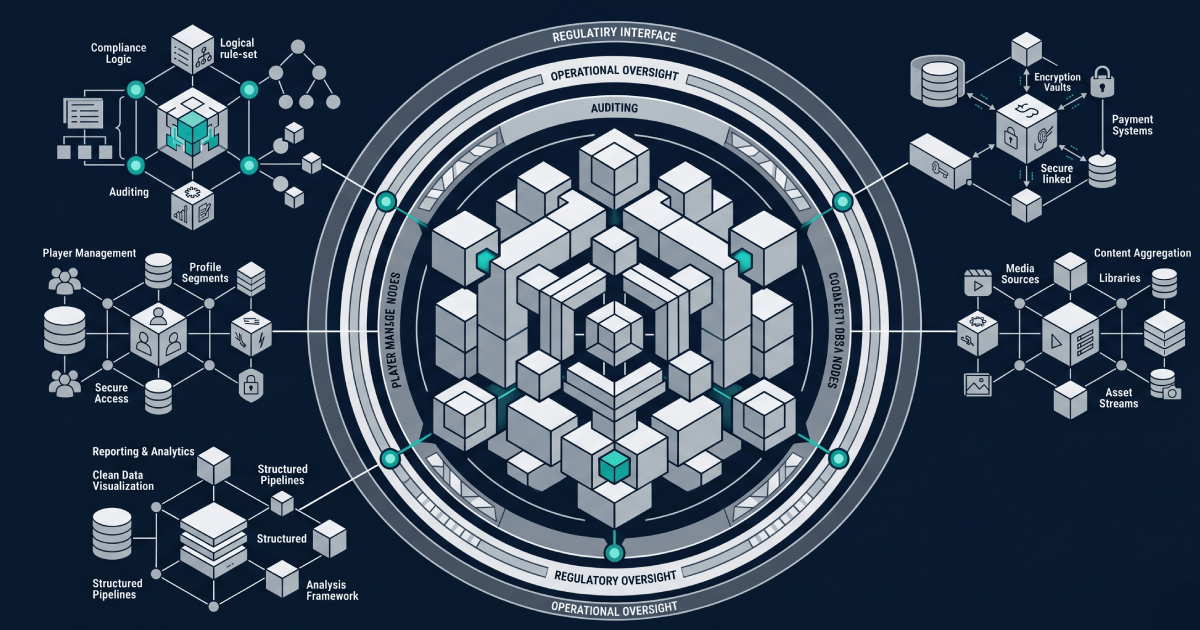
This requires an architecture where the game aggregation layer, the CRM, the bonus engine, and the player data platform can communicate in real time. Most white-label platforms can’t do this. The game feed comes in via a standard API, the bonus engine operates on batch-processed segments, and the lobby is configured manually. The streaming equivalent would be Netflix showing every user the same homepage. They tried that. It didn’t work.
Streaming platforms learned early that content discovery is a retention problem. If a viewer can’t find something to watch within 60 to 90 seconds, they leave. This drove massive investment in recommendation algorithms, auto-play previews, personalised rows, and “continue watching” functionality. The interface is the product.
Player journeys in iGaming carry the same weight, but the stakes are higher because regulatory obligations are embedded in the experience. A deposit flow that adds unnecessary friction loses players. A responsible gaming intervention that’s clumsy or poorly timed erodes trust. A lobby that takes three seconds to load on mobile loses session time you’ll never recover.
The architectural answer that’s gained traction is the headless, API-first platform. Decouple the frontend from the backend. Let the presentation layer be optimised for device, jurisdiction, and player context while the backend handles wallet transactions, compliance checks, and game session management through well-defined APIs.
This isn’t new thinking, but execution matters more than architecture diagrams. The hard part is building a frontend that can render personalised player journeys while simultaneously enforcing UKGC‘s interaction requirements, displaying MGA‘s responsible gaming mandates, and maintaining sub-second load times on mobile. A headless architecture makes this possible. It doesn’t make it easy. And the gap between “we have an API-first platform” and “our API-first platform actually delivers differentiated player experiences across three jurisdictions” is where most implementations stall.
The operators getting this right are treating the player journey as an engineering problem, not a design problem. It’s not about prettier buttons. It’s about whether your platform can conditionally render a different deposit flow based on real-time affordability scoring, and do it without a page reload.
Results Are Designed, Not Hoped For
Clear Objectives. Tangible Outcomes.
Well engineered software is only part of the equation. True impact comes from aligning technology with commercial intent from the outset.
We define success early, measure consistently and refine continuously to ensure every product delivers meaningful and sustained value.

The Social Video Disruption: Redefining ‘Session Time’
TikTok didn’t compete with Netflix by making better long-form content. It competed by redefining what a “session” looks like. Short-form, algorithmically served, infinite-scroll content created a fundamentally different engagement model. The average TikTok session is shorter than a Netflix session, but sessions happen far more frequently throughout the day. Total attention captured per week is comparable or higher.
iGaming is seeing a similar bifurcation. Traditional online casino sessions (30 to 60 minutes of slots or table play) coexist with newer engagement patterns: quick-fire bet builders in sportsbook, crash games with 30-second rounds, and social-leaderboard mechanics that pull players back for micro-sessions throughout the day.
Your platform architecture needs to support both modes. Long-session players need smooth, uninterrupted gameplay with minimal latency. Micro-session players need instant load times, frictionless authentication (biometric login, persistent sessions within regulatory limits), and a lobby that remembers exactly where they left off.
The wallet service is the bottleneck most operators underestimate here. If every micro-session requires a full wallet initialisation, balance check, and AML verification cycle, you’ve killed the engagement pattern before it starts. The wallet needs to support pre-authenticated, cached balance states with asynchronous compliance checks that don’t block the UI. This is architecturally non-trivial and almost impossible on legacy monolithic wallet implementations.
Crash games and instant-win formats also generate transaction volumes that many older platforms weren’t designed to handle. A player placing 200 micro-bets in a 10-minute session creates a very different load profile than a player spinning slots at 6 seconds per spin. If your transaction processing layer wasn’t built for this throughput, you’ll see it in latency spikes, failed bets, and player complaints before you see it in your monitoring dashboards.
Netflix’s recommendation engine reportedly saves the company $1 billion per year in reduced churn. The engine works because Netflix has a unified data layer where every user interaction (plays, pauses, rewinds, browse patterns, search queries) feeds into a single model that drives personalisation.
iGaming operators have a dual mandate that streaming platforms don’t: use data for personalisation and for regulatory compliance. The same data infrastructure that powers personalised game recommendations must also support real-time AML monitoring, responsible gaming interventions, and regulatory reporting. These aren’t separate systems. They can’t be. If your personalisation engine is recommending high-stakes live casino to a player whose AML risk score just escalated, you have a compliance problem that no amount of post-hoc reporting will fix.
The architectural requirement is a real-time event streaming layer (Kafka, or similar) that ingests player actions, transaction data, and session metadata into a unified data platform. From there, compliance models and personalisation models consume the same event stream but apply different logic. The compliance engine applies rule-based checks (threshold monitoring, pattern detection, velocity checks) with guaranteed processing. The personalisation layer applies ML models with best-effort processing, meaning a failed recommendation degrades the experience but doesn’t create regulatory exposure.
Most operators I’ve seen have these as entirely separate data pipelines. The CRM vendor has one data feed. The AML vendor has another. The responsible gaming tool has a third. Each operates on slightly different data, with different latencies, producing different views of the same player. Reconciling these views becomes a manual exercise, usually performed by the compliance team in spreadsheets, weeks after the fact.
Building a unified data layer is a significant infrastructure investment. It’s also a prerequisite for every AI and ML capability vendors are currently promising. If an ML vendor tells you they can deploy a churn prediction model in six weeks but your player data lives in four disconnected systems with no common event schema, they’re either planning to build on incomplete data or they haven’t done their technical discovery properly.
Future-Proofing Your iGaming Platform Strategy
The streaming market is still consolidating. Smaller services are being absorbed or shuttered. The survivors share common characteristics: they own their technology stack deeply enough to iterate quickly, they use data to drive both content decisions and user experience, and they’ve built platforms that can adapt to new distribution models (ad-supported, live events, interactive content) without architectural rewrites.
The iGaming market is heading in the same direction. Regulatory pressure will continue to increase. Player expectations will continue to rise. The operators who survive the next consolidation cycle will be the ones whose platforms can absorb a new UKGC requirement in weeks rather than months, deploy a new game format without re-architecting the lobby, and use real-time data to simultaneously personalise the player experience and satisfy their compliance obligations.
This requires an API-first, event-driven architecture with clear service boundaries. It requires a unified data layer that serves both personalisation and compliance. It requires a frontend that’s decoupled from the backend and optimised for the session patterns players actually exhibit, not the ones operators assume. And it requires an honest assessment of what to build, what to buy, and what to migrate away from, made with full visibility into total cost of ownership rather than headline licensing fees.
The streaming wars taught us that platform decisions compound. The operator who chose the right architecture three years ago is now iterating on player experience while competitors are still trying to extract their wallet service from a monolith. The decisions you make this quarter about your platform will determine your competitive position in 2027. The question isn’t whether your current platform can handle today’s requirements. It’s whether it can handle the ones you can’t yet predict.
Frequently Asked Questions
Latest from our blog
Insights & Perspectives
Our insights explore the intersection of technology, commercial strategy and disciplined execution across complex digital environments.