The Land-Based Operator’s Platform Playbook: Transitioning to Online Gaming
Most land-based operators considering a digital platform already know the strategic case. What they lack is a technical framework for evaluating the actual decisions they’ll face: platform architecture, integration sequencing, wallet design, regulatory compliance at the engineering layer, and total cost of ownership over a realistic horizon. This article provides that framework, structured around the decisions you’re making this quarter, not the ones a vendor wants to sell you.










The case for digital expansion isn’t about chasing trends. It’s about revenue diversification, demographic reach, and competitive positioning against operators who already have both channels running.
Land-based operations have a ceiling. Geographic reach is fixed. Operating hours, even when 24/7, constrain the number of concurrent players your floor can support. And the demographic profile of your existing patron base is aging. The 18 to 35 segment overwhelmingly discovers and engages with gaming through mobile and desktop channels first. If your only touchpoint is the physical venue, you’re invisible to a growing share of the addressable market.
An online platform changes the economics. You move from a fixed-capacity model to one where marginal cost per additional player drops sharply after initial platform investment. You generate new revenue streams: sports betting, online slots, live dealer, virtual games. You create digital touchpoints that can drive footfall back to the physical venue, and vice versa. The omnichannel loop, when it works, increases player lifetime value across both channels compared to either channel in isolation.
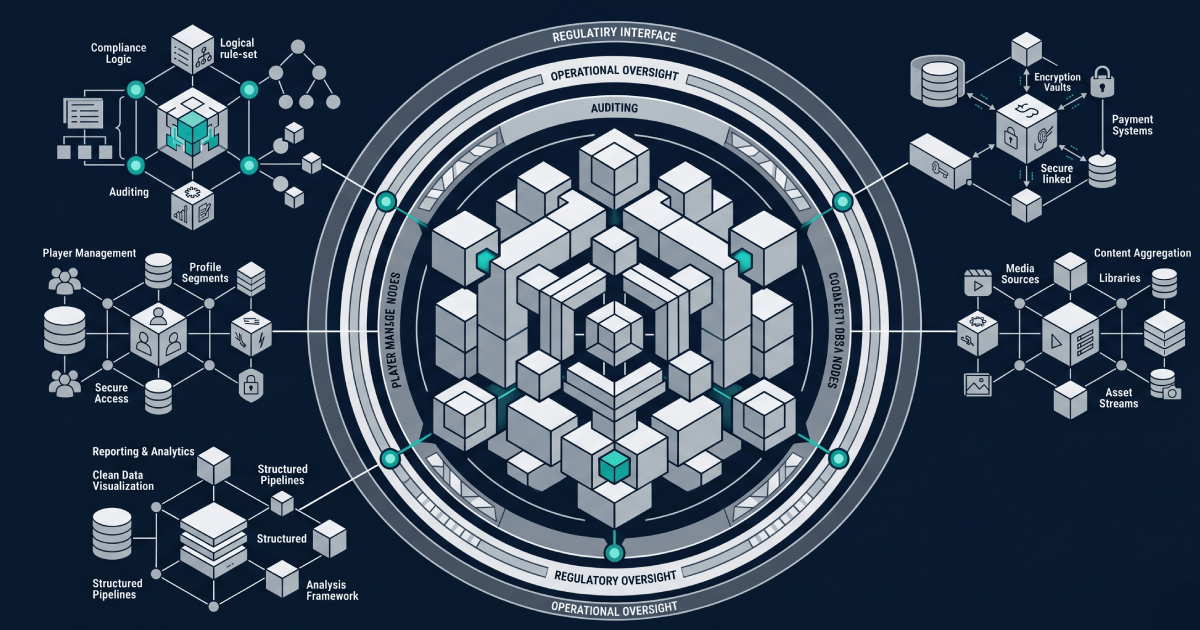
But the strategic imperative carries a technical implication that most board-level presentations gloss over. A digital platform isn’t a bolt-on. It’s a new operational system that touches payments, compliance, CRM, loyalty, identity management, and data infrastructure. Getting the architecture wrong creates technical debt that compounds under regulatory pressure.
The operators who’ve done this well treated the digital platform as a core infrastructure investment, not a marketing project.
The online player and your floor patron are different populations with some overlap. Designing for one while assuming the other’s behaviour is a common product mistake.
Online players skew younger, 18 to 35 for the most engaged segment. They expect mobile-first interfaces, fast load times (under 2 seconds to first interactive frame), and a game catalogue that’s broad and frequently refreshed. They respond to digital bonuses, free spins, and gamified loyalty mechanics. Session lengths tend to be shorter but more frequent. A typical online player might have three or four micro-sessions per day, compared to one extended visit per week for a land-based patron.
Land-based players often value the social experience, the tactile interaction with machines, the atmosphere. They’re typically older, with higher average spend per visit but lower frequency.
The overlap is the omnichannel player, someone who engages in both channels. This segment is your highest lifetime value cohort. They visit more often, spend more online between visits, and respond well to cross-channel promotions (play online, earn a free meal at the venue).
Your platform and product strategy need to serve all three segments without defaulting to a one-size-fits-all approach. This means configurable CRM journeys, separate bonus strategies per segment, and a content strategy that doesn’t assume every player wants the same game catalogue. Your slots floor might feature 500 titles. Your online catalogue should offer 2,000 or more, because digital shelf space is effectively unlimited and game variety is a primary driver of online retention.
Results Are Designed, Not Hoped For
Clear Objectives. Tangible Outcomes.
Well engineered software is only part of the equation. True impact comes from aligning technology with commercial intent from the outset.
We define success early, measure consistently and refine continuously to ensure every product delivers meaningful and sustained value.

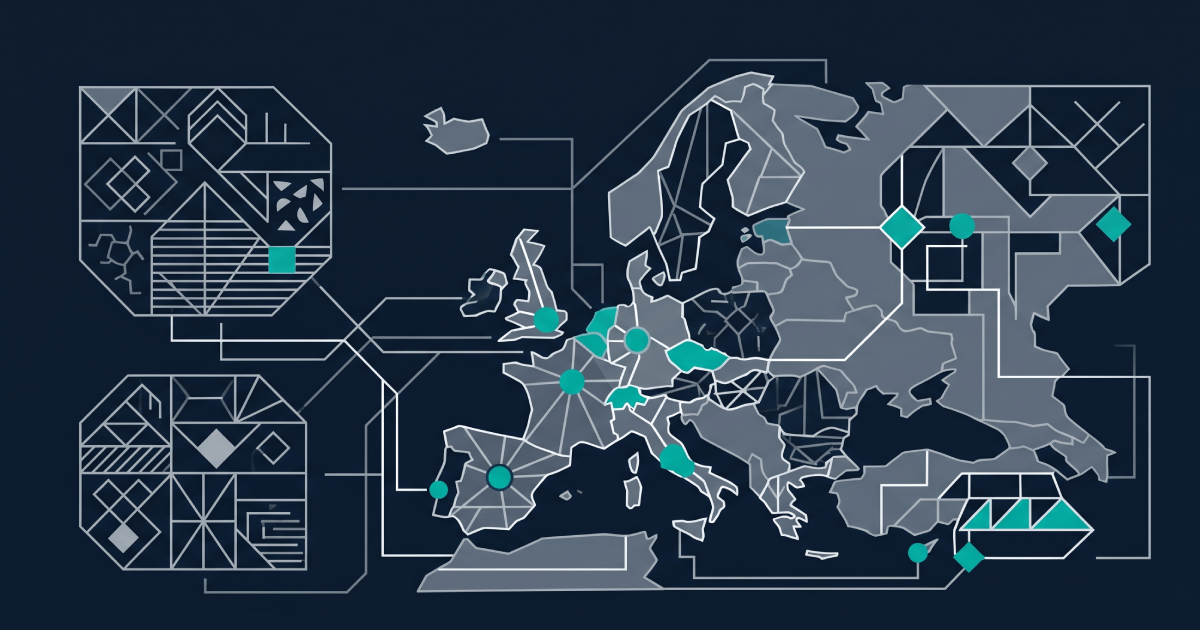
Handling the Regulatory Maze: Compliance in a Multi-Jurisdiction World
Regulatory compliance isn’t a feature you add at the end. It’s a constraint that shapes your architecture from day one.
If you’re operating under UKGC and expanding to MGA, or vice versa, you already know that each jurisdiction has its own requirements for KYC timing, deposit limits, self-exclusion integration (GAMSTOP for UK, various national schemes elsewhere), marketing restrictions, and reporting formats.
The engineering implication: your platform must support jurisdiction-specific configuration at the compliance layer without requiring code changes. KYC triggers (when to verify, what level of verification, which documents to accept) should be configurable per market. Responsible gaming limits (session time reminders, deposit caps, cooling-off periods) need to be market-specific. Regulatory reporting formats differ between UKGC, MGA, and Gibraltar GGC.
A monolithic platform that hardcodes compliance rules for one jurisdiction becomes a liability when you expand. Every new market requires development work, testing, and deployment. A properly abstracted compliance service, with jurisdiction-specific rule sets loaded as configuration rather than code, reduces time-to-market for new jurisdictions from months to weeks.
AML monitoring deserves its own architectural consideration. Transaction monitoring rules need to operate in real-time against the wallet event stream. Batch reporting after the fact doesn’t meet current enforcement expectations. Your platform needs to support automated flagging, case management workflows for the compliance team, and audit trails that satisfy regulatory review.
UKGC’s enhanced focus on affordability checks adds another layer. The platform needs to track net deposits over rolling periods and trigger interventions at configurable thresholds. This requires a reliable, real-time view of the player’s financial activity across all payment methods, which circles back to the wallet architecture.
From RFP to Launch: Selecting Your Technical Partner
The RFP process in iGaming platform selection is often too focused on feature checklists and not enough on architectural decisions that determine your flexibility over the next five years.
Questions that matter more than “do you support Feature X”:
Architecture. Is the platform microservices-based or monolithic? Can individual services (wallet, PAM, bonus engine) be replaced or upgraded independently? What’s the deployment model: multi-tenant SaaS, single-tenant hosted, or on-premise?
Regulatory track record. Which jurisdictions has the platform been deployed in? Not “which jurisdictions can it theoretically support,” but where is it running, in production, under regulatory scrutiny today? Ask for references from operators in your target markets.
Wallet design. Is the wallet event-sourced? Can it emit real-time events to downstream services? What’s the latency from transaction to event availability? If the answer is “near real-time” followed by a vague explanation, that’s a warning sign.
Migration support. Have they handled a migration from another platform while keeping operations live? What was the player attrition rate during migration? What was the parallel-run duration?
Roadmap governance. If you’re on a shared platform, how are roadmap priorities decided? Do you have any influence, or are you waiting behind larger operators? What’s the average lead time from feature request to production deployment?
Data ownership. If you leave, what happens to your data? In what format is it exported? What’s the contractual timeline for data return?
Avoid partners who position themselves as “the platform” and expect you to adapt your operations to their product. The right technical partner understands that your land-based operations, your regulatory obligations, and your player base create constraints that the platform must accommodate, not the other way around.
Look for evidence that they’ve worked with operators Managing the specific transition from land-based to omnichannel. The technical challenges are different from building a digital-native operation. The integration complexity, the data migration, the dual-channel compliance requirements: these demand experience, not just capability on paper.
The gap between vendor promise and operational reality is where most platform transitions fail. Close that gap by asking hard questions early, modelling costs honestly, and choosing a partner whose incentives align with your long-term architecture, not just your launch date.
Frequently Asked Questions
Latest from our blog
Insights & Perspectives
Our insights explore the intersection of technology, commercial strategy and disciplined execution across complex digital environments.