Competition Mechanics Platforms for iGaming: An Architectural Deep Dive
Most iGaming operators treat competition mechanics as a marketing function: spin up a leaderboard, attach a prize pool, push it through CRM. The platform team gets a brief two weeks before launch, and the result is a bolted-on promotion that strains the wallet service, creates compliance gaps, and generates data that never makes it back into the player model. This article breaks down what it actually takes to build or buy a competition mechanics platform that operates as a first-class citizen in a regulated iGaming architecture, covering integration patterns, regulatory constraints, fraud surfaces, and the real trade-offs in procurement.







Acquisition bonuses are a race to the bottom. Every operator in a UKGC or MGA-regulated market is offering some variant of matched deposit or free spins, and player sensitivity to these offers has flattened. The CAC keeps climbing while the players acquired through bonus stacking churn faster than organically acquired ones.
Competition mechanics solve a different problem. They create engagement loops that extend session depth, increase deposit frequency, and generate organic referral traffic. A well-designed tournament structure or milestone challenge gives players a reason to return that isn’t purely bonus-driven. That matters commercially because it shifts spend from acquisition to retention, where the unit economics are better.
It also matters strategically. Operators who build proprietary engagement mechanics own the differentiation layer. Players can get slots and live casino from dozens of operators. They can’t get your specific competitive experience anywhere else. Rank Group’s deployment of bespoke engagement features across Mecca venues and digital properties illustrates this: the mechanics become part of the brand, not a commodity bolted onto it.
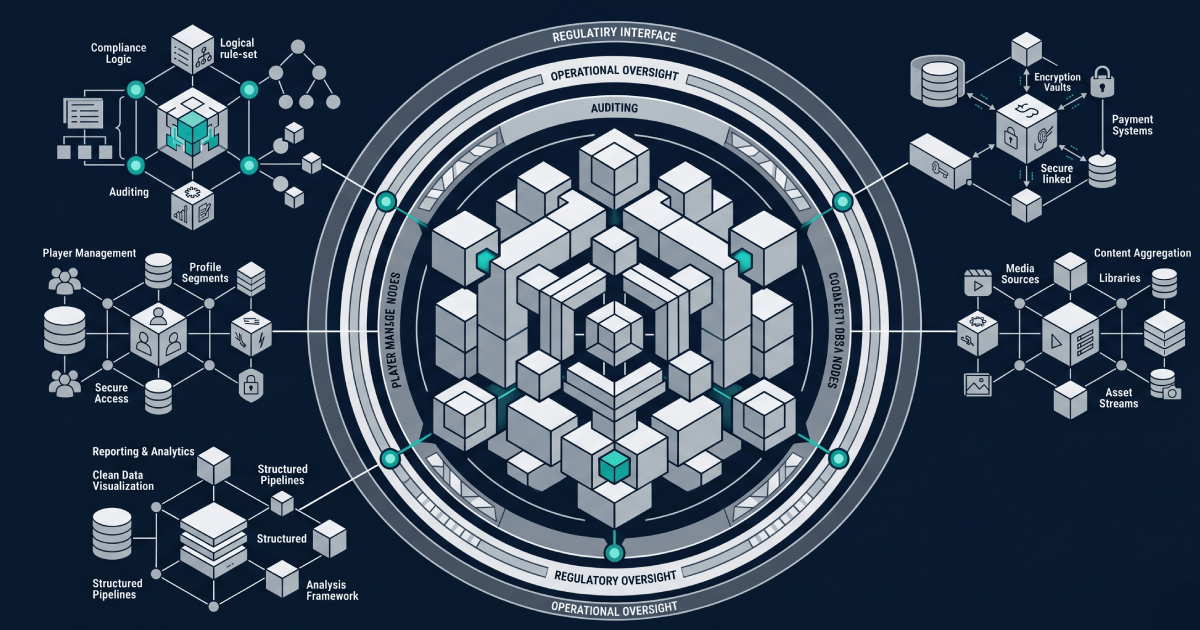
The problem is that most platform architectures weren’t designed to support this. Competition mechanics touch the wallet, the PAM, the game aggregation layer, CRM, and real-time event processing simultaneously. Building them properly requires architectural intent, not afterthought.
The honest answer is that neither option is universally correct, and anyone telling you otherwise is selling something.
Off-the-shelf SaaS tools get you to market fast, typically in weeks. They handle the commodity features well: basic leaderboards, simple referral tracking, standard prize distribution. Where they fall down is integration depth. Most SaaS competition platforms weren’t built for iGaming. They don’t understand wallet architectures with segregated balances. They don’t enforce UKGC promotional rules. They can’t consume game round events from your aggregation layer natively. You end up building a substantial integration and compliance layer around the SaaS tool, which erodes the time-to-market advantage and creates a maintenance burden.
Full custom builds give you complete control. You design the rules engine to your exact requirements, integrate natively with your PAM and wallet, and own the IP. The cost is real: expect 6 to 12 months of development for an initial production-grade platform with a team of 4 to 6 engineers, plus ongoing maintenance. For a PE-backed operator group running multiple brands across jurisdictions, the investment can pay back within 18 months through reduced third-party platform fees and the ability to iterate on engagement mechanics without vendor roadmap dependency.
The middle path (and the one most operators should evaluate seriously) is a bespoke build delivered by a specialist engineering partner with iGaming domain expertise. You get custom architecture designed for your specific PAM, wallet, and regulatory context, built by engineers who’ve already solved the hard integration and compliance problems. You own the IP. You avoid the SaaS lock-in. You compress the timeline because the team isn’t learning iGaming platform patterns for the first time on your project.
Results Are Designed, Not Hoped For
Clear Objectives. Tangible Outcomes.
Well engineered software is only part of the equation. True impact comes from aligning technology with commercial intent from the outset.
We define success early, measure consistently and refine continuously to ensure every product delivers meaningful and sustained value.

Engineering for Tier-One Operators
Building competition mechanics for operators like Rank Group and Mecca surfaces problems that don’t appear in smaller deployments. Multi-venue (digital and physical) participation in a single competition requires event ingestion from both online game servers and retail POS systems. Multi-brand deployment across shared infrastructure needs tenant isolation in the rules engine and prize pools. Player volumes in the hundreds of thousands per competition demand architecture that was designed for horizontal scaling from day one, not optimised for it retroactively.
The approach that works starts with the integration layer. Map the PAM and wallet service contracts first. Understand the game event taxonomy from your aggregation partners. Define the compliance rules as machine-executable constraints before writing application logic. Then build the rules engine and competition lifecycle management on top of that foundation.
API-first architecture isn’t a buzzword here. It’s a practical requirement. Rank Group’s deployment across Mecca venues needed competition data surfaced in mobile apps, on in-venue screens, and through staff-facing tools. Three different front-end consumers, one back-end platform. Without clean API contracts, that’s three integration projects instead of one.
Deep regulatory understanding means the engineering team knows that UKGC‘s Remote Technical Standards apply to competition random elements (if any), that MGA requires competition rules to be available in specific languages for specific jurisdictions, and that GGC has its own reporting requirements for promotional spend. These details drive database schema design, API response structures, and back-office workflows. They’re not items to address in a compliance review after the platform is built.
Integrating Engagement Mechanics into Your Platform Roadmap
Competition mechanics should appear on your platform roadmap as a capability, not a project. The first implementation might be a slot tournament leaderboard. The architecture you build should support referral competitions, milestone challenges, and cross-product events without re-platforming.
The operators who gain a durable advantage from competition mechanics are the ones who treat them as an engineering discipline, not a promotional tactic.
Latest from our blog
Insights & Perspectives
Our insights explore the intersection of technology, commercial strategy and disciplined execution across complex digital environments.