Prize Game Platforms for Brands: A Technical & Strategic Analysis
Most prize game platform evaluations die in procurement because nobody mapped the integration requirements to the existing tech stack before signing the contract. The platform looked great in the demo. The game mechanics were engaging. Then engineering discovered the “API” was a webhook that fires JSON to a single endpoint, the CRM connector only supported HubSpot, and the analytics layer couldn’t distinguish between a returning player and a new registration from the same household.
This analysis breaks down prize game platforms from the perspective of someone who has to make them work inside a regulated, multi-system environment. It covers architectural trade-offs between build approaches, the feature set that actually matters at implementation, integration complexity beyond the sales deck, realistic cost structures, and the compliance surface area that marketing teams consistently underestimate.










The business case for prize game platforms is straightforward when you strip away the gamification buzzwords. They solve three problems that traditional digital marketing handles poorly.
First, attention duration. A banner ad gets fraction-of-a-second exposure. A well-designed instant-win game holds a user for 45 to 90 seconds minimum. That’s not a vanity metric. It’s the difference between a brand impression and a data capture opportunity. When a user voluntarily engages with a branded game mechanic, you get consent-based interaction time that compounds into measurable brand recall.
Second, qualified lead generation. A prize game with a registration gate converts at 2x to 5x the rate of a standard landing page form, depending on prize value and game design. The reason is simple: reciprocity. The user perceives value before you ask for data. The quality of those leads depends entirely on form design and progressive profiling strategy, which we’ll cover later.
Third, first-party data acquisition. With third-party cookies disappearing and consent frameworks tightening, prize games offer a legitimate, user-initiated channel for collecting behavioural and preference data. Every tap, every choice, every completion time is an event you own.
The operators who treat these platforms as campaign tools miss the point. The real value is in the data pipeline they create. A prize game that runs for six weeks and captures 50,000 registrations with behavioural event data attached to each one is a segmentation asset, not a marketing stunt. The question is whether your platform choice lets you actually use that data, or buries it in a vendor dashboard you can’t query.
A Zapier integration is a proof of concept, not a production architecture. If your vendor’s integration strategy starts and ends with Zapier, you’re looking at a platform built for SMB marketing teams, not enterprise operators.
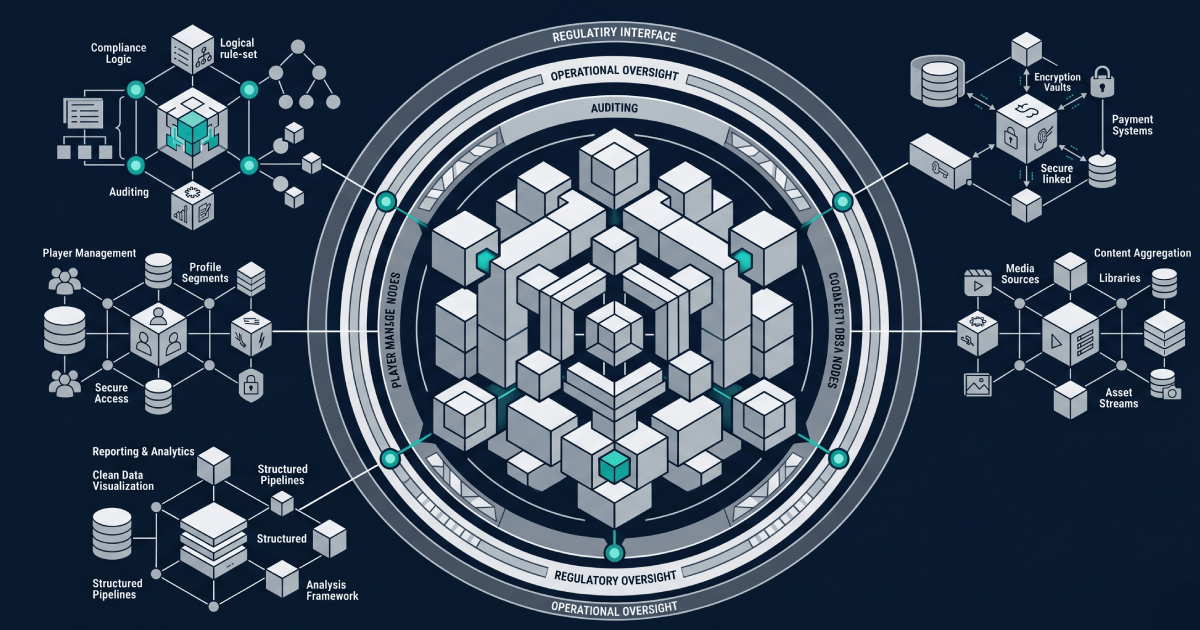
The integration layer needs to support three flows reliably.
Inbound: CRM and CDP sync. Registration data, behavioural events, and prize outcomes need to flow into your CRM or CDP in near real-time. This means a proper REST or GraphQL API with pagination, filtering, and idempotent operations. Batch export via CSV is a fallback, not a strategy. For high-volume campaigns (100K+ participants), you need to understand throughput limits. Can the API handle 500 requests per second during peak campaign hours? What’s the retry and dead-letter queue behaviour when your downstream system is unavailable?
Outbound: Personalisation and segmentation. The platform should accept inbound data to personalise the game experience. If a user is a loyalty programme member in your existing system, the game should reflect that, showing different prizes, different difficulty levels, or different messaging. This requires the platform to accept authenticated API calls that modify the game state before render.
Transactional: Prize fulfilment and financial reconciliation. When a prize is awarded, the downstream effects might include triggering a voucher code from a third-party provider, crediting a loyalty account, updating inventory in a warehouse management system, or posting a journal entry to finance. Each of these is a separate integration point. Each needs error handling, retry logic, and reconciliation capability.
Ask vendors for integration architecture diagrams, not feature lists. Ask how they handle eventual consistency. Ask what happens when your CRM is down for 30 minutes during a live campaign. The answers tell you more about platform maturity than any feature comparison.
Results Are Designed, Not Hoped For
Clear Objectives. Tangible Outcomes.
Well engineered software is only part of the equation. True impact comes from aligning technology with commercial intent from the outset.
We define success early, measure consistently and refine continuously to ensure every product delivers meaningful and sustained value.

The Economics: Deconstructing Pricing Models and ROI
Subscription SaaS platforms typically run £500 to £5,000 per month depending on tier, with enterprise plans reaching £10,000+ monthly for high-volume, multi-brand deployments. Per-campaign fees of £200 to £2,000 on top are common. Some vendors charge per-participant fees above volume thresholds, which can surprise you during a successful campaign.
White-label solutions often start lower, £200 to £1,500 per month, but layer on setup fees, customisation charges, and sometimes revenue share on prize-related transactions.
Custom development follows the ranges outlined earlier: £150K to £500K+ for initial build, with ongoing costs.
The ROI framework that matters isn’t cost-per-lead in isolation. Calculate it across three dimensions.
Cost per qualified lead. Total campaign cost (platform fees, prize costs, media spend to drive traffic, operational overhead) divided by leads that meet your qualification criteria. If you’re spending £15 per qualified lead through paid social and a prize game campaign delivers them at £4 to £8 including prize costs, the math works. But only if your integration layer actually moves those leads into your sales pipeline without manual intervention.
Incremental lifetime value. Leads acquired through prize game engagement who convert to customers. Track these cohorts separately. If prize game acquired customers show different retention or spend patterns, that changes the ROI calculation materially.
Data asset value. Harder to quantify but real. The behavioural data captured during game interactions (preferences indicated through trivia answers, engagement patterns, time-of-day activity) has value for personalisation across your marketing stack. Assign it a proxy value based on what you’d pay for equivalent third-party data enrichment.
Avoid the trap of measuring only registrations. A campaign that generates 100,000 registrations but integrates none of them into your marketing automation is an expensive vanity exercise.
Making the Build vs. Buy Decision for Your Next Engagement Platform
The decision framework isn’t theoretical. It comes down to four variables.
Integration complexity. If your core systems (CRM, CDP, loyalty, wallet, analytics) are standard commercial products with well-supported connectors, a SaaS platform will likely integrate without excessive custom work. If you’re running proprietary systems, a custom build or a SaaS platform with a genuinely flexible API layer is necessary. Map every required data flow before evaluating vendors.
Regulatory surface area. Multi-jurisdiction campaigns with different legal structures, language requirements, and data processing obligations push you toward custom builds or, at minimum, enterprise-tier SaaS with proper multi-tenancy. If you operate under UKGC, MGA, or GGC licensing, your compliance team needs to review the platform’s architecture, not just its marketing materials.
Campaign frequency and variation. If you run two campaigns a year with standard mechanics, a SaaS subscription is cost-effective. If you run 20+ campaigns annually with varied mechanics, custom prize logic, and deep integration requirements, the per-campaign overhead of configuring a SaaS platform may exceed the amortised cost of a custom build.
Total cost of ownership over three to five years. Model this honestly. SaaS costs compound annually, often with price increases at renewal. Custom builds carry higher upfront cost but lower ongoing costs if built well. Factor in the cost of vendor lock-in: what does it cost to migrate your campaign data, your game templates, and your integration logic if you switch platforms in year three?
For operators with complex, multi-system environments, proprietary game mechanics, or regulatory requirements that demand architectural control, custom development delivers better TCO and eliminates roadmap dependency. For operators with simpler requirements and standard integrations, SaaS platforms offer faster time-to-market at lower initial investment.
The worst outcome is choosing a white-label solution for speed, discovering its limitations six months in, and then funding a custom build anyway with the added cost of migrating live campaigns. Do the architectural evaluation upfront. Map the integrations. Model the costs over a realistic time horizon. The platform decision is an infrastructure decision, and it deserves the same rigour you’d apply to any other component in your tech stack.
Latest from our blog
Insights & Perspectives
Our insights explore the intersection of technology, commercial strategy and disciplined execution across complex digital environments.