Mobile Casino App Development for Enterprise Operators
Most enterprise operators already know their mobile experience is underperforming. The question isn’t whether to invest in a better mobile casino app. It’s whether to keep patching what you have, migrate to a new white-label, or build something bespoke. This article breaks down the architectural decisions, regulatory constraints, and engineering trade-offs that shape that choice, with enough specificity to inform an actual platform decision this quarter.










If you’re running a regulated operation on a white-label mobile shell, you already know the friction. Feature requests sit in a vendor backlog for quarters. Regulatory changes from the UKGC or MGA require platform updates you can’t control the timeline for. Your UX looks identical to three competitors because you’re all skinning the same product. And your revenue share arrangement means your vendor profits from your marketing spend while you absorb the acquisition cost.
These aren’t minor annoyances. They compound into structural disadvantages.
Player retention on mobile correlates directly with session performance, load times, and the smoothness of transitions between lobby, gameplay, and cashier. A 200ms delay on game launch or a clunky deposit flow doesn’t just frustrate players. It shows up in your cohort analysis as reduced session frequency, lower deposits per session, and accelerated churn. When your mobile experience is dictated by a vendor whose roadmap serves 40 operators simultaneously, you can’t optimise for your player base.
Legacy platforms carry a different but related problem. Technical debt accumulated over five or more years of regulatory patches and feature bolts makes the codebase brittle. Every UKGC consultation response or MGA technical compliance update becomes a six-figure engineering project because the architecture wasn’t designed for the rate of regulatory change operators now face.
A bespoke mobile strategy gives you control over three things that directly affect lifetime value: performance tuning for your specific player demographics, release cadence that matches your commercial calendar rather than a vendor’s, and the ability to implement compliance changes without waiting in a shared queue.
The wallet service is the most architecturally sensitive component in any casino platform, and it’s where most white-label constraints bite hardest.
A well-designed wallet needs to support real-time balance updates during gameplay, handle concurrent bonus balances with different wagering contribution rules, and provide a transaction ledger that satisfies both player-facing transparency and regulatory audit requirements. If your wallet can’t distinguish between deposited funds, bonus funds, and pending withdrawal funds in real time, you can’t implement proper AML monitoring or affordability checks without bolting on workarounds.
Payment gateway integration adds another layer of complexity. You need to support multiple PSPs (payment service providers) per jurisdiction, with intelligent routing that optimises for approval rates, processing fees, and speed. A UK player depositing via Apple Pay follows a different flow than a Maltese player using a bank transfer. The abstraction layer between your app and your PSPs needs to handle this without the player experiencing friction.
Fraud prevention at the wallet layer requires real-time event streaming. If your wallet architecture is request-response only (player initiates deposit, system processes, returns result), you’re limited in what you can detect. An event-driven architecture where every wallet mutation publishes to a stream enables real-time pattern detection: velocity checks, device fingerprint anomalies, deposit-withdrawal cycling indicative of money laundering. This is where many legacy platforms fail. They were built for transactional correctness but not for the observability that modern AML requirements demand.
For operators considering AI-driven personalisation or real-time affordability modelling, the wallet architecture is the prerequisite. You can’t run ML models against player financial behaviour if the underlying data isn’t structured, timestamped, and available as a stream. The vendors promising AI-powered responsible gaming tools rarely mention that their products require a data infrastructure most operators don’t yet have.
Gamification in iGaming is often reduced to a points-and-badges system bolted onto the existing product. That approach produces mediocre results.
Effective engagement engineering requires a flexible bonus engine capable of expressing complex promotional rules: wagering requirements that vary by game type, time-bound campaigns with dynamic prize pools, tournament structures with real-time leaderboards, and loyalty tiers that adjust based on multi-dimensional player activity rather than just deposit volume.
The bonus engine is one of the most underestimated components in a casino platform. A rigid engine forces your CRM team to work around its limitations, resulting in promotions that look generic and fail to differentiate. A well-architected engine exposes promotional logic as configuration, allowing marketing teams to create, test, and deploy campaigns without engineering involvement for each iteration.
Leaderboards and achievements need real-time data feeds. A leaderboard that updates every 15 minutes creates a fundamentally different player experience than one updating in real time. The infrastructure cost of real-time updates is higher (WebSocket connections, pub/sub messaging), but the engagement difference is measurable in session duration and return frequency.
Push notification architecture deserves more thought than most teams give it. Notification timing, personalisation, and frequency capping all affect opt-in rates. Over-notify and players disable permissions. Under-notify and you lose a re-engagement channel. The technical implementation should support segmentation rules, A/B testing of notification content, and per-player frequency caps, all managed through a CRM integration rather than hardcoded logic.
Results Are Designed, Not Hoped For
Clear Objectives. Tangible Outcomes.
Well engineered software is only part of the equation. True impact comes from aligning technology with commercial intent from the outset.
We define success early, measure consistently and refine continuously to ensure every product delivers meaningful and sustained value.

Choosing an Engineering Partner, Not Just a Vendor
When evaluating development partners, the questions that actually matter go beyond portfolio reviews.
Ask how they handle multi-jurisdiction compliance divergence in their architecture. If the answer doesn’t involve configuration-driven compliance rules and modular KYC pipelines, they haven’t built for regulated markets at this level.
Ask for specifics about their game aggregator integration experience. How many providers have they integrated? How do they handle provider-specific quirks in wallet callbacks, round management, and free spin delivery? The difference between a team that has integrated five aggregators and one that has integrated fifty shows up in timeline accuracy and bug rates.
Ask about their post-launch support model. A partner who disappears after deployment leaves you holding a codebase your internal team may not fully understand. Understand their approach to knowledge transfer, documentation, and ongoing maintenance.
Ask about their experience with specific regulators. A team that has shipped products under UKGC, MGA, and GGC scrutiny will understand the difference between what the regulations say and how the compliance teams at those bodies actually interpret and enforce them. That operational knowledge doesn’t come from reading the rules.
References from tier-one operators matter more than case study pages. If a partner has delivered for operators at the scale of Rank Group, Mecca, or DAZN Bet, they’ve dealt with the volume, regulatory, and integration complexity that enterprise operators face.
Future-Proofing Your Mobi
Compliance isn’t a feature. It’s an architectural constraint that should shape your system design from day one.
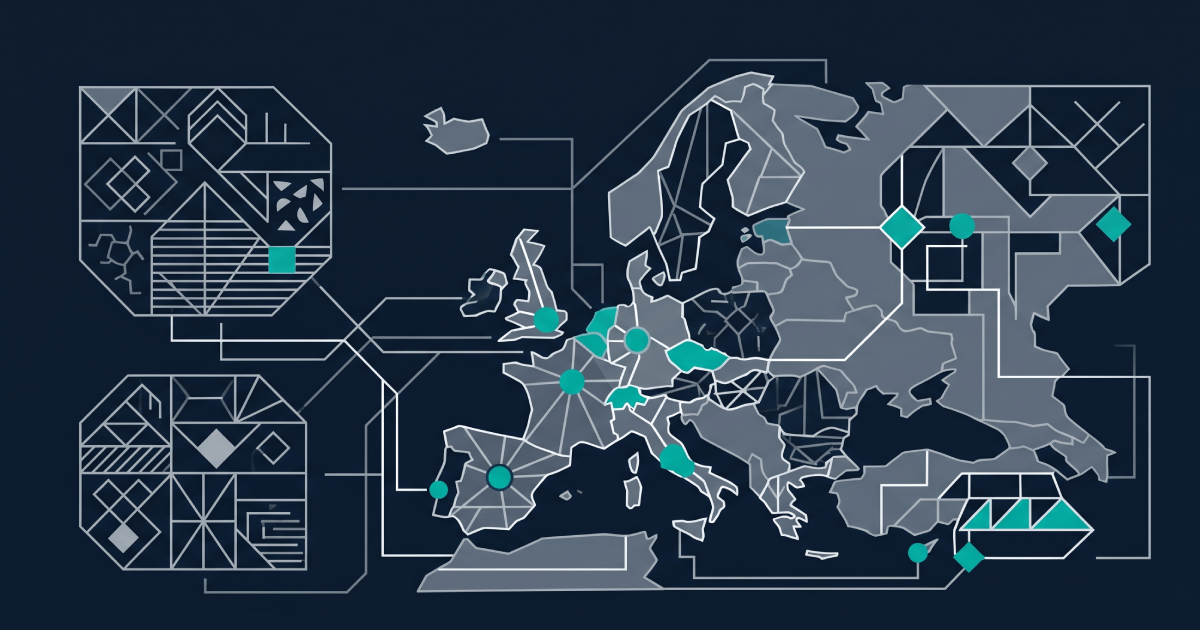
UKGC requirements are the most prescriptive. The Licence Conditions and Codes of Practice (LCCP) impose specific technical obligations: customer interaction must be triggered by behavioural markers, affordability checks require real-time financial data, and self-exclusion must propagate across all channels (including mobile) within 24 hours. The September 2022 updates to remote technical standards added requirements around game design transparency and fair terms presentation that directly affect mobile UI implementation.
MGA‘s Player Protection Directive requires a different set of controls. Cool-off periods, reality checks, and session time limits must be configurable per player and enforceable at the platform level. The technical standard also mandates that RNG certification evidence be available on request, which means your game integration layer needs to track and surface provider certification data.
Gibraltar’s framework adds its own nuances, particularly around data residency and financial reporting.
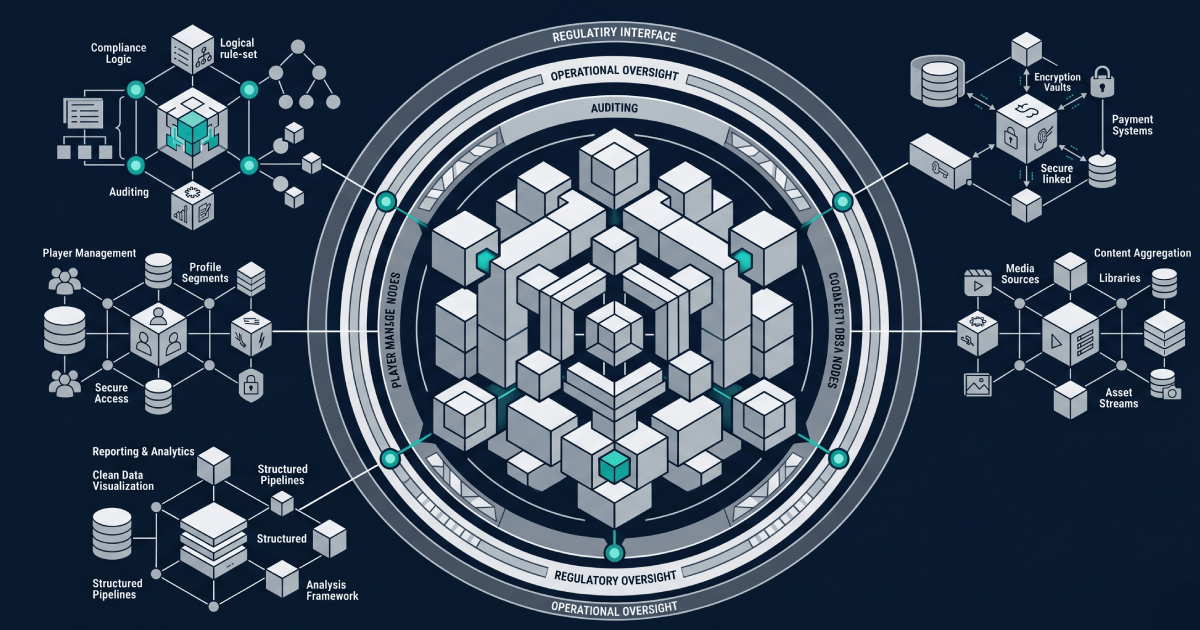
The engineering challenge is building a compliance layer that can accommodate all three (and future jurisdictions) without requiring a rewrite for each market. This means:
Abstracting responsible gaming controls behind a configuration interface, so adding a new jurisdiction’s requirements is a data change rather than a code change. Implementing event-driven audit logging that captures every player interaction relevant to compliance. Building KYC/AML as a modular pipeline where identity verification providers, document checks, and PEP/sanctions screening can be swapped or layered per jurisdiction.
Age verification is a useful example of why modularity matters. In the UK, you need to verify age before a player can deposit or play. In Malta, verification must complete within 72 hours of registration. In some US states, geolocation verification must happen continuously during a session. A hardcoded verification flow can’t accommodate this variance. A pipeline architecture with jurisdiction-specific rules can.
Partnering with Jadex for Your Next Mobile Platform
Enterprise operators in regulated markets face a specific set of challenges that generalist development agencies don’t understand. The intersection of high-performance mobile engineering, multi-jurisdiction regulatory compliance, and the commercial realities of iGaming requires a partner with deep domain expertise.
Jadex brings that expertise, with experience delivering for tier-one operators under UKGC, MGA, and GGC frameworks. The approach is collaborative and technically grounded: architecture decisions are made jointly with your engineering leadership, trade-offs are discussed openly, and timelines reflect reality rather than sales targets.
If you’re evaluating a platform migration, a move from white-label to bespoke, or a ground-up mobile build, the next step is a technical scoping session. Not a sales call. A working session where your team and ours examine your current architecture, regulatory obligations, and commercial objectives to determine what the right platform strategy actually looks like.
Frequently Asked Questions
Latest from our blog
Insights & Perspectives
Our insights explore the intersection of technology, commercial strategy and disciplined execution across complex digital environments.