Custom Sportsbook Development: Engineering for Performance, Compliance & Scale
Most operators hit the same wall around year three of a white-label agreement: the platform can’t absorb a new regulatory requirement without a six-month vendor roadmap dependency, the revenue-share model is eating into margins that should fund growth, and the “flexible API layer” promised during procurement turns out to be a thin wrapper over a monolithic core. This article breaks down the architecture, cost structure, and regulatory engineering behind custom sportsbook development, giving you the technical specifics to evaluate whether a bespoke build makes sense for your operation.










White-label platforms exist for a reason. They compress time-to-market to weeks rather than months. They bundle licensing support, payment integrations, and a functioning betting engine into a single contract. For operators entering a new market to test demand before committing capital, that trade-off can make sense.
The problems emerge when the operator outgrows the platform. And most tier-1 operators do.
Vendor lock-in manifests in predictable ways. The platform controls your player data, often behind proprietary schemas that make migration painful and expensive. Your product roadmap is subordinate to the vendor’s, which means your highest-priority feature competes with every other operator on their client roster. Revenue-share models that look reasonable at £2M monthly GGR become a serious drag at £20M. And the customisation ceiling, the one the sales team assured you was “very high,” turns out to be cosmetic: theming, banner placement, maybe some bonus rule configuration. Not architectural.
The real question isn’t build vs. buy in the abstract. It’s about where you are on the operator maturity curve. If you’re pre-revenue or testing a new jurisdiction with uncertain demand, a white-label platform is a rational choice. If you’re a mid-tier or tier-1 operator running multi-brand, multi-jurisdiction deployments with specific product differentiation requirements, you’re paying a compounding tax on someone else’s architecture.
Custom sportsbook development doesn’t eliminate complexity. It shifts that complexity from commercial dependency to engineering ownership. That’s a trade-off worth making only if your organisation has the capability, or the right development partner, to manage it.
Results Are Designed, Not Hoped For
Clear Objectives. Tangible Outcomes.
Well engineered software is only part of the equation. True impact comes from aligning technology with commercial intent from the outset.
We define success early, measure consistently and refine continuously to ensure every product delivers meaningful and sustained value.

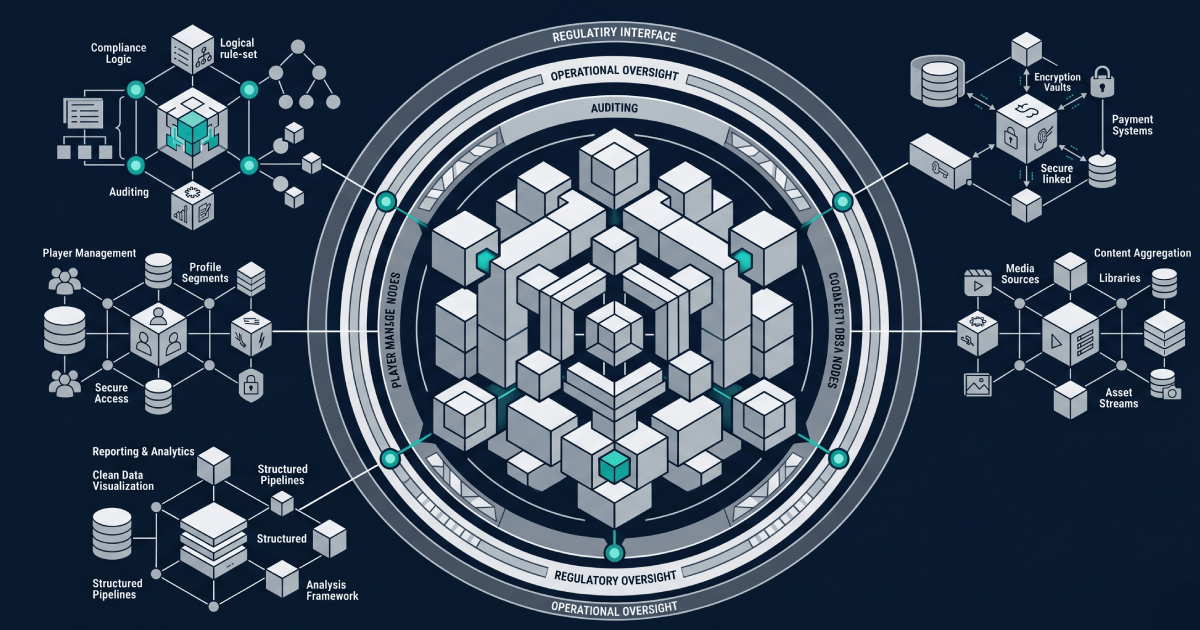
Deconstructing the Modern Sportsbook Technology Stack
Technology choices in sportsbook development are driven by specific constraints, not framework popularity.
Backend: The betting engine and wallet service demand concurrency handling and fault tolerance. Erlang/OTP remains a strong choice for these components (it was designed for telecom systems with similar requirements). Go offers comparable concurrency with a larger talent pool. .NET Core is common in the industry, particularly among operators with Microsoft-system investment. Avoid choosing a backend language based on what’s trending on Hacker News. Choose based on your team’s existing expertise and the specific performance characteristics of each module.
Database Layer: PostgreSQL handles the transactional workload (bets, wallet operations, player accounts) well. It supports ACID compliance, which is non-negotiable for financial transactions. Redis or similar in-memory stores handle odds caching, session management, and real-time leaderboard/state data where speed matters more than durability. Some operators use Cassandra or ScyllaDB for high-write event logging where the access pattern is append-heavy and the data volume is large.
Message Queues & Event Streaming: Kafka or equivalent handles the event backbone: odds updates flowing from feed providers, bet placement events propagating to risk and settlement services, player activity events streaming to compliance monitoring. This is the nervous system of the platform. Getting the event architecture right early prevents expensive refactoring later.
Cloud Infrastructure: AWS, GCP, and Azure all support regulated iGaming workloads, though availability zone selection matters for data residency requirements. Containerised deployments (Kubernetes) give you the scaling flexibility to handle traffic spikes during major sporting events without over-provisioning baseline infrastructure. Some jurisdictions require on-premises or specific data centre locations, which constrains your cloud strategy.
Microservices vs. Modular Monolith: The industry default has swung toward microservices, but be honest about the operational overhead. A team of 15 engineers managing 40 microservices will spend more time on inter-service communication, distributed tracing, and deployment orchestration than on features. A modular monolith with well-defined domain boundaries, designed for eventual decomposition, is often the pragmatic starting point. You can extract services (PAM, betting engine, payments) as each reaches the complexity threshold where independent deployment and scaling provides clear value.
AI/ML: The honest framing here is that most operators don’t have the data infrastructure to support production ML workloads. Before investing in an AI personalisation engine or predictive risk model, verify that your event pipeline reliably delivers clean, structured data with consistent schemas, that you have sufficient historical depth for training (12+ months of granular player behaviour data), and that you have the engineering capacity to maintain models in production. The value is real, but the prerequisites are non-trivial.
Compliance isn’t a feature you bolt on. It’s an architectural concern that influences database schema design, event pipeline architecture, and API contract definitions.
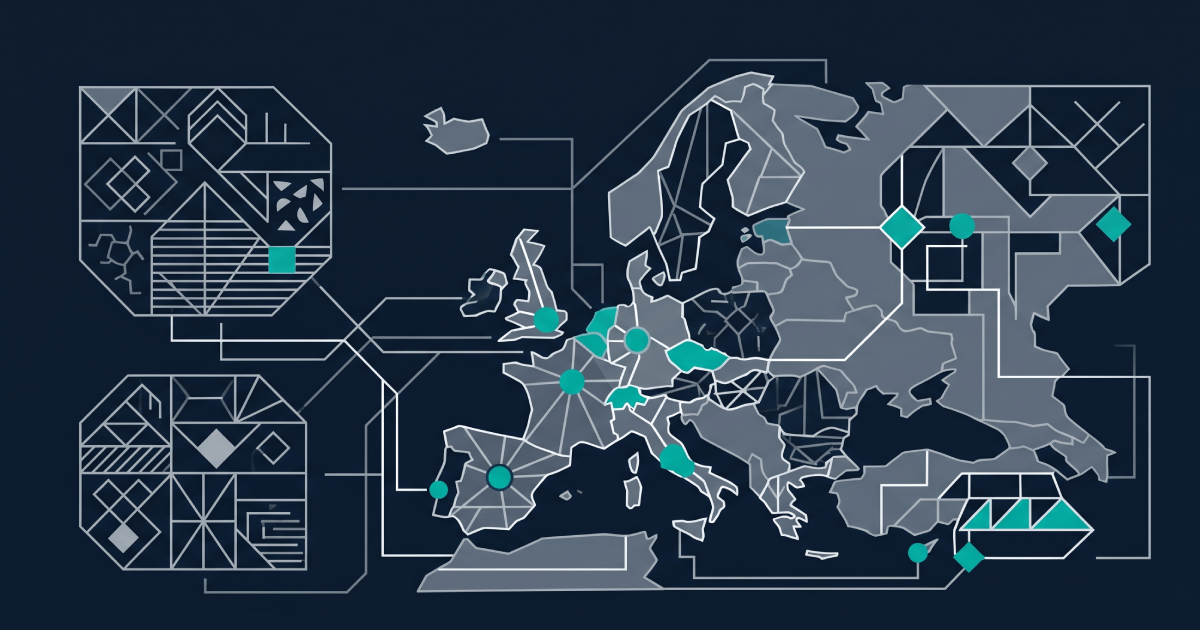
UKGC: The most prescriptive regime. The Licence Conditions and Codes of Practice (LCCP) require: source of funds checks integrated into the deposit flow with configurable thresholds, a single customer view across all brands in your group (which means your PAM must support cross-brand identity resolution), interaction logging for responsible gaming triggers (time on site, deposit velocity, loss thresholds), and self-exclusion integration with GAMSTOP‘s API. The 2023 White Paper’s affordability check requirements add further complexity: your platform needs to support frictionless and enhanced checks at different financial thresholds, with configurable rules that will likely change as the Gambling Commission refines its approach.
MGA: Requires a Remote Gaming Server (RGS) hosted in or routed through MGA-approved data centres. The technical requirements specify minimum system uptime, data retention periods, and player fund segregation. Your wallet architecture must support regulatory holds and segregated player funds in a way that’s auditable.
US Markets (state-by-state): Each state regulator has distinct technical standards. Some require on-premises server presence, specific certification bodies (GLI, BMM), real-time reporting feeds to regulatory systems, and geo-location verification with specified accuracy levels (typically using a combination of IP, GPS, Wi-Fi, and cell tower triangulation). Multi-state deployment means your platform must support per-state configuration of betting limits, permitted bet types, tax calculations, and reporting formats without forking your codebase.
Technical Implementation: Build compliance as configurable policy engines, not hardcoded logic. A jurisdiction configuration layer that controls deposit limits, KYC trigger thresholds, permitted markets, tax rates, and reporting schedules per jurisdiction means you can enter a new market by adding configuration rather than writing new code. This is easier to describe than to implement well, but it’s the right architectural target.
Audit trails matter more than you expect during a regulatory review. Every state-changing operation (bet placement, settlement, wallet transaction, KYC status change, responsible gaming interaction) should produce an immutable, timestamped event record. Store these in append-only data stores and ensure they’re queryable for the retention periods each jurisdiction requires (typically 5-7 years).
Is a Custom Sportsbook Platform Your Next Strategic Move?
The decision comes down to three questions.
First: are you at a scale where the annual cost of your current platform (including revenue share and opportunity cost of roadmap dependency) exceeds what you’d spend on engineering and infrastructure for a custom build? If yes, the financial case is clear.
Second: does your product strategy require capabilities that your current platform architecturally cannot support? Real-time personalisation, proprietary risk models, cross-brand player views, or jurisdiction-specific compliance features that your vendor deprioritises. If yes, you’re paying for a platform that’s actively limiting your growth.
Third: do you have, or can you build or partner to get, the engineering capability to own and operate a custom platform? This is the constraint most operators underestimate. Owning a platform means owning its uptime, its security posture, its compliance certifications, and its evolution.
If your answers lean toward custom development, the next step isn’t a sales call. It’s a technical scoping exercise: documenting your jurisdictional requirements, integration environment, migration constraints, and performance targets with enough specificity to produce a credible architecture and TCO model. That’s the conversation worth having.
Frequently Asked Questions
Latest from our blog
Insights & Perspectives
Our insights explore the intersection of technology, commercial strategy and disciplined execution across complex digital environments.