Branded Casino-as-a-Service: A Strategic Framework for Operators
Most operators evaluating platform strategy this quarter face the same tension: the white-label model they launched on three years ago now constrains every decision they make, from compliance adaptation to feature velocity. This article lays out a framework for evaluating Branded Casino-as-a-Service (CaaS) as a distinct architectural and commercial model, covering technical components, real cost structures, regulatory implications, and the due diligence questions that actually matter when selecting a provider.








The traditional white-label casino model was built for a different era. You got a templated frontend, a shared backend, a bundled game library, and a revenue share agreement that locked you into someone else’s roadmap. For operators entering a new market quickly with minimal capital, it worked. For anyone trying to build a differentiated brand or adapt to the pace of UKGC or MGA regulatory change, it became a liability.
Branded Casino-as-a-Service is the structural evolution of that model. It retains the core proposition of a turnkey solution (core technology, game content, payment integrations, regulatory scaffolding) while solving the problems that made traditional white-labels untenable for serious operators.
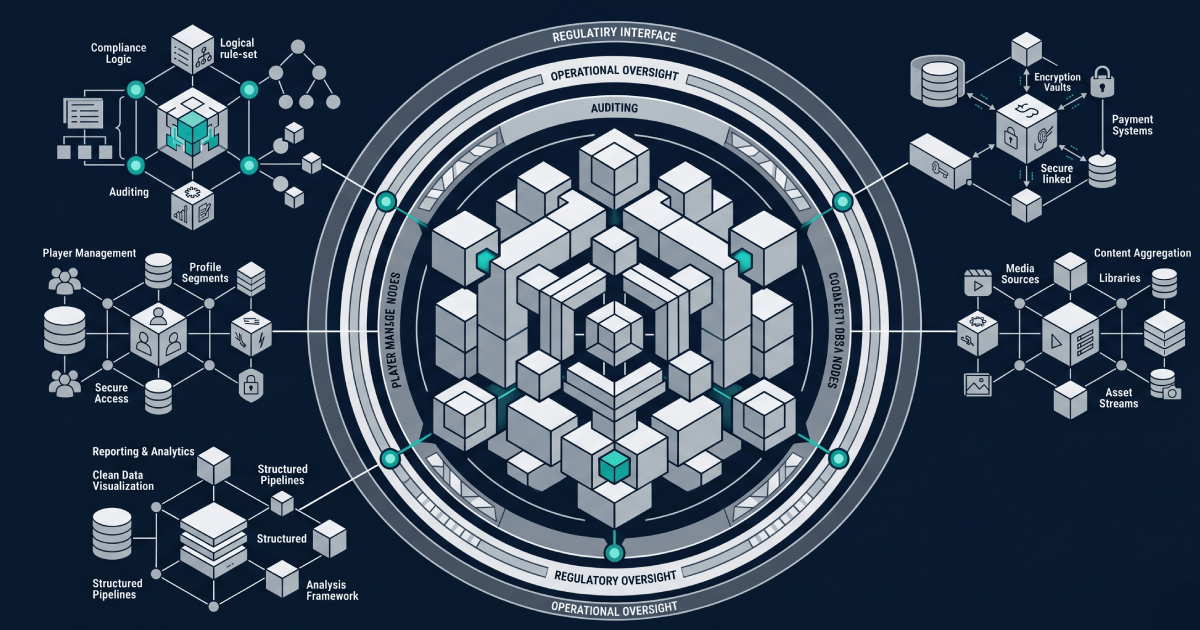
The distinction matters at the architecture level. A proper CaaS platform provides modular infrastructure where components can be swapped, extended, or overridden. You’re not just placing a logo on a shared instance. You’re operating on a platform where your wallet service, CRM layer, bonus engine, and compliance tooling can be configured (and in some cases replaced) independently. The backend serves your brand, not the other way around.
The build vs. buy framing is too binary for most operators in regulated markets. The real question is: which components do you need to own, which do you rent, and where does the boundary sit? CaaS, done properly, lets you answer that question per component rather than making a single all-or-nothing bet.
A custom platform build in a regulated market takes 12 to 24 months before a single player registers. That’s assuming your team has done it before. A CaaS deployment can put you live in 4 to 8 weeks, depending on the complexity of your jurisdictional requirements and the extent of frontend customization.
That speed advantage is real, but it carries a caveat that most vendor pitches omit: rapid deployment on a rigid platform creates a different kind of technical debt. You’re live in six weeks, but eighteen months later you’re paying to work around architectural decisions someone else made. The CRM doesn’t expose the event hooks you need for your retention model. The bonus engine can’t support the promotional mechanics your commercial team designed. The wallet service doesn’t emit the real-time transaction streams your AML monitoring requires.
The strategic case for CaaS only holds if the platform is genuinely modular. Otherwise you’ve traded one form of technical debt (legacy custom code) for another (vendor lock-in disguised as convenience).
Cost comparison is worth grounding in ranges. A custom platform build for a single jurisdiction typically runs £2M to £5M in development cost before licensing fees. A CaaS deployment sits in the £50k to £200k setup range, with ongoing revenue share. The gap is obvious. What’s less obvious is the three-to-five year TCO once you factor in revenue share compounding against GGR growth, the cost of customization requests that fall outside the provider’s standard offering, and the engineering effort required to integrate your own systems around the edges.
Neither model is universally cheaper. The right answer depends on your growth trajectory, your regulatory footprint, and how much of the platform you need to control.
Results Are Designed, Not Hoped For
Clear Objectives. Tangible Outcomes.
Well engineered software is only part of the equation. True impact comes from aligning technology with commercial intent from the outset.
We define success early, measure consistently and refine continuously to ensure every product delivers meaningful and sustained value.

Branding & Customization: Avoiding the ‘Cookie-Cutter’ Casino
The “just slap your logo on it” era of white-label is over, but the degree of actual customization available varies enormously across CaaS providers.
At minimum, you should expect full control over visual identity: colour palette, typography, imagery, logo placement, and marketing page layouts. Most modern CaaS platforms deliver this through a theming layer that sits on top of a shared component library. You’re changing the skin, not the skeleton.
The more important question is how deep customization goes below the visual layer. Can you modify the registration flow to match your brand’s onboarding philosophy? Can you restructure the lobby taxonomy to reflect your content strategy rather than the provider’s default categorization? Can you implement custom gamification mechanics (tournaments, missions, loyalty tiers) that go beyond what the platform offers out of the box?
Where we see operators get burned: they invest in brand design, launch a visually distinct site, then discover that the user journey, promotional mechanics, and player communication cadence are identical to every other operator on the same platform. Players notice. Retention suffers. The brand equity you built in acquisition gets eroded by a generic post-registration experience.
The due diligence question here is specific: ask the provider to show you three live operator brands running on their platform. If you can’t tell the difference beyond the colour scheme, that tells you everything about the customization ceiling.
Revenue share is the commercial model that makes CaaS accessible and, over time, the mechanism that makes it expensive.
The typical structure: an upfront setup fee (£50k to £200k depending on customization scope) plus an ongoing percentage of Gross Gaming Revenue. Revenue share ranges sit between 15% and 40% of GGR. That range is wide because it depends on jurisdiction, volume commitments, and the extent to which the provider is also supplying the gaming licence.
At £1M monthly GGR, a 25% revenue share means £250k per month flowing to the platform provider. At that scale, the annual cost exceeds what a well-scoped custom build would have cost in year one. This is the inflection point where operators start questioning whether they should migrate to an owned platform.
The honest framing: revenue share works in your favour during the growth phase when GGR is low and you’re benefiting from infrastructure you didn’t have to build. It works against you once you hit scale. The decision to stay or migrate should be modelled against projected GGR growth over three to five years, not current revenue.
Additional cost factors that often surface post-contract:
Customization fees. Anything outside the standard configuration typically carries development charges billed at the provider’s rates, not yours.
Payment processing margins. Some CaaS providers take a spread on payment processing in addition to revenue share.
Game provider minimums. Certain content deals carried by the platform include minimum guarantee commitments passed through to the operator.
Compliance adaptation costs. When UKGC or MGA introduce new requirements, the platform absorbs the development cost, but the timeline is the provider’s, not yours.
Model the full TCO before signing. And get the customization pricing schedule in writing.
At Jadex Consulting, we don’t sell a CaaS platform. We help operators make the right platform decision, then we help them execute on it.
Our work with tier-one operators like Rank Group, Mecca, and DAZN has given us direct experience with the architectural, regulatory, and commercial trade-offs that define platform decisions in regulated markets. We’ve seen what breaks at scale. We’ve negotiated with the providers you’re evaluating. We know which promises hold up in production and which ones don’t survive first contact with UKGC‘s compliance expectations.
What we bring to a CaaS evaluation: technical due diligence on platform architecture, commercial negotiation support on revenue share and contract terms, regulatory gap analysis against your target jurisdictions, and migration planning if you’re moving off an existing platform while keeping operations live. That last piece (live migration without player disruption) is where most operators underestimate complexity and where our experience is most directly applicable.
We also work with operators launching new iGaming ventures from scratch, guiding them from market selection through provider evaluation to operational launch. The framework in this article reflects the same process we run with clients, adapted to be useful without a consultant in the room.
Making the Right Platform Decision for Your Brand
The CaaS model works. For operators entering regulated markets with limited capital and a need for speed, it remains the most viable path to launch. For operators at scale, it becomes a cost structure that needs periodic reassessment against the build alternative.
The evaluation criteria that matter: architectural modularity, API depth, multi-jurisdiction deployment capability, commercial terms that include volume-based step-downs and data portability, and a compliance adaptation track record measured in days, not quarters.
What doesn’t matter: the length of the game provider list, the number of logos on the provider’s website, or claims about AI capabilities that the underlying data infrastructure can’t support.
Choose based on operational reality. Test the platform. Talk to existing operators on it. Model the three-to-five year TCO against your growth projections. And if you want a team that’s done this evaluation dozens of times across UKGC, MGA, and GGC-regulated operations, we’re here to work through it with you.
Latest from our blog
Insights & Perspectives
Our insights explore the intersection of technology, commercial strategy and disciplined execution across complex digital environments.