iGaming Technology for Retail Operators: The Omnichannel Engineering Blueprint
Most retail betting operators already know they need a digital channel. The harder question is how to architect one that doesn’t create two separate businesses operating under the same brand, with disconnected player data, separate wallets, and compliance frameworks that duplicate effort without reducing risk. This article lays out the engineering decisions that determine whether an omnichannel build actually works or simply adds operational complexity: the platform architecture, the integration layer between physical and digital, the vendor evaluation framework, and the compliance engineering that UKGC and MGA timelines demand.










The retail betting estate still holds real advantages. Brand recognition. Physical trust. A customer base that self-identifies by walking through the door. But that customer base is aging, and the players who do walk in expect to continue their session on a phone fifteen minutes later. The convergence isn’t aspirational. It’s a retention problem that shows up in declining visit frequency and stagnant spend-per-head metrics.
The mistake most retail operators make is treating digital as a bolt-on. A white-label sportsbook deployed alongside the existing retail operation, sharing a brand but sharing nothing else. Two separate player databases. Two CRM systems. Two compliance reporting pipelines. The customer sees one brand; the engineering team manages two platforms with separate technical debt trajectories.
A genuine omnichannel approach means a single customer identity that spans the counter, the SSBT, the website, and the native app. A wager started in-store can be cashed out on mobile. A loyalty point earned online applies at the counter. This sounds straightforward from a product perspective. From an engineering perspective, it requires deliberate architectural decisions made early and maintained under pressure.
The operators who have done this well didn’t start with channel strategy decks. They started with data architecture. Where does the canonical player record live? Which system is authoritative for balance? How do you reconcile transactions across systems that were never designed to talk to each other? Those questions shape every downstream decision.
If you’re evaluating platform providers rather than building from scratch, the feature comparison matrix in the RFP response tells you almost nothing useful. Every vendor ticks every box. The differentiation is in the architecture underneath.
Headless vs. monolithic. Ask where the frontend ends and the backend begins. A monolithic platform where the UI is coupled to the backend means every market-specific frontend change requires vendor involvement. A headless architecture with documented APIs lets your team own the player experience independently. If the vendor can’t articulate their API surface without scheduling a follow-up call, that’s your answer.
Multi-tenancy model. If you run multiple brands or plan to enter additional jurisdictions, ask how the platform handles tenant isolation. Shared database with tenant ID filtering is cheaper but creates compliance risk when regulators want data residency guarantees. Separate deployments per tenant are more expensive but give you clean jurisdictional separation.
Scalability evidence. “We scale horizontally” means nothing without specifics. What’s the peak concurrent user count they’ve sustained in production? What’s the transaction throughput on the wallet service? Can they show load test results rather than architecture diagrams?
Regulatory support depth. Does the platform encode regulatory requirements at the configuration level or the code level? If UKGC changes the affordability check threshold, is that a config change your compliance team can make, or a development sprint? Can you map the specific LCCP conditions to platform capabilities without gaps?
Pricing model. Revenue share models (typically 10-20% of GGR) look attractive at low volumes but become punitive as you scale. Fixed-fee licensing with usage-based infrastructure costs gives more predictable economics past the breakeven point. Run the TCO model at your projected Year 3 volumes, not your launch volumes.
Integration capability. How many game providers are live in production (not “supported” or “available”)? What’s the average integration timeline for a new provider? Can you talk to an operator reference who has actually completed a POS integration through their platform?
Security and fraud architecture. Where does fraud detection sit in the request lifecycle? Pre-transaction (blocking suspicious activity before the wallet is affected) or post-transaction (flagging for review after the fact)? Pre-transaction is harder to build but prevents losses rather than merely detecting them.
Results Are Designed, Not Hoped For
Clear Objectives. Tangible Outcomes.
Well engineered software is only part of the equation. True impact comes from aligning technology with commercial intent from the outset.
We define success early, measure consistently and refine continuously to ensure every product delivers meaningful and sustained value.

Engineering for Compliance: Managing UKGC, MGA, and Beyond
Compliance is an architectural concern, not an operational afterthought. The tightening of UKGC requirements around affordability checks, the upcoming changes to customer interaction requirements, and MGA‘s changing technical standards all demand that your platform can adapt to regulatory change without major re-architecture.
Responsible gaming controls (deposit limits, loss limits, session time limits, reality checks, self-exclusion) must be enforced consistently across every channel. If a player self-excludes online, that exclusion must propagate to every SSBT and POS terminal in your estate in real time. This is trivial if you have a centralized PAM with real-time channel communication. It’s a significant compliance risk if your retail and digital systems maintain separate player states.
KYC and AML requirements demand that identity verification, source of funds checks, and enhanced due diligence flagging operate against the same player record regardless of channel. For omnichannel operators, this means the KYC state machine must handle scenarios unique to retail: a player who provides ID documents in-store needs that verification to unlock their digital account immediately.
UKGC’s Social Responsibility Code Provision 3.4.1 requires that customer interactions are triggered by behavioural indicators. The engineering implication: you need a real-time event processing pipeline that can evaluate player behaviour against configurable thresholds and trigger interventions (automated messages, cooldown periods, account restrictions) without manual review. The rule definitions will change. Your architecture must accommodate rule changes without code releases.
Data protection adds another layer. GDPR and the Data Protection Act 2018 require that player data collected in-store and online is processed under a consistent legal basis, with consent management and data subject access request fulfilment that works across both channels. If your retail POS stores player data in a separate system from your digital platform, DSARs become an expensive manual process.
For operators targeting multiple jurisdictions, the platform must support per-jurisdiction configuration of responsible gaming limits, KYC requirements, game availability restrictions, and tax calculation rules. MGA requires different reporting granularity than UKGC. Gibraltar GGC has its own technical testing requirements. The platform should encode these as jurisdiction-specific configuration, not as branching logic scattered across the codebase.
Designing Your Future-Proof iGaming Platform with Jadex
AI-driven personalization in iGaming is a real capability with genuine commercial value, but only when the data infrastructure prerequisites are met. Most operators who attempt ML-based personalization discover that their data is siloed, inconsistent, or insufficiently granular to train useful models. The recommendation engine that promises real-time next-best-offer needs a feature store populated by a unified event stream with sub-second latency. If your current architecture can’t deliver that event stream, the ML model is irrelevant.
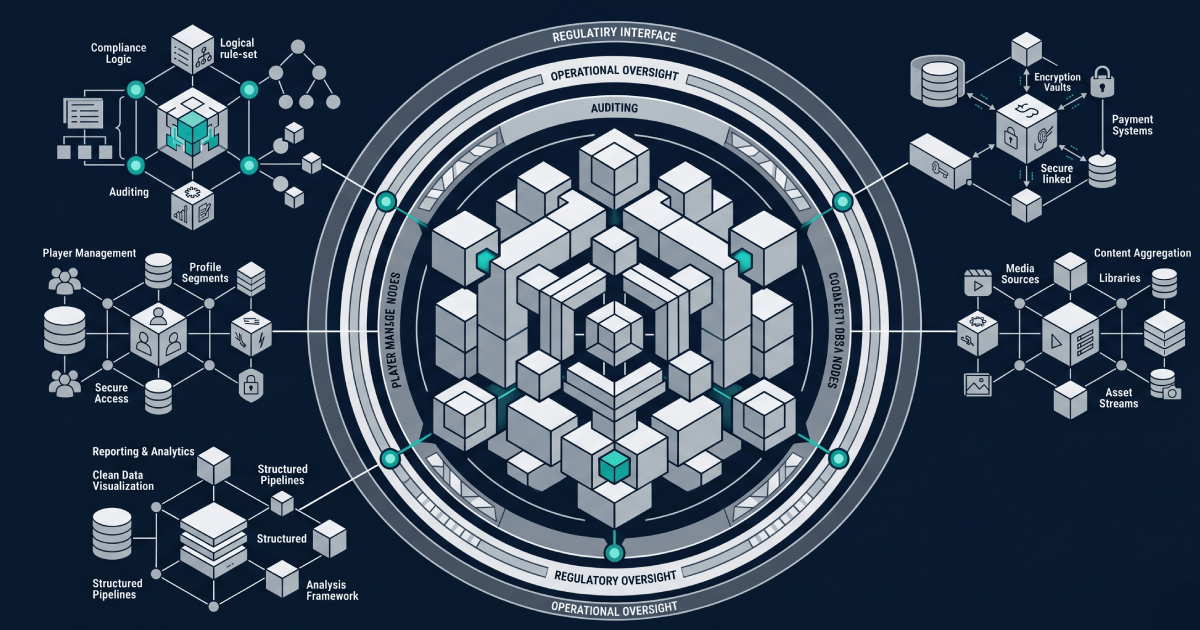
The path from a fragmented retail and digital operation to a unified omnichannel platform is an engineering programme that touches every layer of the stack: identity, wallet, payments, compliance, CRM, game integration, and frontend delivery. It requires architectural decisions made with full awareness of the regulatory constraints, commercial objectives, and operational realities specific to your business.
Jadex Consulting operates at this intersection of platform engineering, regulatory awareness, and commercial pragmatism. The work with operators including Rank Group and platforms supporting DAZN Bet reflects the reality that these projects demand deep iGaming domain expertise combined with enterprise engineering discipline. Not vendor selection advice from a slide deck, but hands-on technical architecture and delivery capability.
The question for your next quarter isn’t whether to build an omnichannel platform. It’s whether your current technical architecture and vendor relationships can get you there within the regulatory timelines you’re working against.
Frequently Asked Questions
Latest from our blog
Insights & Perspectives
Our insights explore the intersection of technology, commercial strategy and disciplined execution across complex digital environments.