
Gibraltar’s regulatory framework is tightening. The 2025 Gambling Act is coming. And if you’re evaluating jurisdictions for a new licence, a platform migration, or a multi-jurisdiction expansion, Gibraltar’s specific technical and compliance requirements will shape your architecture decisions for the next three to five years. We’ve helped operators build and migrate platforms within GRA-regulated environments, and this is what the decision actually looks like from the engineering layer.
Why Gibraltar Remains a Premier iGaming Jurisdiction
Gibraltar punches well above its weight. A territory of roughly 34,000 people generates a disproportionate share of global iGaming activity, and that didn’t happen by accident. The Gibraltar Regulatory Authority has spent two decades building a licensing regime that balances operator-friendliness with genuine regulatory credibility, and the result is a jurisdiction that tier-one operators continue to choose over alternatives.
Three factors matter most at the decision-making level.
First, telecommunications infrastructure. Gibraltar invested early in fibre connectivity and data centre capacity. For operators running real-time wallet services, live dealer feeds, and high-frequency sportsbook pricing, latency and uptime are non-negotiable. Gibraltar’s infrastructure supports this. You won’t find the connectivity challenges that plague some emerging jurisdictions.
Second, the skilled workforce. Gibraltar has a concentrated pool of iGaming professionals with deep domain expertise across compliance, platform engineering, and operations. This concentration means you can staff a compliance function or a platform team locally without the 12-month recruitment cycles you’d face building from scratch in a less established hub.
Third, regulatory reputation. A Gibraltar licence carries weight with payment processors, banking partners, and downstream regulators. If you hold a GRA licence and also operate under UKGC or MGA frameworks, the regulatory alignment reduces friction. Payment acquirers, in particular, treat Gibraltar-licensed operators more favourably than those from lower-tier jurisdictions. That directly affects your payment acceptance rates and, by extension, your revenue.
None of this makes Gibraltar the right choice for every operator. It’s expensive relative to Curaçao or Anjouan. The compliance bar is high. But if you’re building for regulated European markets, particularly the UK, it remains one of the strongest positions you can operate from.
The Gibraltar Operator Environment: Key Players and B2B Providers
The operator roster in Gibraltar tells you a lot about the jurisdiction’s positioning. Entain (formerly GVC Holdings), 888 Holdings, and Bet365 all maintain significant operations here. These are large, publicly listed groups running multi-brand, multi-jurisdiction platforms at scale. Their continued presence is a strong signal about the jurisdiction’s commercial viability.
But the B2B layer is equally important if you’re making platform decisions. Companies like Bragg Gaming Group operate Gibraltar-licensed B2B businesses, providing game aggregation and content delivery to operators across regulated markets. The B2B licence category matters because it defines the integration architecture available to you. If your aggregator or platform provider holds a Gibraltar B2B licence, your compliance chain for content delivery is cleaner.
Over 30 licensed operators currently call Gibraltar home. What’s notable is the diversity: you’ll find pure sportsbook operations alongside casino-first brands and hybrid operators. The licensing framework accommodates different business models without forcing operators into a one-size-fits-all structure.
For CTOs evaluating build vs. buy, the Gibraltar B2B system offers a practical middle ground. You can source game content through licensed aggregators, handle payments through Gibraltar-based PSPs, and build your proprietary PAM and wallet layers on top. That hybrid approach avoids the full vendor lock-in of a white-label while keeping you within a well-understood compliance perimeter.
Working with Gibraltar’s Regulatory Framework: From the 2005 Act to 2025
The Gambling Act 2005 has been the backbone of Gibraltar’s iGaming regulation for nearly two decades. It established the GRA, set licensing standards, and defined the player protection requirements that operators must meet. If you’ve operated under UKGC or MGA frameworks, the 2005 Act’s requirements will feel familiar in principle, though the specifics differ.
Here’s what most operators get wrong: they treat the 2005 Act as static. It isn’t. The GRA has layered on guidance notes, technical standards, and enforcement actions that have materially changed what compliance looks like in practice. AML requirements have tightened. Responsible gaming obligations have expanded. Source of funds checks are more granular. Your platform needs to accommodate these changes, not just the baseline Act.
The bigger shift is the Gibraltar Gambling Act 2025, which is expected to modernise the entire regulatory framework. While final details are still being confirmed, the direction is clear: stronger consumer protection, enhanced AML/CFT provisions, more prescriptive technical standards, and greater enforcement powers for the GRA.
For platform teams, the 2025 Act is the planning horizon that matters. If you’re building or migrating a platform now, you should be designing for the incoming requirements, not the current ones. Retrofitting compliance into a platform that was architected for the 2005 Act’s requirements will cost you two to three times what it would cost to build it in from the start. We’ve seen this pattern repeatedly: operators who optimise for today’s rules and then spend 18 months and seven figures adapting when the framework changes.
The practical implication is that your architecture needs to be modular enough to absorb regulatory change without a full re-platform. That means separating your compliance logic from your core transaction processing. It means treating KYC, AML, and responsible gaming as independently deployable services rather than hardcoded business rules in a monolithic backend.
The Role of the Gibraltar Regulatory Authority (GRA)
The GRA is a hands-on regulator. Unlike some jurisdictions where the licensing authority is largely administrative, the GRA actively monitors operators, conducts technical audits, and enforces compliance. They review your technical infrastructure, your data handling, your RNG certification, your AML procedures, and your responsible gaming implementation.
What this means in practice: expect the GRA to ask detailed questions about your architecture during the licensing process and during ongoing supervision. They want to understand how your wallet service handles transaction sequencing. They want to see that your self-exclusion system operates in real time, not via a batch process that runs overnight. They want evidence that your AML monitoring is automated and that alerts are actioned within defined SLAs.
The GRA’s approach to enforcement has also sharpened. Licence conditions are specific, and breaches carry real consequences. If your platform can’t produce the audit data the GRA requests, or if your responsible gaming interventions don’t trigger at the thresholds you’ve documented, you have a problem.
For technical leaders, the key takeaway is that GRA compliance isn’t a checkbox exercise. It’s an ongoing operational requirement that your platform must support natively. Your logging, your event tracking, your player interaction history: all of it needs to be queryable, auditable, and available on demand. If your current platform makes it hard to produce compliance reports without manual data extraction, that’s a red flag.
Securing a Gibraltar iGaming Licence: A Step-by-Step Overview
The GRA licensing process is deliberately rigorous. It filters out underfunded, unprepared, or technically weak applicants. If you’re coming from a jurisdiction with a lighter touch, recalibrate your expectations.
The process broadly works as follows. You submit a detailed application covering your business plan, financial projections, corporate structure, and key personnel. The GRA conducts due diligence on all beneficial owners and senior management. This isn’t cursory: expect background checks, source of wealth verification, and cross-referencing against sanctions lists and PEP databases.
The technical assessment is where many applicants stumble. The GRA evaluates your platform infrastructure, your hosting arrangements, your disaster recovery procedures, your data protection practices, and your game fairness (RNG certification). If you’re using a third-party platform, the GRA still holds you accountable for the technical standards it meets.
Anti-Money Laundering compliance is a focal point. Your application must demonstrate a fully documented AML programme with risk assessments, customer due diligence procedures, transaction monitoring capabilities, and suspicious activity reporting workflows. The GRA expects automation here. Manual-only AML processes won’t pass muster for any meaningful transaction volume.
Responsible gaming gets equal scrutiny. Your application needs to detail how players set deposit limits, how self-exclusion is implemented and enforced across your brands, how you identify problem gambling behaviour, and what interventions you deploy. The GRA wants to see that these aren’t just policy documents but are actually embedded in your platform’s functionality.
Timeline-wise, expect the process to take several months. Six months is realistic for a well-prepared applicant. Twelve months or more if your documentation is incomplete or your technical infrastructure needs remediation. The application fee and ongoing licence costs are meaningful but competitive relative to other tier-one jurisdictions.
One point we always raise with operators: don’t start the application process until your platform can actually demonstrate compliance. The GRA doesn’t issue conditional licences while you finish building your KYC integration. Have your stack ready.
Tax and Financial Incentives for Gibraltar Operators
Gibraltar’s tax regime is one of the primary reasons operators choose the jurisdiction, and it’s worth understanding the specifics rather than relying on generalisations.
Corporate tax in Gibraltar is levied at 12.5% on profits accruing in or derived from Gibraltar. For iGaming operators, there’s also a gambling duty that applies specifically to gaming revenue. The rates and structure of this duty have been a competitive advantage for Gibraltar relative to the UK (where the 21% Remote Gaming Duty applies) and some other European jurisdictions.
The absence of VAT, capital gains tax, and wealth tax also factors into the total cost of ownership calculation for operators considering where to base their operations.
But here’s the nuance: tax advantages only matter if you can maintain substance. The GRA and Gibraltar tax authorities expect genuine economic presence. You need real employees, real office space, and real operational activity in Gibraltar. Brass-plate arrangements won’t survive scrutiny, and the GRA has become more aggressive about substance requirements in recent years. Factor local staffing costs, office leases, and operational overhead into your financial model. The net tax benefit is still attractive for most operators, but it’s not as simple as applying a headline rate to your projected GGR.
Economic Impact and Gibraltar’s Enhanced Reputation
The iGaming sector accounts for a substantial portion of Gibraltar’s GDP. Thousands of jobs depend on it, and the government understands the symbiotic relationship between regulatory quality and economic output. This alignment means the regulatory framework evolves to support the industry, not strangle it.
A significant recent development is Gibraltar’s work to address its position on the Financial Action Task Force grey list. Being grey-listed increased AML compliance burdens for operators and complicated relationships with banking partners. Gibraltar has invested heavily in strengthening its AML/CFT framework, and the trajectory is toward removal from the grey list. For operators, this matters because it directly affects your ability to maintain banking relationships and process payments efficiently.
If Gibraltar achieves FATF compliance and is removed from the grey list (which is the current direction of travel), it materially strengthens the value proposition of a GRA licence. Your compliance costs don’t go away, but the friction with financial institutions decreases, and the reputational benefit of the jurisdiction improves.
Platform Architecture for Gibraltar: Compliance by Design
This is where regulatory theory meets engineering reality, and where most operators either get it right early or pay for it later.
Operating under the GRA means your platform architecture must treat compliance as a first-class concern, not an afterthought bolted onto a generic iGaming platform. Here’s what that looks like at the system design level.
Wallet services. Your wallet needs to support real-time transaction logging with immutable audit trails. The GRA expects you to reconstruct any player’s complete transaction history on demand. If your wallet architecture uses eventual consistency patterns without a clear reconciliation layer, you’ll struggle to meet this requirement. We’ve seen operators running dual-write patterns to separate hot wallets (for real-time gameplay) from compliance-grade ledgers (for regulatory reporting). It’s more complex to build, but it solves the key tension between transaction throughput and audit completeness.
Player Account Management (PAM). Your PAM system is the compliance nerve centre. KYC status, document verification, AML risk scoring, responsible gaming settings, self-exclusion flags, marketing consent: all of this lives in or connects through PAM. If your PAM is a monolithic component inside a white-label platform you don’t control, your ability to respond to GRA requirements is constrained by your vendor’s roadmap. That’s a real risk.
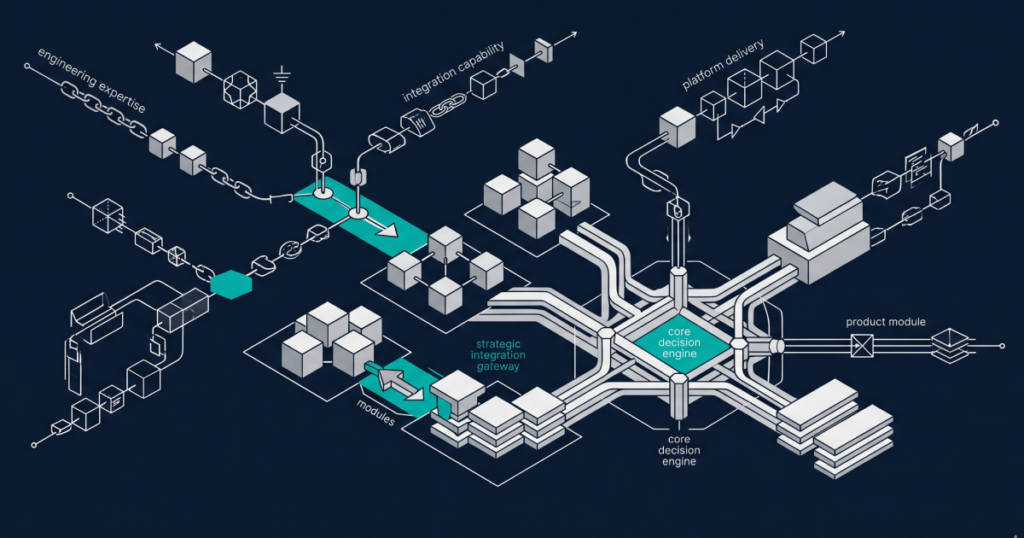
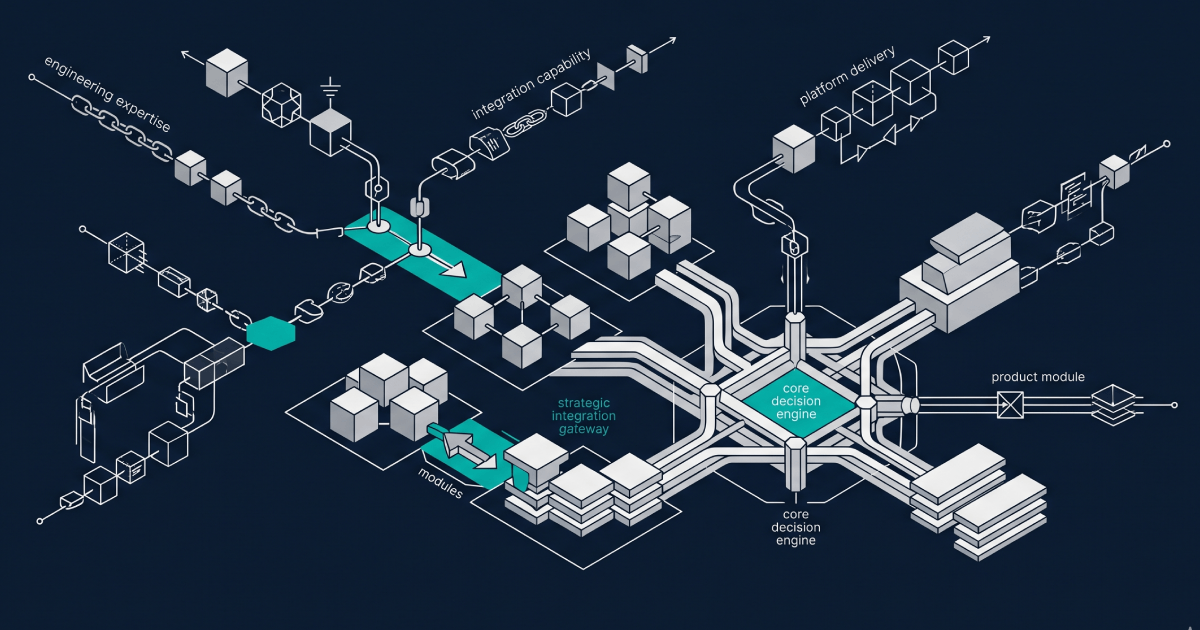
API-first integration layer. Game aggregators, payment gateways, KYC/AML providers, responsible gaming tools: all of these need clean, well-documented API integrations. An API-first architecture lets you swap providers without re-platforming. Given the pace of regulatory change in Gibraltar (and the incoming 2025 Act), the ability to replace a KYC provider or add a new AML screening service without a three-month integration project is a genuine competitive advantage.
Technical debt. If you’re carrying legacy components, particularly around player data storage, transaction logging, or responsible gaming implementation, Gibraltar’s regulatory requirements will expose them. The GRA’s technical audits are thorough enough that workarounds and duct-tape solutions get flagged. We’ve worked with operators who entered the GRA licensing process only to discover that their platform couldn’t produce the required data formats without manual intervention. That’s an expensive lesson when you’re mid-application.
Multi-jurisdiction deployment. If you’re operating under both GRA and UKGC licences (a common combination), your architecture needs to handle jurisdiction-specific rules without duplicating your entire stack. This is where a microservices approach to compliance logic pays dividends. Each jurisdiction’s rules are encapsulated in their own service, consuming events from the same core platform but applying different business logic. It’s more work upfront, but it prevents the scenario where a UKGC rule change forces you to regression-test your entire Gibraltar deployment.
The honest assessment: building a platform that’s compliant by design for Gibraltar is harder and more expensive than operators typically estimate at the outset. Budget 20-30% more for compliance-related engineering than your initial scoping suggests. The cost of getting it wrong, whether through failed licensing, enforcement action, or an expensive re-platform, is substantially higher.
Partnering for Success in the Gibraltar iGaming Market
Launching or migrating a platform within the GRA’s framework is not a project you want to learn on. The intersection of regulatory specificity, technical complexity, and operational risk requires experience with tier-one regulated environments.
At Jadex Consulting, we’ve built and migrated platforms for operators in GRA, UKGC, and MGA-regulated markets. We understand the engineering decisions that make the difference between a platform that passes regulatory scrutiny and one that creates ongoing compliance overhead. Our work with operators like Rank Group and Mecca has given us direct experience with the architectural patterns that work in practice, not just in vendor pitch decks.
The specific challenges we help operators address: migrating from a white-label to a proprietary platform without operational downtime. Designing wallet and PAM architectures that satisfy GRA audit requirements from day one. Building integration layers that support rapid onboarding of new game aggregators and payment providers. Reducing time-to-market for new features by decoupling compliance logic from core product development.
If you’re evaluating Gibraltar as a jurisdiction, or if you already hold a GRA licence and your platform is struggling to keep pace with tightening requirements, the architectural decisions you make now will determine your compliance costs and operational flexibility for the next three to five years. We’d rather help you make those decisions before the application is submitted than help you fix them after an enforcement notice arrives.
About the Author: admin