The CTO’s Playbook for iGaming Platform Modernisation
Every quarter your platform doesn’t modernise, the cost of eventually doing so goes up. Regulatory changes compound. Technical debt accrues interest. Your competitors ship features while you’re still negotiating roadmap slots with your white-label provider. This article lays out the architectural decisions, migration strategies, and cost frameworks you need to move from “we should probably modernise” to an actual, defensible plan with a timeline and a risk profile your board can evaluate.










A platform built in 2015 was architected for a different regulatory environment, a different traffic profile, and a different player expectation around latency. The problem isn’t that it was badly built. The problem is that the assumptions baked into its architecture no longer hold.
Start with performance. A monolithic platform handling both pre-match and in-play betting through the same request pipeline will buckle during a Premier League Saturday. Players don’t wait. A bet placement that takes four seconds instead of sub-second doesn’t just degrade experience; it’s a missed bet. That’s revenue you never see, and you often can’t even measure the loss because the player bounced before the transaction was attempted.
Then there’s the security surface. Legacy systems often run on outdated frameworks with known vulnerabilities. Patching them is a manual, high-risk process because the test coverage is thin and the deployment pipeline (if one exists) wasn’t built for frequent releases. Every month you defer those patches, you’re accumulating risk that a single penetration test will surface, and your regulator will want to know why it wasn’t addressed.
The maintenance cost curve is the most insidious part. Year one, you’re spending maybe 15-20% of your tech budget on keeping the lights on. By year five, it’s 40-50%, and your best engineers are spending their time on workarounds instead of features. You’re paying senior salaries for infrastructure babysitting.
The commercial trap with white-label platforms is different but equally painful. You’re locked into a revenue share model that made sense when you were small but now extracts millions annually. Your feature requests sit in a shared backlog alongside every other operator on that platform. Your differentiation options are limited to theming and bonus configuration. And when the UKGC publishes new responsible gaming requirements, you’re waiting for your vendor to prioritise compliance work that directly affects your licence.
None of this is theoretical. If you’re running a platform older than five years in a UKGC or MGA-regulated market, you’re almost certainly experiencing some combination of these pressures right now.
In-play betting now accounts for the majority of sportsbook revenue for most operators. The technical requirements are unforgiving.
When odds shift on a live match, your platform needs to receive the update from the feed provider, recalculate exposure, update the odds displayed to the player, validate any pending bet placements against the new odds, and settle resolved markets. All of this in milliseconds, under load, with consistency guarantees on the wallet.
Batch processing architectures can’t do this. You need a real-time stream processing layer.
Apache Flink has emerged as the strongest option for stateful stream processing in this context. Unlike simpler pub/sub systems, Flink maintains state across events, which matters when you’re calculating rolling exposure windows or detecting suspicious betting patterns across a session. It handles exactly-once processing semantics, which is non-negotiable when money is involved. Apache Kafka serves as the event backbone, providing durable, ordered event streams that Flink consumes.
The practical challenge is that running Flink at production scale requires specific expertise. The operational burden of managing Flink clusters, handling checkpoints, and tuning parallelism is real. Managed offerings from cloud providers reduce this but add cost and sometimes lag behind the open-source release.
Fraud detection and AML monitoring benefit directly from this same infrastructure. Pattern detection across bet placement events, deposit/withdrawal sequences, and session behaviour becomes possible in real time rather than in overnight batch jobs that surface suspicious activity 12-24 hours after it occurred. For UKGC-regulated operators, the ability to intervene in real time on responsible gaming triggers (spend velocity, session duration, loss-chasing patterns) is moving from “nice to have” to “the regulator expects it.”
The data pipeline you build for in-play betting is the same pipeline that feeds your ML models for personalisation and your compliance systems for regulatory reporting. One investment, multiple returns.
Results Are Designed, Not Hoped For
Clear Objectives. Tangible Outcomes.
Well engineered software is only part of the equation. True impact comes from aligning technology with commercial intent from the outset.
We define success early, measure consistently and refine continuously to ensure every product delivers meaningful and sustained value.

Anatomy of a Modern iGaming Platform Architecture
Three architectural principles matter here: cloud-native infrastructure, microservices decomposition, and API-first integration. Each comes with genuine trade-offs.
Cloud-native means your platform is designed to run on elastic infrastructure from the ground up. Not “we moved our VMs to AWS.” Actual cloud-native: containerised workloads orchestrated by Kubernetes, auto-scaling policies tied to real metrics (bet placement latency, not just CPU), and infrastructure defined as code so you can spin up a complete environment for a new jurisdiction in hours rather than weeks. The trade-off is operational complexity. Kubernetes is not simple. You need platform engineering capability in-house or from a partner, and you need to invest in observability tooling (Prometheus, Grafana, distributed tracing) or you’ll be debugging distributed systems blindfolded.
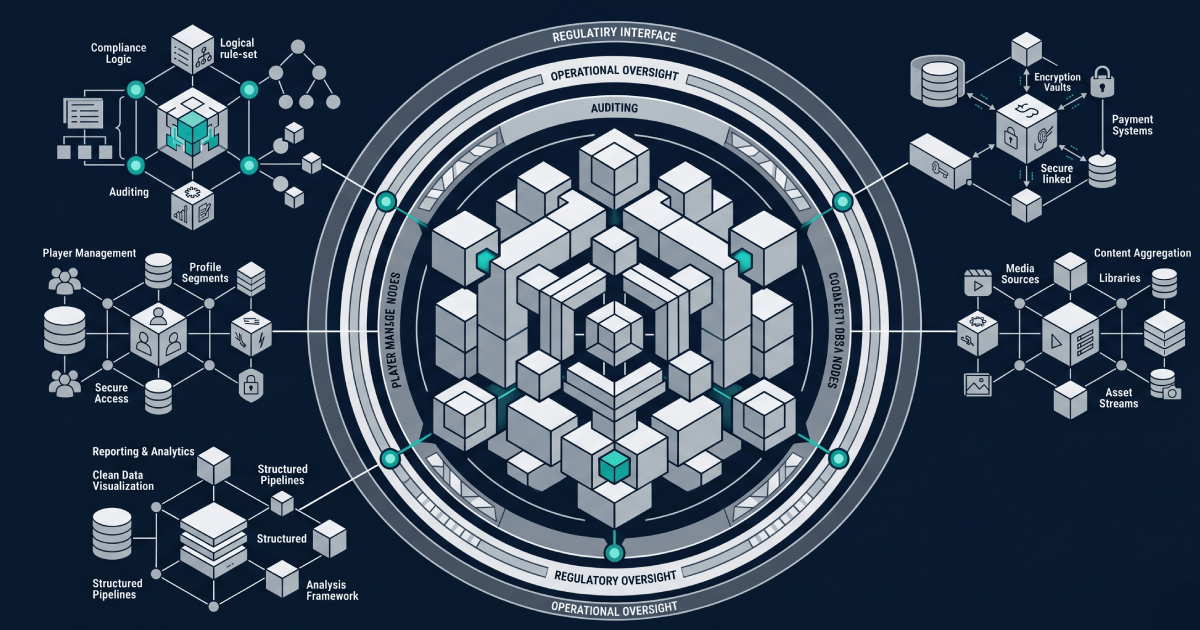
Microservices decomposition means breaking your monolith into independently deployable services aligned to business domains: wallet service, bet placement, player account, bonus engine, KYC/AML, game aggregation, CMS. Each service owns its data, scales independently, and can be deployed without coordinating with every other team.
The honest caveat: microservices done badly are worse than a well-structured monolith. If you decompose too aggressively, you end up with a distributed monolith where every request fans out across 15 services and your latency is worse than before. Start with the domains where independent scaling and deployment actually deliver value. Bet placement and wallet services are obvious candidates. Your CMS probably isn’t.
API-first design means every capability your platform exposes is accessible through well-documented, versioned APIs. This is how you integrate with game aggregators, payment gateways, KYC providers, and odds feeds without building bespoke point-to-point integrations that become unmaintainable. An API gateway handles authentication, rate limiting, and routing. Your game aggregator integration complexity drops substantially when providers plug into a standardised integration layer rather than each requiring custom adapter code deep in your platform.
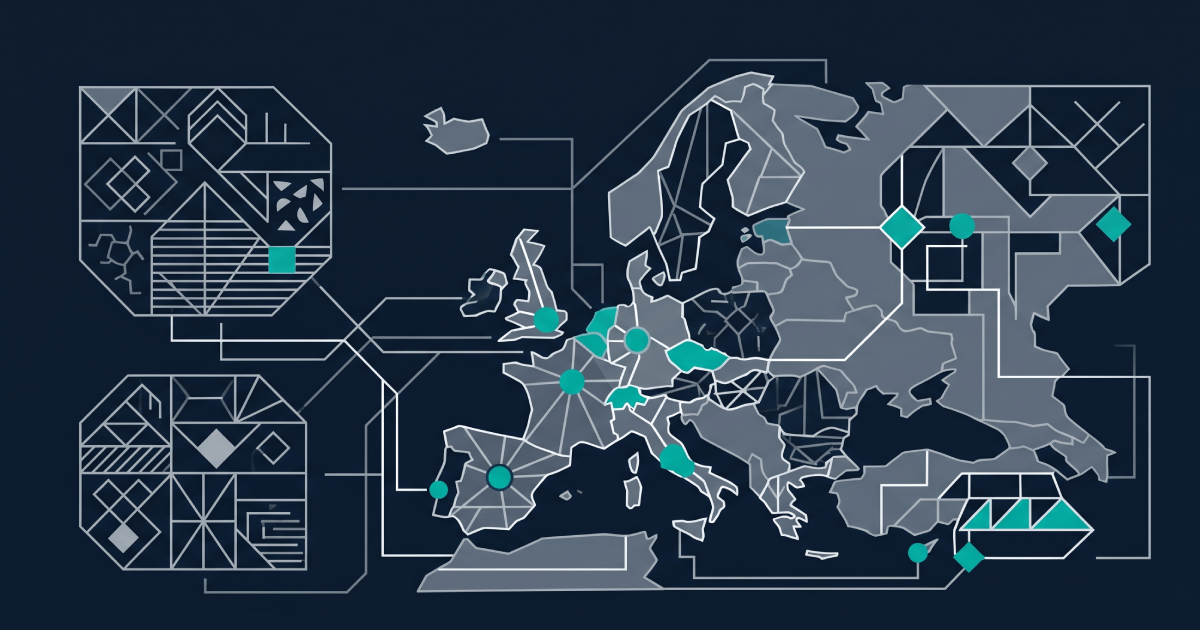
The architecture should support multi-brand and multi-jurisdiction deployment from the start. This means externalising configuration (jurisdiction-specific rules, brand theming, feature flags) rather than hardcoding it. A single deployable platform that can present as multiple brands across multiple regulatory regimes, with compliance rules injected per-jurisdiction, is the target state. Achieving this retroactively on a monolith is brutal. Designing for it in a new architecture is straightforward if you commit to it early.
Building the Future-Proof iGaming Operation
A modern platform isn’t a destination. It’s an operational posture.
The value of the architecture described here isn’t just that it solves today’s problems. It’s that it gives you the structural flexibility to respond to problems you can’t predict yet. When the UKGC introduces new requirements next year, you update a service, not the entire platform. When a new market opens in Latin America with different regulatory requirements, you deploy with jurisdiction-specific configuration, not a fork of your codebase. When your data science team wants to deploy an ML model for real-time personalisation, the event streaming infrastructure and feature stores are already in place.
The operators who will dominate the next five years aren’t the ones with the biggest marketing budgets. They’re the ones whose platforms can absorb regulatory change in weeks rather than quarters, ship new products faster than competitors can scope them, and deliver player experiences that perform under real-world conditions on real-world devices.
The decision isn’t whether to modernise. The decision is whether you do it on your timeline, with a plan, or whether you’re forced into it by a regulatory mandate, a competitor’s feature velocity, or a platform failure during the biggest sporting event of the year. One of those scenarios gives you control over the outcome.
Frequently Asked Questions
Latest from our blog
Insights & Perspectives
Our insights explore the intersection of technology, commercial strategy and disciplined execution across complex digital environments.