White Label Gambling Software: A Strategic Analysis for Operators
Most operators outgrow their white label platform within 18 to 36 months. The commercial model that looked attractive at launch (low capex, fast go-live, someone else’s licence) becomes the constraint that prevents differentiation, erodes margin, and creates architectural dependencies that are expensive to unwind. This analysis breaks down the white label model’s components, commercials, and regulatory implications, then provides a framework for deciding when and how to move beyond it.










A white label gambling software package gives you a functional online casino or sportsbook without building anything. The provider supplies the platform, the game integrations, payment processing, a CRM layer, and often a sublicence under their own regulatory approval. You supply the brand, the marketing budget, and the players.
The pitch is straightforward: you’re live in weeks instead of months, you spend $100k to $200k upfront instead of $1M+, and you’re operating under someone else’s compliance infrastructure while you learn the market.
For a first-time operator entering a single jurisdiction, or a land-based brand testing digital waters, this is a rational choice. The speed to market is real. The reduced upfront investment is real. The ability to validate a market hypothesis without committing to a multi-year engineering programme is genuinely valuable.
But this is a trade. You are exchanging sovereignty for speed. Every month you operate on a turnkey casino platform, you accumulate dependency on someone else’s architecture, someone else’s roadmap, and someone else’s commercial terms. The question isn’t whether white label gambling software works. It does, for a specific operator profile at a specific stage. The question is whether the trade remains favourable over a three to five year horizon. For most operators with growth ambitions, it doesn’t.
White label providers are often vague about pricing in their marketing. Here’s what the actual commercial structures look like.
Setup fee. Ranges from $50k to $200k depending on the provider, the jurisdiction, and the level of initial customisation. This covers platform provisioning, brand skinning, and initial configuration.
Monthly platform fee. $5k to $20k per month for hosting, maintenance, and access to the provider’s support team. Sometimes bundled into the revenue share calculation, sometimes separate.
Revenue share. Calculated as a percentage of gross gaming revenue (GGR) or sometimes net gaming revenue (NGR, which is GGR minus bonuses and provider fees). Typical ranges are 25% to 50% of GGR. Some providers use a tiered model where the percentage decreases as GGR increases. Others use a flat rate.
The revenue share is where the economics become uncomfortable at scale. An operator generating €500k in monthly GGR at a 35% revenue share is paying €175k per month, or €2.1M per year, to the white label provider. At that volume, a custom platform’s total engineering cost (build plus run) is typically lower, and you own the asset.
Game provider fees. These flow through the white label provider’s aggregation layer. You’re paying the provider’s negotiated rate with each game supplier, plus the provider’s margin on top. In a direct integration model, you negotiate directly and eliminate the intermediary margin.
Payment processing fees. Similarly intermediated. The provider’s PSP relationships set your processing costs. In some cases, you can bring your own PSP, but the integration still runs through the provider’s infrastructure.
The calculation that matters: model your GGR growth over 36 months, apply the revenue share, add the fixed costs, and compare that total to the capex and opex of a bespoke build. Include the cost of migration when you eventually outgrow the white label, because most operators do.
Results Are Designed, Not Hoped For
Clear Objectives. Tangible Outcomes.
Well engineered software is only part of the equation. True impact comes from aligning technology with commercial intent from the outset.
We define success early, measure consistently and refine continuously to ensure every product delivers meaningful and sustained value.

The Regulatory Maze: Licensing and Compliance via Sublicence
The licensing convenience of a white label arrangement masks real complexity and risk.
Most white label providers offer sublicences under their own B2C licences, typically from jurisdictions like the MGA or Curaçao. This means the provider holds the licence, and you operate under their regulatory umbrella. For operators targeting UKGC-regulated markets, this gets harder. The UKGC requires the operating entity to hold its own licence in most commercial arrangements, and the compliance obligations (LCCP, customer interaction requirements, source of funds checks) fall on the licensee regardless of who provides the technology.
Here’s what operators consistently underestimate:
KYC and AML responsibility doesn’t transfer. Even operating under a sublicence, you bear regulatory responsibility for your customer due diligence, anti-money laundering monitoring, and responsible gambling interventions. If the white label provider’s KYC tooling is inadequate for the jurisdiction you’re operating in, that’s your problem with the regulator, not theirs.
Marketing compliance is yours. Advertising standards, bonus terms transparency, social responsibility messaging: the brand-facing obligations sit with you. The provider supplies the platform, not the compliance strategy.
Regulatory change velocity. UKGC, MGA, and GGC compliance requirements are tightening. The UKGC’s customer interaction guidance, the MGA’s player protection directives, upcoming changes to affordability checks: these translate into platform feature requirements. If the provider’s development team prioritises differently than your regulatory timeline demands, you’re exposed.
Sublicence revocation risk. If the provider loses their licence, your sublicence goes with it. Due diligence on the provider’s regulatory track record isn’t optional. It’s existential.
Multi-jurisdiction complexity. Each jurisdiction has specific technical requirements: geolocation, tax calculation, game availability restrictions, responsible gambling tool mandates. A white label platform that handles MGA requirements well may not have the configurability to meet UKGC or US state-level requirements without substantial customisation that the provider may not prioritise.
Operators targeting tier-one regulated markets (UK, select EU, regulated US states) need to assess whether the white label’s compliance infrastructure genuinely meets the regulatory standard, or whether it meets the minimum the provider can get away with.
Beyond the White Label: Planning Your Platform’s Evolution
The signals that it’s time to move are usually commercial before they’re technical. Revenue share costs exceeding what a custom build would cost to operate. Feature requests that have been on the provider’s backlog for quarters without movement. Regulatory requirements that demand platform changes the provider won’t prioritise. Multi-brand or multi-jurisdiction ambitions that the shared platform can’t support without extensive workarounds.
The migration path isn’t binary. A phased approach typically works better than a full cutover.
Start with data infrastructure. Get your player data, event streams, and transactional records flowing into your own warehouse. This gives you the foundation for proprietary analytics, ML model development, and CRM capability that doesn’t depend on the provider’s reporting layer.
Next, identify the services where provider dependency causes the most friction. For many operators, that’s the bonus engine, the CRM layer, or payment orchestration. Build or procure replacements for these services and integrate them alongside the white label platform through whatever API access you have.
The PAM and wallet migration comes last because it’s the most complex and the most risky. It requires a parallel running period where both systems process transactions, a reconciliation layer to ensure consistency, and a cutover plan that accounts for in-flight bonuses, pending withdrawals, and active sessions.
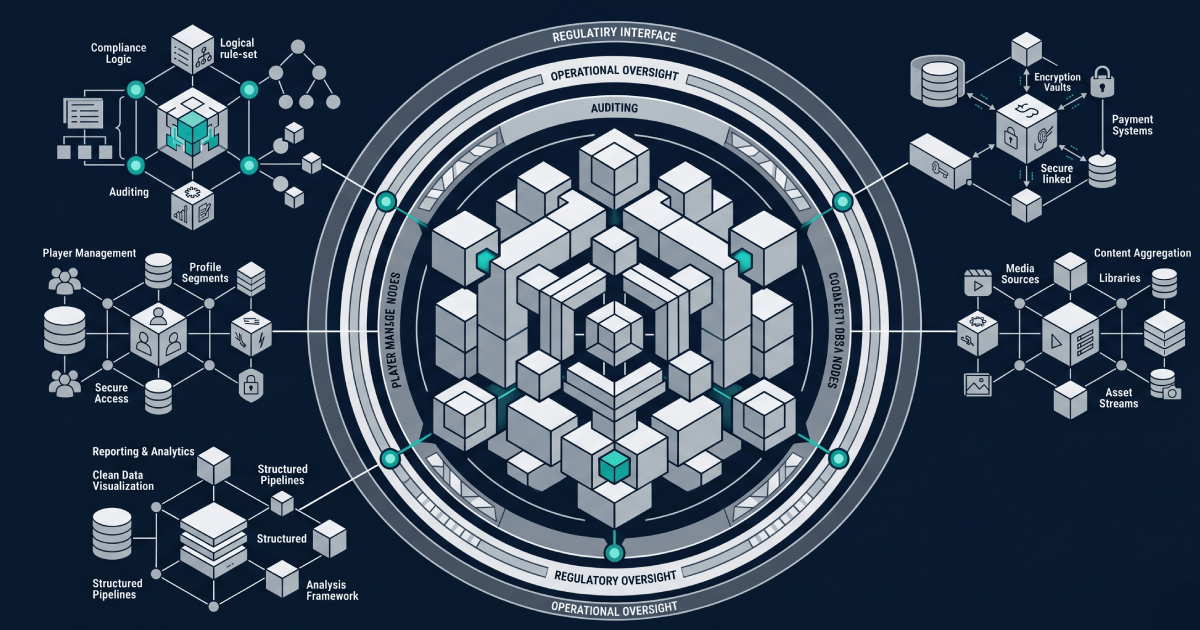
An enterprise iGaming platform built on microservices with clear domain boundaries (PAM, wallet, game aggregation, CRM, payments, responsible gambling) gives you the architectural flexibility to evolve each service independently. It’s more expensive to build. It’s more complex to operate. But it’s yours, and it scales with your ambitions rather than constraining them.
The white label model has a role. It gets operators into the market fast and at low initial cost. But platform strategy should account for what happens after launch. The operators who plan for the transition early, who structure their provider contracts with data portability and exit clauses, who start building internal engineering capability before they need it, are the ones who make the shift without the operational trauma that catches others off guard.
Your platform is the business. Treat the architecture decision accordingly.
Frequently Asked Questions
Latest from our blog
Insights & Perspectives
Our insights explore the intersection of technology, commercial strategy and disciplined execution across complex digital environments.