On This Page
- You're already late to this decision
- How to tell your platform has hit its ceiling
- The three paths, side by side
- What makes iGaming modernisation different
- Five criteria to pick your path
- The cost picture nobody models properly
- Managing migration risk on a live platform
- Choosing the right engineering partner
- FAQ
- How long does it take to rebuild an iGaming platform?
- What's the difference between migrating and extending a platform?
- When is it too late to extend a legacy iGaming platform?
- How do you migrate a live iGaming platform without disrupting revenue?
- How do I know which modernisation path is right for my platform?
- Next step
If you're staring down an iGaming platform modernisation decision, you've got three options on the table: rebuild from scratch, migrate to a new platform, or extend what you already have. Each one carries a different cost profile, a different risk surface, and a different long-term consequence. Picking between them on instinct is one of the most expensive mistakes an operator can make. This guide gives you a diagnostic framework to make the call properly.
You're already late to this decision
Most operators don't get here on a planned timeline. They get here after a trigger event. A failed release. A compliance gap papered over with a manual workaround. A competitor launching something the platform can't support. If that's familiar, you're not alone, and you're also not early. By the time the trigger lands, the cost of inaction has been compounding for months. Sometimes years.
The financial logic for moving is well documented. IBM research indicates that organisations modernising legacy systems can cut maintenance costs by up to 50% and recover up to 74% of their staff, hardware and software overhead. The real question isn't whether to modernise. It's which path fits your situation.
How to tell your platform has hit its ceiling
Before committing to anything, run your platform against four categories of signal.
Technical signals
Release cycles measured in weeks instead of days. Disproportionate engineering effort for incremental changes. Inability to plug in new game aggregators or payment providers without significant rework. If your senior engineers are spending most of their week maintaining undocumented legacy behaviour rather than building product, you're past the inflection point.
Commercial signals
Roadmap items getting cut because the platform can't support them. Vendor lock-in stopping you from differentiating. Infrastructure costs creeping up without matching gains in performance. These look like engineering problems. They're revenue problems with engineering symptoms.
Compliance signals
If new responsible gambling requirements or AML obligations can't be implemented at platform level, you have a serious issue. Regulatory changes met by manual workarounds rather than engineered solutions are compliance risk that an audit from the UKGC or MGA will eventually surface. Usually at the worst possible time.
Organisational signals
Key-person dependency on people who understand legacy quirks that exist nowhere in documentation. Engineering teams that have given up pushing back on technical debt because they've accepted it as permanent. Both tell you the platform has become an organisational constraint, not just a technical one.
The three paths, side by side
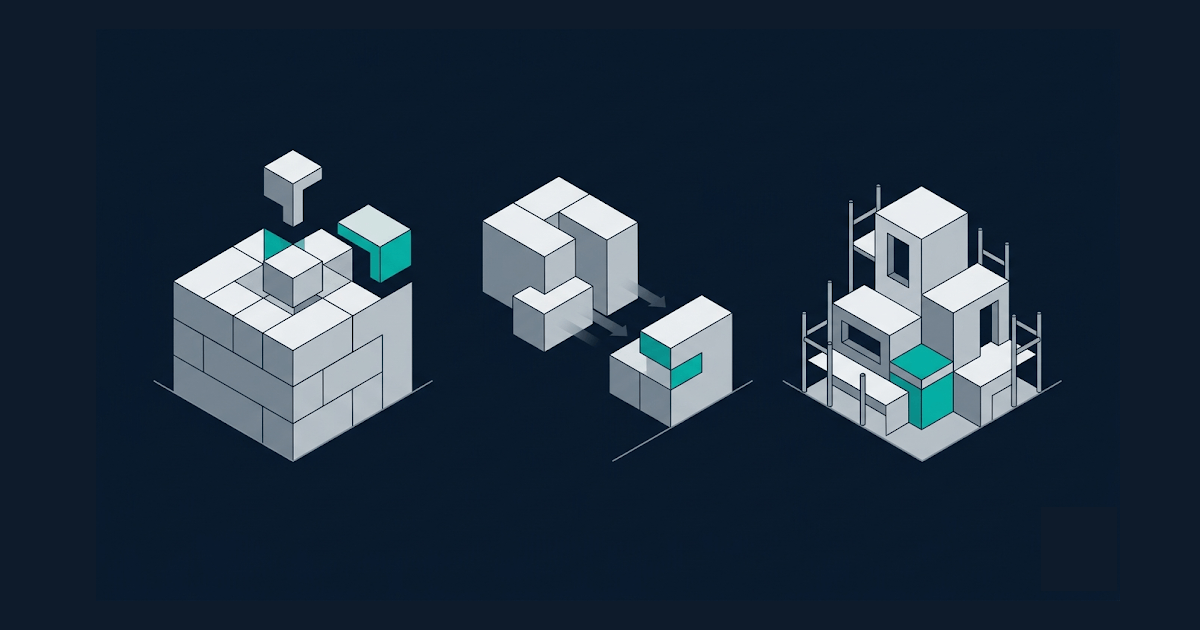
Before going into each path in detail, here's how they compare at a glance:

Here's the same comparison in detail:
| Path | Upfront Cost | Execution Risk | Long-Term Cost | Best When |
|---|---|---|---|---|
| Extend | Low | Low | High (debt compounds) | Foundation is sound; bottleneck is localised |
| Migrate | Medium-High | Medium | Medium | Structural constraints; clear roadmap ahead |
| Rebuild | High | High | Low | Ambition exceeds what any migration could deliver |
The extend path explained
Extending means adding capability to the existing platform without changing its core architecture. If the bottleneck is contained, like a payment integration layer, a bonus engine, or a reporting module, extending makes sense when the foundation underneath is genuinely sound. Lowest short-term risk, lowest upfront spend.
What it doesn't do is resolve structural debt, and it doesn't buy you unlimited time. Operators who extend when they should have migrated typically end up back at this decision inside 18 months, with a more constrained architecture and less runway than they started with.
The migrate path explained
Migration means moving from the existing platform to a new one, either a different vendor product or a custom replacement, while keeping the live platform running throughout. It addresses the root cause of platform constraint rather than its symptoms. Execution is more complex than extending, but you eliminate vendor lock-in, ongoing licence obligations, and the integration constraints that accumulate over time. For operators with a structurally limited platform and a clear product roadmap, migration is usually the right call.
The rebuild path explained
Rebuilding means replacing the platform from the ground up with new architecture: API-first, event-driven, composable, microservices-based. Built around your long-term requirements rather than adapted from a legacy foundation that no longer fits. We go deeper on this in our piece on the headless casino architecture trend.
Year 1 cost is highest. Execution risk is highest. But you get the highest long-term control, the lowest ongoing maintenance overhead, and the most architectural flexibility. It's the right path when the existing system is too constrained to migrate incrementally, or when your product ambition genuinely can't be supported by any migration route.
What makes iGaming modernisation different
The complexity in iGaming modernisation isn't generic enterprise complexity. Four things change the calculation in ways most generalist agencies underestimate.
Wallet service architecture is the single highest-risk component. Single wallet versus multi-wallet decisions carry compliance, scalability and player experience implications that have to be resolved before migration sequencing begins. Not during it.
Game aggregator dependencies create integration complexity that's routinely missed. Normalising game data across aggregators, managing RGS communication, maintaining session integrity through a migration: all of this requires iGaming-specific engineering experience. A team that hasn't done it before will discover the complexity mid-migration, which is the worst possible time to discover it.
KYC and AML obligations are data architecture decisions, not compliance checkboxes. They need to be designed into the new platform from day one. Retrofitting them after migration is expensive and creates audit exposure you don't want.
Responsible gambling tooling, deposit limits, self-exclusion, session timers, reality checks, has to stay fully operational throughout any migration. Both UKGC and MGA require continuous availability. Any approach that risks interruption to RG tools on a live platform isn't a viable migration strategy, full stop. For more on where RG tooling is heading, see our breakdown of responsible gambling technology trends.
These four dependencies are the main reason iGaming modernisation projects fail when they're led by teams without domain experience.
Five criteria to pick your path
Score each from 1 (low) to 5 (high):
- Technical debt severity — How constrained is the existing architecture? Can components be isolated, or is everything tightly coupled?
- Integration surface area — How many live aggregator, payment and KYC integrations depend on the platform's specific behaviour?
- Regulatory exposure — Are compliance obligations being met through engineered solutions, or duct tape?
- Commercial velocity — How many roadmap items are blocked, and what's the revenue cost of each quarter of delay?
- Team capability — Does the internal team have the capacity to support migration while keeping the live platform running, or does that need external resource?
Scoring guide:
- Below 12: candidate for a structured extend programme
- 12 to 18: migration territory
- Above 18: rebuild should be your default unless execution constraints make it undeliverable in the commercial window you're working with
The score gives you a defensible starting position. You can then pressure-test it against your specific architecture before committing.
The cost picture nobody models properly
The comparison that matters isn't Year 1 build cost versus Year 1 licence cost. It's five-year total cost of ownership across each path, including delayed product releases, competitive capability gaps, and the maintenance overhead that compounds on a constrained platform.
The extend path has the lowest upfront spend, but technical debt accumulates underneath. Right call only when the structural foundation is sound and the bottleneck is genuinely localised.
The migrate path costs more upfront in planning and execution, but eliminates vendor lock-in and ongoing licence or revenue share obligations. Year 2 onwards looks significantly better than staying on a constrained vendor platform.
The rebuild path carries the highest Year 1 cost and the lowest long-term maintenance overhead. Operators who only model upfront cost consistently underestimate what staying on a constrained platform actually costs over five years.
Managing migration risk on a live platform
The core principle of low-risk migration is parallel operation. Run the new platform alongside the existing one. Migrate player cohorts progressively rather than executing a single cutover. Start with lower-activity cohorts so the new platform can be validated under real conditions before the full player base moves across.
Data integrity is where things go wrong fastest. Player balances, transaction history, bonus state, responsible gambling records — all of it has to transfer with complete accuracy and a full audit trail. Rollback capability needs to be designed into the migration architecture from the start, not bolted on later. The ability to revert a cohort to the legacy platform if something breaks is a hard requirement on any live iGaming migration. It isn't optional.
Choosing the right engineering partner
If you're evaluating partners for iGaming platform modernisation, domain-specific experience is the filter that matters most. The complexity of wallet service design, game aggregator integration, KYC architecture and regulatory compliance is routinely underestimated by generalist development agencies. The consequences of that underestimation show up mid-migration, when the cost of correcting course is at its highest.
Two things to evaluate partners on:
Can they articulate the risks of each path, not just the benefits? A partner who only sells you on the upside isn't telling you what you need to hear.
Architecture ownership after delivery. You should own the codebase outright, with no ongoing dependency on the development partner to maintain or extend it. Lock-in to a delivery partner is just lock-in to a different vendor.
The right modernisation partner is one who'll tell you when extending is the correct short-term decision. Not one who defaults to rebuild because it's the bigger contract.
FAQ
How long does it take to rebuild an iGaming platform?
A full rebuild for a mid-market operator typically runs 12 to 18 months from architecture design to go-live, depending on integration complexity and regulatory scope. Enterprise-scale platforms with extensive aggregator and payment dependencies can run beyond 24 months.
What's the difference between migrating and extending a platform?
Extending adds capability to the existing architecture without replacing it. Migration moves the operator from the existing platform to a new one while keeping live operations running. Extension fixes localised bottlenecks. Migration addresses structural platform constraints.
When is it too late to extend a legacy iGaming platform?
When the cost of each incremental extension exceeds the value it delivers, or when compliance obligations can no longer be met through the existing architecture. At that point, migration or rebuild becomes the only commercially viable path.
How do you migrate a live iGaming platform without disrupting revenue?
Phased, cohort-based migration with parallel platform operation, designed rollback capability, and rigorous data integrity validation at each stage. Player session continuity and responsible gambling tool availability have to be maintained throughout.
How do I know which modernisation path is right for my platform?
Apply the five diagnostic criteria: technical debt severity, integration surface area, regulatory exposure, commercial velocity and team capability. Score each from 1 to 5. The total maps to a recommended path. A platform assessment run against your specific architecture and integration surface will validate that diagnosis before you commit.
Next step
If you want to apply this framework to your specific platform, request a platform architecture review with Jadex's iGaming engineering team. We'll validate your diagnostic score, pressure-test your path selection, and identify the highest-risk assumptions in your current modernisation thinking before they become live problems.
About the Author: admin

Related Posts
 iGaming Industry Trends 2026: A Platform and Strategy Guide for Operators