
A Gibraltar licence costs more and takes longer to obtain than most alternatives. That’s the point. The jurisdiction’s selectivity is precisely what makes it valuable, and understanding the full regulatory, financial, and technical picture before you apply will save you months of rework and hundreds of thousands in avoidable spend. This article breaks down the licence categories, fee structures, application process, ongoing obligations, and the platform architecture decisions that determine whether your operation passes the GGC’s technical assessment or gets sent back to the drawing board.
Why Gibraltar Remains a Tier-One iGaming Jurisdiction
Gibraltar has been licensing remote gambling operators since 1998. That head start matters. Over two decades of iterative regulatory refinement have produced a framework that major operators (bet365, 888, BetVictor, and others) chose as their primary licensing jurisdiction and continue to operate from today. The territory’s reputation functions as a market access credential: holding a Gibraltar licence signals regulatory credibility to payment processors, game suppliers, and partner jurisdictions in ways that newer licensing regimes simply cannot replicate.
The tax regime remains competitive. Operators pay a gaming tax of 0.15% of gross gaming revenue, subject to a minimum of £85,000 and capped at £425,000 per annum. Compare that to the UK’s 21% point-of-consumption tax or Malta’s tiered structure, and the financial case for Gibraltar becomes clear for operators generating significant GGR. There is also no VAT, no capital gains tax, and a corporate tax rate of 12.5% (though the effective rate on gaming profits works differently due to the gaming duty structure).
Beyond tax, Gibraltar’s political stability as a British Overseas Territory gives it an unusual position. Its regulatory framework is modelled on UK standards, which smooths dual-licensing strategies for operators targeting UK and international markets simultaneously. The GGC maintains a close working relationship with the UK Gambling Commission, and the two jurisdictions share intelligence and enforcement coordination. For PE-backed operator groups evaluating jurisdictional strategy, this alignment reduces friction when structuring multi-market operations.
What most people get wrong: they treat jurisdiction selection as purely a tax optimization exercise. The real value of Gibraltar is the regulatory imprimatur it confers in negotiations with tier-one payment providers, banking partners, and B2B suppliers who apply their own due diligence to the operators they work with. A Gibraltar licence opens doors that cheaper alternatives do not.
The Gibraltar Gambling Commissioner (GGC): Mandate & Framework
The GGC operates under the Gambling Act 2005 (Gibraltar’s own legislation, distinct from the UK’s Act of the same year) and subsequent amendments. The Commissioner’s remit extends well beyond licence issuance. The GGC sets technical standards, publishes and enforces codes of practice, investigates complaints, and has the authority to suspend or revoke licences.
The GGC’s codes of practice cover anti-money laundering procedures, responsible gambling requirements, advertising standards, fair trading obligations, and data protection. These codes are not advisory. They carry regulatory force, and the GGC actively audits licensees against them. The regulatory philosophy is supervisory rather than prescriptive: the GGC expects operators to demonstrate that their systems, controls, and governance structures achieve the regulatory objectives, rather than mandating exactly how to build them. This gives operators architectural flexibility, but it also means the burden of proof falls squarely on you during the application and throughout ongoing supervision.
The GGC’s team is small relative to the UKGC or MGA. That’s both an advantage (direct access to your regulatory contact, faster informal guidance) and a constraint (processing times for applications and change-of-control notifications can stretch if the queue is full). Building a direct, professional relationship with the Commissioner’s office pays dividends over the life of a licence.
Decoding Gibraltar’s Remote Gambling Licence Categories
Gibraltar issues remote gambling licences under two broad categories, and getting the categorization right at the outset prevents scope issues later.
B2C Licences cover operators who deal directly with end customers. Within this category, the primary types are:
- Bookmaker licence: authorises the operator to offer sports betting, including fixed-odds, exchange, and spread betting products.
- Gaming operator licence: covers casino games, poker, bingo, lotteries, and other games of chance delivered remotely.
Many operators require both a bookmaker and gaming operator licence to run a full sportsbook-and-casino product. These are separate applications and carry separate fees.
B2B Licences apply to software providers, platform suppliers, and any entity providing gambling software or services to licensed B2C operators. If you supply the technology layer (RNG, trading engine, platform) without directly facing the consumer, a B2B licence is the relevant instrument.
A critical distinction: Gibraltar’s licensing scope is tied to where the operator is based, not solely where the player is located. To hold a Gibraltar licence, you must maintain a genuine operational presence on the Rock, with real staff, real office space, and key management functions performed locally. This is not a brass-plate jurisdiction. The GGC verifies substance, and operators who underestimate the local presence requirement find their applications stalled.
For multi-jurisdictional operators, it is common to hold a Gibraltar B2C licence alongside a UKGC licence for UK-facing traffic, using Gibraltar as the primary base for international markets. The architectural implications of serving multiple regulatory regimes from a shared platform are significant, and we will address those in the final section.
The Application Gauntlet: A Step-by-Step Technical Breakdown
The Gibraltar licensing process is thorough and non-trivial. Expect 6 to 12 months from initial submission to licence grant, though complex applications (multi-product, complex corporate structures, or those requiring extensive remediation) can take longer. Here’s what actually happens at each stage.
Pre-Application Preparation
Before submitting anything, you need your corporate entity established in Gibraltar (or at minimum in formation), your key personnel identified, and your business plan drafted. The GGC informally encourages pre-application meetings, and we strongly recommend taking them. These meetings surface potential objections early, before you have spent six figures on legal and compliance preparation.
Initial Submission
The application pack includes the completed application form, a detailed business plan, corporate structure documentation, personal declaration forms for all directors and key personnel, financial projections, and a description of your technical infrastructure. The application fee of £30,000 (for B2C) is non-refundable, payable on submission.
Due Diligence on Key Personnel
The GGC conducts background checks on all persons of significant influence: directors, beneficial owners, key management, and anyone with material control over the operation. Expect disclosure of financial history, criminal record checks, and scrutiny of prior regulatory interactions. If any of your key personnel have been involved in regulatory enforcement actions elsewhere, address this proactively in the application rather than waiting for the GGC to discover it.
Business Plan & Financial Review
The GGC evaluates your business plan for realism, not ambition. They want to see credible market analysis, a clear player protection strategy, a responsible gambling framework, and financial projections that demonstrate the operation’s viability. They also verify solvency and capital adequacy, ensuring you can meet player liabilities and operational costs from day one. Be prepared to provide audited accounts, bank statements, and evidence of funding.
Technical Standards Assessment
This is where many applications hit friction. The GGC requires operators to demonstrate that their technical infrastructure meets published standards across several domains: random number generation (with independent certification), information security, data integrity, system resilience and disaster recovery, audit logging, and player account management. Your platform architecture, hosting environment, and third-party integrations are all in scope.
The GGC does not mandate specific technology stacks, but it does require that your systems are auditable, that transaction records are immutable and retained for prescribed periods, and that your platform can enforce the regulatory controls (deposit limits, self-exclusion, time-outs) that the codes of practice require. If you are running on a white-label platform, the GGC will assess the underlying provider’s infrastructure as well as your own controls.
Licence Grant & Conditions
If the application is approved, the licence is issued subject to conditions. These may include specific reporting requirements, restrictions on product scope, or mandated timelines for completing system enhancements identified during the assessment. Licences are not indefinite; they are subject to regular review and renewal.
Essential Licence Requirements: Proving Suitability & Viability
Three pillars underpin the GGC’s assessment of any applicant: personal suitability, financial standing, and operational viability.
Personal suitability means the GGC must be satisfied that every person in a position of control is fit to be involved in a gambling operation. Integrity, competence, and relevant experience all matter. If you are bringing in a new CEO or CTO mid-application, expect the timeline to reset for additional due diligence.
Financial standing goes beyond proving you have money in the bank today. The GGC expects segregation of player funds (held in trust or ring-fenced accounts separate from operational funds), adequate reserves to cover outstanding player liabilities, and evidence that the business can sustain itself through its projected ramp-up period. Undercapitalized applications get rejected.
Technical infrastructure requirements deserve particular attention from engineering and platform leadership. The GGC expects:
- Player account systems that enforce individual deposit limits, cooling-off periods, and self-exclusion with no manual overrides that could circumvent these controls.
- Wallet architecture that provides a complete, immutable audit trail of every transaction, including deposits, withdrawals, bet placements, settlements, and bonus transactions.
- RNG certification from an accredited testing house (e.g., eCOGRA, BMM, GLI) for any proprietary game content.
- Information security controls aligned with ISO 27001 or equivalent, including encryption at rest and in transit, penetration testing, and incident response procedures.
- Disaster recovery and business continuity plans with defined RTOs and RPOs, tested regularly.
- Age verification and identity checks integrated into the registration flow, not bolted on after the fact.
If your platform cannot enforce these controls programmatically (because, for example, your wallet service is a monolithic component that cannot separate player funds from operational accounts at the data layer, or because your responsible gambling tooling depends on batch processing rather than real-time triggers), the technical assessment will flag this. Remediating these architectural gaps after submission is expensive and extends timelines considerably.
A Transparent Look at Gibraltar Licence Costs & Fees
Cost transparency is poor across most jurisdictional guides. Here is our best itemization based on publicly available information and direct experience.
Regulatory fees:
- Application fee (B2C): £30,000 (non-refundable)
- Application fee (B2B): lower, typically in the range of £15,000 to £20,000
- Annual licence fee (B2C): £100,000
- Annual licence fee (B2B): typically lower, scaled to the nature of services provided
- Gaming tax: 0.15% of GGR, minimum £85,000, maximum £425,000 per annum
Operational costs beyond fees:
- Legal and advisory fees for the application: £50,000 to £150,000 depending on corporate complexity
- Local office establishment and staffing: variable, but expect at least £200,000 to £400,000 annually for a small team with appropriate premises
- Technical compliance and certification (RNG testing, penetration testing, security audits): £30,000 to £80,000 initially, plus ongoing costs
- Corporate services (company secretary, registered agent, accounting): £20,000 to £50,000 annually
Total first-year cost for a B2C operator, including the application, setup, and initial operational period, commonly falls between £500,000 and £1,000,000. Ongoing annual costs (licence fees, gaming tax, local operations, compliance) will vary by scale but rarely drop below £300,000 for even a lean operation.
These are real numbers, and they explain why Gibraltar self-selects for operators with genuine scale ambitions. If your projected GGR does not justify this overhead, a different jurisdiction may be more appropriate. We would rather tell you that upfront than watch you burn capital on a licensing process that does not align with your commercial model.
Maintaining Compliance: Ongoing Obligations for GGC Licence Holders
Obtaining the licence is the beginning of the regulatory relationship, not the end of it. The GGC’s ongoing compliance framework covers several mandatory areas.
AML and KYC obligations require operators to maintain risk-based customer due diligence procedures, file suspicious activity reports (SARs) with Gibraltar’s Financial Intelligence Unit, and conduct enhanced due diligence on high-risk customers. Your AML framework must be documented, your staff trained, and your systems capable of flagging anomalous patterns in real time. Batch-processed transaction monitoring that runs overnight is not sufficient for current regulatory expectations.
Responsible gambling duties include offering players self-exclusion options, deposit limits, reality checks, and time-out periods. The GGC expects these tools to function without exception, and operators must not market to self-excluded players. Integration with multi-operator self-exclusion schemes (like GAMSTOP for UK-facing operations) is expected where applicable.
Reporting requirements include regular financial reporting to the GGC, notification of material changes (to corporate structure, key personnel, technical infrastructure, or product scope), and compliance with any ad-hoc information requests from the Commissioner. Failure to report material changes is treated seriously.
Non-compliance consequences are real. The GGC has the power to issue warnings, impose financial penalties, attach additional licence conditions, suspend operations, or revoke the licence entirely. Gibraltar’s small operator community means that enforcement actions carry reputational weight beyond the formal penalty.
One area operators frequently underestimate: the GGC expects your platform to evolve alongside regulatory expectations. Codes of practice are updated, new responsible gambling research informs regulatory guidance, and AML standards tighten. If your platform architecture makes it difficult to implement new controls quickly (because your responsible gambling tooling is hard-coded rather than configurable, or because your KYC orchestration cannot accommodate new verification providers without a full release cycle), you will find ongoing compliance more painful.
The Role of the Gibraltar Betting and Gaming Association (GBGA)
The GBGA is the industry trade association representing Gibraltar-licensed operators. Its membership includes many of the largest operators on the Rock. The association engages directly with the Gibraltar government and the GGC on policy development, represents operator interests in legislative consultations, and promotes industry standards.
For operators new to the jurisdiction, GBGA membership provides practical value: networking with established licensees, early visibility into regulatory developments, and access to collective industry positions on emerging issues (such as changing advertising standards or cross-border regulatory cooperation). The GBGA has also intervened in legal proceedings affecting the industry, including challenges to the UK’s point-of-consumption tax framework.
Membership is not mandatory, but active participation in the GBGA signals long-term commitment to the jurisdiction, which does not hurt when the GGC is evaluating your application or conducting supervisory reviews.
Building a GGC-Compliant Platform: Key Architectural Decisions
Everything discussed above converges on a single practical question: can your platform enforce the controls the GGC requires, adapt to changing obligations, and do so without requiring a six-month engineering programme every time a regulation changes?
At Jadex Consulting, we work with operators Managing exactly this challenge. The architectural decisions you make at the platform level determine your compliance posture for years, and retrofitting compliance into a platform that was not designed for it is consistently the most expensive path.
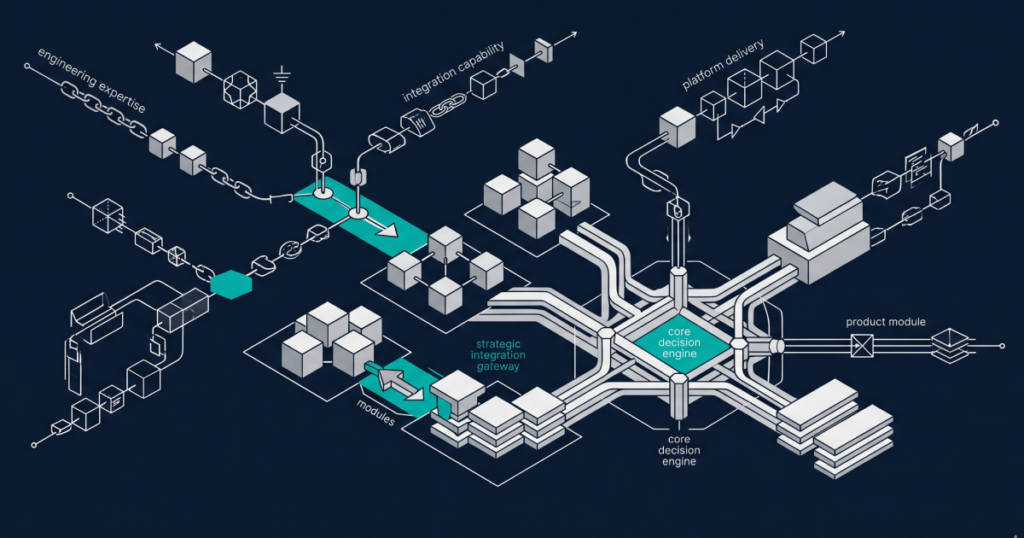
API-first, headless architecture is not just a buzzword in this context; it is a structural enabler. When your responsible gambling controls, KYC orchestration, AML transaction monitoring, and wallet services are exposed as discrete, independently deployable services behind well-defined APIs, you can swap providers, add new regulatory controls, and extend to new jurisdictions without rearchitecting your core platform. When they are embedded in a monolithic application layer, every regulatory change becomes a cross-cutting engineering project.
Wallet service architecture is particularly consequential. The GGC requires immutable transaction audit trails and segregation of player funds. If your wallet is a single ledger that co-mingles operational and player funds at the data layer, you have a compliance problem and an engineering problem simultaneously. We design wallet services with regulatory reporting baked into the data model, not retrofitted as a reporting layer on top of an opaque transaction store.
KYC/AML system integration needs to be orchestrated, not hard-wired. The GGC does not mandate which verification providers you use, but it does expect your systems to perform identity checks, source-of-funds verification, and ongoing transaction monitoring in a way that is auditable and responsive. An orchestration layer that can route verification requests to different providers based on jurisdiction, risk tier, or regulatory requirement (and that can accommodate a new provider without a platform-wide release) is the right pattern here.
Multi-jurisdictional compliance is where most white-label platforms break down. If you hold a Gibraltar licence alongside a UKGC licence (a common configuration), your platform must enforce different responsible gambling rules, different KYC thresholds, and different reporting formats for each regulator, against the same player database and transaction ledger. A platform that treats regulatory rules as configuration (not code) can handle this. A platform that hard-codes UK-specific logic into the application layer cannot serve Gibraltar-specific requirements without forking.
At Jadex Consulting, we have built and migrated platforms for tier-one operators facing precisely these challenges. Operators locked into white-label arrangements often discover that their platform provider’s architecture cannot support the granular, jurisdiction-specific controls that the GGC demands. Migrating to a purpose-built platform is a significant undertaking, but the alternative (paying escalating compliance costs to work around an inflexible architecture) is worse over any meaningful time horizon.
The operators who get this right treat their platform as a regulatory asset, not just a technology stack. When the GGC updates its codes of practice, when AML thresholds change, when a new market requires a new set of responsible gambling controls, the platform should absorb those changes through configuration and service composition rather than emergency engineering sprints.
That is the standard we build to. If your current platform cannot meet it, the best time to address that is before you submit your Gibraltar application, not after the GGC’s technical assessment surfaces the gaps.
About the Author: admin