
White Label vs. Turnkey iGaming Platforms: A Technical Comparison for Operators
Every iGaming operator we’ve worked with eventually hits the same wall: the platform that got them to market is now the thing holding them back. The revenue share that seemed reasonable at launch is compounding into millions in lost margin. The compliance change that should take a sprint takes three months because it’s stuck in someone else’s roadmap. The wallet architecture that was “fine for now” two years ago is now the single biggest blocker to real-time fraud detection or dynamic bonus orchestration.
The core tension hasn’t changed in a decade. Speed to market pulls you toward white label. Long-term operational control pulls you toward turnkey or custom. What has changed is the regulatory environment, the sophistication of player expectations, and the real cost of unwinding a bad platform decision once you’re live and generating revenue. The strategic framework sits in our casino platform build vs buy guide.
This piece breaks down both models with the technical specificity the decision actually requires: architecture, licensing mechanics, realistic cost ranges, scalability constraints, and the honest trade-offs that vendor sales decks won’t surface.










The terms get used interchangeably in vendor marketing, which causes confusion during procurement. The distinction is structural, and it matters.
A white label solution means you’re operating under the provider’s gaming license. You get a branded front-end sitting on top of their platform, their wallet, their game aggregator integrations, their payment processing stack. You are a skin on their infrastructure. Your relationship with the regulator is mediated entirely through the provider. You don’t hold the license; they do.
A turnkey solution provides you with platform software, but you obtain and hold your own gaming license. You own the regulatory relationship. You control compliance operations directly. The provider delivers the technology stack (often including CMS, PAM, payment gateway integrations, and a game aggregation layer), but you’re the licensee. You’re the entity the UKGC, MGA, or GGC holds accountable.
That licensing distinction cascades into everything: who controls the player database, who decides which payment providers to integrate, who sets responsible gambling parameters, who owns the data, and critically, who can walk away from the relationship without losing the right to operate.
A turnkey platform is a different proposition. You’re buying (or licensing) a technology stack, but you’re building the business around your own license, your own compliance framework, and your own operational team.
The immediate benefit is control. You choose which payment processors to integrate. You define responsible gambling parameters at the implementation level, not just the configuration level. You own the player database outright. You can negotiate directly with game studios and aggregators rather than accepting the provider’s pre-packaged portfolio. When the MGA updates its technical standards or the UKGC tightens reporting requirements, you control the timeline for compliance.
Turnkey platforms typically offer deeper API access than white labels. A well-architected turnkey PAM (Player Account Management) system will expose wallet operations, bonus engine logic, player segmentation data, and event streams through documented APIs. This is what enables you to layer on third-party fraud detection, build custom CRM automation, or implement ML-driven personalisation without being blocked by the platform vendor’s feature backlog. The architectural foundation for this sits in our headless casino architecture guide.
Brand equity compounds over time when you own the full stack. Your player experience isn’t constrained to what the platform’s templating system allows. You can build genuinely differentiated front-ends, design unique bonus mechanics, and create player journeys that reflect your brand positioning rather than a lowest-common-denominator template shared across dozens of other operators.
The trade-off is cost, time, and organisational complexity.
Launch timelines for turnkey deployments run three to six months at minimum. That includes license application and approval (which alone can take three to twelve months depending on jurisdiction), platform configuration, payment and game provider integration, QA across the full player journey, and regulatory sign-off on technical standards compliance.
You also need to build or hire an operational team. Compliance officers, fraud analysts, customer support, VIP management, CRM specialists. Under a white label, many of these functions are partially or fully handled by the provider. Under turnkey, they’re yours.
Results Are Designed, Not Hoped For
Clear Objectives. Tangible Outcomes.
Well engineered software is only part of the equation. True impact comes from aligning technology with commercial intent from the outset.
We define success early, measure consistently and refine continuously to ensure every product delivers meaningful and sustained value.

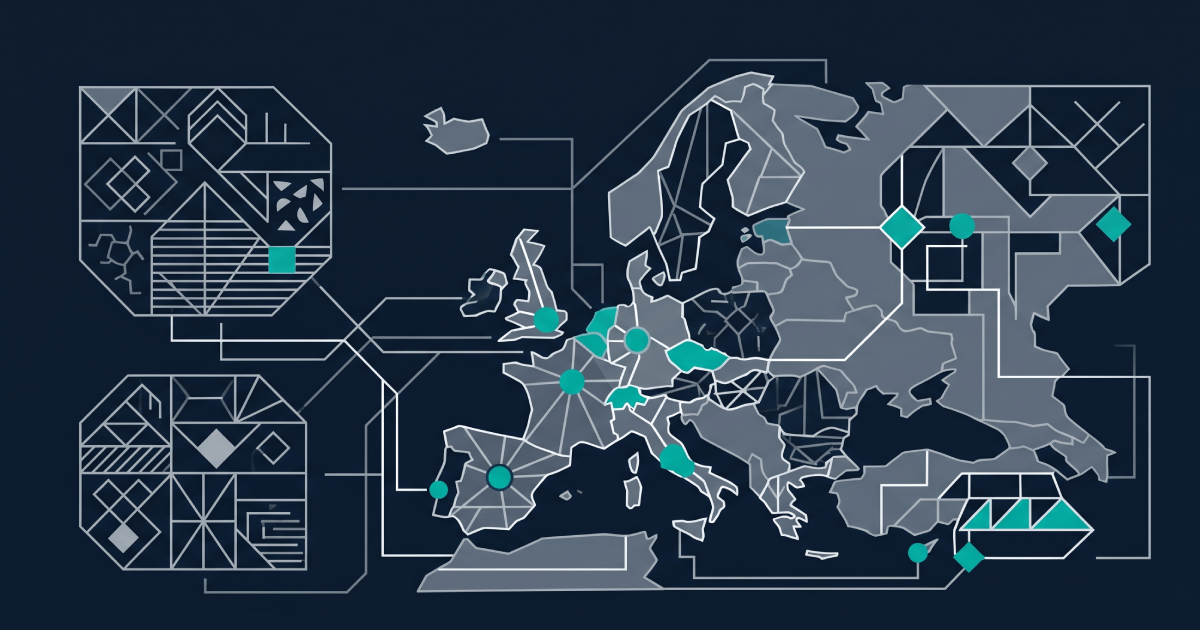
The Regulatory Maze: Licensing Models Compared
Under a white label, you operate as a skin under the provider’s master license. The MGA permits this structure through its B2C licensing framework… The UKGC does not allow traditional white label arrangements in the same way; operators targeting UK players need their own license or must operate under very specific hosting and management agreement structures that still require UKGC approval.
This matters for market access. If your provider holds an MGA license but not a UKGC license, you cannot legally target UK players. If they hold a Curaçao license, you’re excluded from most regulated European markets entirely. Your market strategy is constrained by your provider’s licensing portfolio.
Under a turnkey model, you apply for and hold your own license. This means direct regulatory accountability, which is both a burden and a strategic asset. You control your compliance narrative. You can apply for licenses in additional jurisdictions without being dependent on a third party’s expansion plans. For multi-jurisdiction operators or those with ambitions to enter regulated US states or LatAm markets, holding your own license is essentially a prerequisite.
The licensing process itself requires technical compliance. The UKGC’s Remote Technical Standards, the MGA’s technical compliance requirements, and the GGC’s technical standards all impose specific requirements on platform architecture: transaction logging, RNG certification, data protection, responsible gambling controls, player fund segregation. Under a white label, these are the provider’s problem. Under turnkey, they’re yours. Whether that’s a benefit or a burden depends entirely on your organisational maturity and appetite for regulatory ownership.
This is where the decision has the most long-term impact and where it’s hardest to reverse course.
A white label platform gives you a fixed architecture. The wallet service, bonus engine, game aggregation layer, and PAM are the provider’s implementations. If their bonus engine can’t support the mechanic your CRM team has designed, you redesign the promotion. If their wallet service processes transactions in batches rather than in real-time event streams, you cannot implement real-time fraud triggers or dynamic responsible gambling interventions that respond to individual transaction patterns.
API access on white labels ranges from limited to nearly nonexistent. Some providers expose a basic reporting API and maybe a CRM webhook. Few provide the kind of granular, event-driven API surface that enables genuine third-party integration at the data layer.
Scalability is also bounded. Multi-brand deployments on a shared white label backend are constrained by the provider’s multi-tenancy architecture. If you’re operating three brands across two jurisdictions, you need the platform to support clean data segregation, jurisdiction-specific compliance configurations, and independent bonus and CRM operations per brand. Not every white label architecture supports this well.
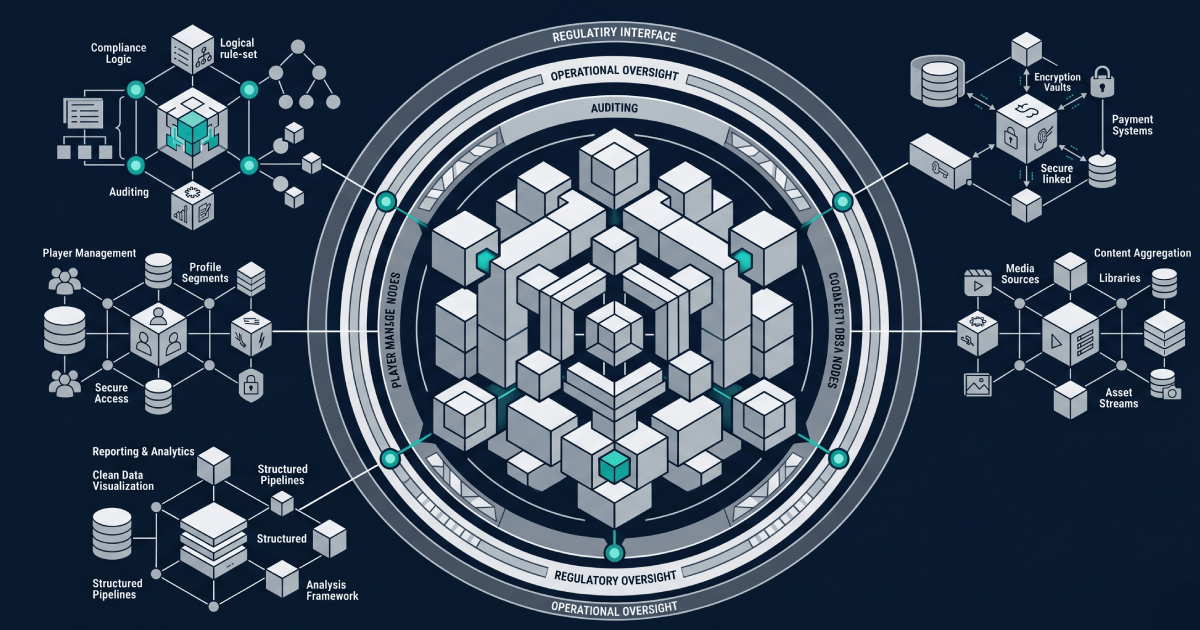
A turnkey platform typically offers more flexibility here, but the range is wide. Some turnkey vendors deliver what amounts to a more configurable white label with a license bolted on. Others provide a genuinely modular architecture where the PAM, wallet, bonus engine, and game aggregation layer are independently deployable microservices with well-documented APIs and event-driven integration points.
The questions to ask during vendor evaluation:
- Is the wallet service a discrete, independently scalable component, or is it embedded in the PAM monolith?
- Can we subscribe to a real-time event stream of player transactions for external fraud/AML processing?
- What’s the game integration architecture? GAS (Game Aggregation Service) with a standardised API, or bespoke per-provider integrations?
- Can we deploy independent front-ends per brand/jurisdiction against a shared backend, or does each brand require a separate platform instance?
- What does data egress look like? Can we export full player histories, transaction logs, and KYC records in a structured format?
If the vendor can’t answer these clearly, that tells you something about the architecture.
Choose white label if:
- You’re a new entrant with under €500K in initial capital and need to validate whether your brand or traffic source converts in a live gaming environment.
- You’re an affiliate converting to operator and want to test the economics before committing to the infrastructure.
- Speed to market is genuinely the priority because the window is competitive and time-bound.
- You accept that this is likely a transitional platform, not a long-term one.
Choose turnkey if:
- You have funding and a team capable of holding and operating under your own license.
- You’re an existing operator migrating from a white label where the rev-share economics no longer make sense.
- Multi-jurisdiction deployment is part of your three-year plan.
- You need real API access, data ownership, and the ability to integrate third-party ML, fraud, or CRM tooling at the platform level.
- You’re building a brand and player database as a long-term asset, not just a revenue stream.
The honest reality: most operators who start on a white label and succeed will eventually need to migrate to turnkey or custom. The question is whether you plan for that migration from day one (negotiating data portability, documenting player account structures, understanding the provider’s data model) or deal with it reactively when the constraints become commercially painful. The full vendor selection framework, evaluation criteria, and RFP template sit in our B2B research cluster.
Beyond Turnkey: When to Consider a Custom Platform Build
Both white label and turnkey models share a common constraint: you’re running on someone else’s software. The vendor’s architectural decisions, technical debt, and product roadmap priorities become your operational reality.
For tier-one operators, multi-brand groups, or businesses with genuinely differentiated product requirements, there’s a point where even a configurable turnkey platform becomes the bottleneck. The bonus engine can’t support the mechanic that your data shows would increase reactivation by 30%. The wallet architecture can’t handle the real-time event throughput your fraud team needs. The game aggregation layer adds 200ms of latency that your mobile players feel.
That’s the inflection point for a custom build.
A bespoke platform means you own every layer: the PAM, the wallet service, the bonus engine, the game aggregation layer, the front-end, the data pipeline. You architect the system for your specific regulatory requirements, your player base characteristics, your product differentiation strategy. You don’t wait for a vendor to prioritise your feature request. You build what you need, when you need it.
The cost is real. Custom platform builds start in the hundreds of thousands and can run into the millions depending on scope, jurisdiction count, and the sophistication of the player experience. Build timelines are measured in months, not weeks. You need a strong engineering organisation or a development partner with deep iGaming platform experience.
At Jadex Consulting, we work with operators at exactly this inflection point. The operators who’ve outgrown their white label economics, who’ve hit the ceiling of what their turnkey platform can support, and who need a platform architecture that’s built for their specific regulatory, commercial, and technical requirements rather than a vendor’s average customer. See our iGaming platform development capability for the engineering approach. That’s a different kind of engagement, one where the platform becomes a competitive asset rather than a shared commodity.
The decision between white label, turnkey, and custom isn’t a ranking. It’s a progression. The right answer depends on where you are today and where you need to be in three years. Get the sequencing right, plan for data portability from the start, and make sure the platform decision is driven by your roadmap rather than your vendor’s.
Latest from our blog
Insights & Perspectives
Our insights explore the intersection of technology, commercial strategy and disciplined execution across complex digital environments.

Frequently Asked Questions
enquiry@jadexconsulting.com