On This Page
- What headless casino architecture actually means
- How the iGaming platform stack maps to a headless model
- The case for headless: where it pays off
- The real trade-offs: what headless costs you
- Headless architecture and regulatory compliance
- When headless casino architecture makes sense
- Making the architectural decision
- FAQ
- How long does it take to migrate to a headless casino platform?
- What is the difference between headless and API-first in iGaming?
- Does headless architecture affect gaming licence compliance?
- Can a small iGaming operator benefit from headless architecture?
- What frontend frameworks work with a headless casino backend?
- Next step
If you're evaluating headless casino architecture for a platform build or migration, most of what's out there is written for CMS or e-commerce contexts. The iGaming-specific complexity — wallet service design, game aggregator integration, KYC orchestration, jurisdiction-specific compliance propagation — gets left out. This guide covers the architecture as it actually applies to a regulated, real-money gaming environment.
Quick Answer
Headless casino architecture separates a platform's frontend from its backend services, connecting them through APIs. It makes sense when you need to deploy multiple frontends, accelerate UI releases, or run several brands from one backend. It adds complexity that smaller or single-market operators may not need.
What headless casino architecture actually means
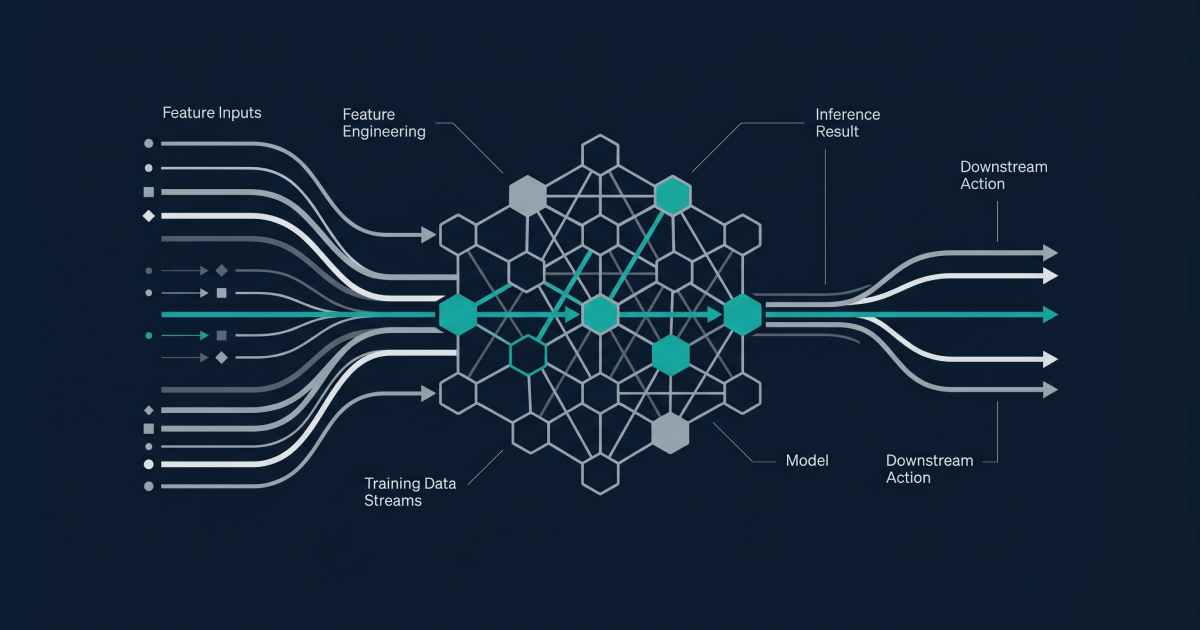
Headless casino architecture is a decoupled platform model. The player-facing frontend, the "head", is separated from the backend business logic and data layer. All platform functionality is exposed via APIs. The presentation layer becomes a consumer of services rather than an integral part of the platform itself.
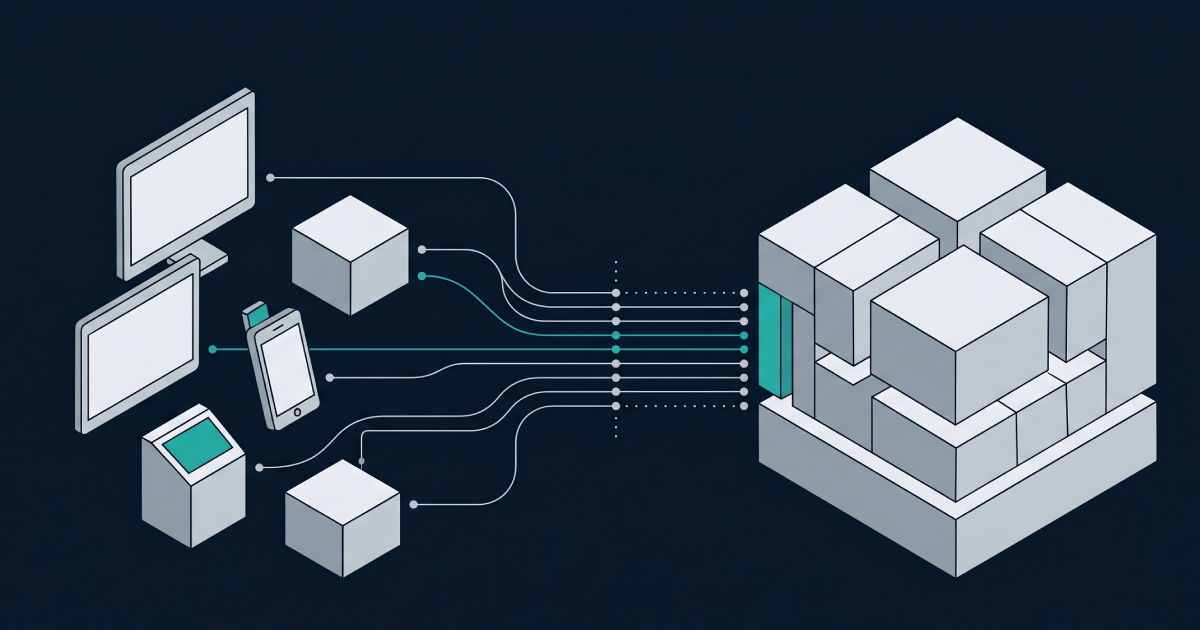
In iGaming, the "head" is your player-facing product: the lobby, cashier, account management screens, responsible gambling widgets. The "body" is everything underneath: wallet service, game aggregator, RGS connections, KYC flows, bonus engine, compliance layer. In a headless model, the body doesn't know or care what's consuming it. Any frontend, whether web, mobile, or retail kiosk, can call the same API layer and get the same data back.
This sounds straightforward in concept. In practice, getting it right at iGaming scale is where teams without domain experience underestimate the work. If you're weighing this against other modernisation paths, our piece on iGaming platform modernisation covers the rebuild, migrate or extend decision in detail.
How the iGaming platform stack maps to a headless model
The core platform components in a headless iGaming architecture sit behind the API boundary.
The wallet service manages player balances, transaction records, and fund flows. It exposes balance queries, deposit and withdrawal endpoints, and transaction history to any authorised frontend.
The game aggregator provides access to content from multiple studios through a single integration point. In a headless model, game launch URLs and lobby data are surfaced via API to whatever frontend renders the lobby.
KYC, responsible gambling tools, and CRM all sit in the backend layer. Deposit limits, self-exclusion status, session timer state are all backend-held values surfaced to the frontend via API. The compliance layer doesn't move. What changes is the contract between that layer and any frontend consuming it.
The API gateway as critical infrastructure
In a properly designed headless stack, an API gateway sits between frontend consumers and backend services. It handles authentication, rate limiting, request routing, and provides a single versioned interface that frontend teams can build against without needing to track changes across individual backend services.
The quality of this gateway design directly determines how much flexibility the headless model actually delivers in practice. A weak gateway design produces the same coupling problems as a monolith, just at a different boundary.
The case for headless: where it pays off
The clearest commercial argument for headless casino architecture is multi-brand operation. A single backend serving multiple frontend brands, with one wallet, one aggregator integration, one compliance layer, and multiple player-facing products, reduces infrastructure cost, consolidates compliance obligations, and eliminates parallel release cycles. Operators running two or more brands on a coupled platform carry that overhead in full. Headless removes it.
Multi-channel deployment is the second strong argument. A mobile app, a web product, and a potential retail terminal can all consume the same API layer without backend duplication. Frontend teams own their rendering environments independently. The backend team ships once.
Frontend velocity as a competitive advantage
In a coupled architecture, your product team's ability to iterate on player experience is constrained by backend release cycles. Changing the lobby layout, testing a new cashier flow, or updating responsible gambling widgets all require backend coordination.
In a headless model, the frontend team deploys independently. For operators competing on UX differentiation, and in mature markets many are, this release independence is a real competitive lever.
Composability is the longer-term benefit. Headless architecture lets operators swap or extend individual frontend components, whether a new lobby renderer, a redesigned cashier, or a third-party responsible gambling widget, without touching the platform core. That flexibility compounds as the product roadmap evolves.

Here's the same comparison in detail:
| Dimension | Headless Architecture | Traditional Coupled Architecture |
|---|---|---|
| Frontend Deployment | Full independence; frontend deploys on its own cycle | Limited; tied to backend release cycles |
| Multi-Brand Support | Native; single backend, multiple frontends | Requires duplication or complex configuration |
| Compliance Isolation | Backend-only; correct structurally | Risk of compliance logic bleeding into frontend |
| Team Requirements | Dedicated frontend capability required | Shared full-stack team can manage |
| Best Fit | Multi-brand, multi-channel, UX-differentiated | Single-brand, constrained timeline, limited frontend resource |
The real trade-offs: what headless costs you
Frontend complexity increases in a headless model, and the increase is significant. The operator now owns the full rendering layer: every page, every component, every state management decision. A coupled platform or white-label product handles this work. Headless doesn't. Without dedicated frontend engineering capability, you're not gaining flexibility. You're acquiring a dependency you're not equipped to manage.
API design quality becomes a hard constraint. If your backend team ships breaking changes without versioning, or designs endpoints that assume a specific frontend rendering model, the architectural benefits disappear quickly. The API gateway and its governance model are not optional infrastructure.
When headless does not make sense
Single-brand operators with a tight launch timeline, limited frontend engineering resource, and no near-term plans to extend beyond one web product face a difficult equation. Headless introduces more complexity than it resolves. The payoff lands in Year 2 and beyond, not at launch. Worth being honest about that before committing.
Headless architecture and regulatory compliance
Compliance obligations sit correctly in the backend platform layer in a headless model. UKGC responsible gambling requirements, MGA AML data retention obligations, and GGC reporting requirements are all backend concerns. Compliance logic should never live in the frontend. Headless architecture enforces that separation structurally.
The practical challenge is propagation. Responsible gambling tools, including deposit limits, self-exclusion status, session timers, and reality checks, must be surfaced consistently across every frontend channel. A player who has set a deposit limit on the web product must see that limit enforced on the mobile app. RG state needs to be a primary API concern, not an afterthought bolted onto a game launch flow. We cover this in more depth in our breakdown of responsible gambling technology trends.
KYC flows require careful orchestration
KYC presents a specific challenge in a headless architecture. The verification journey spans frontend and backend: document upload, identity checks, status polling, and conditional access to deposit or play features all require coordinated state management.
A poorly orchestrated KYC flow in a headless model introduces friction at a commercially critical moment. Player drop-off during KYC is a known conversion problem. Headless architecture doesn't cause it, but it does require more careful engineering to avoid it.
When headless casino architecture makes sense
You operate multiple brands or plan to
A single backend serving multiple regulated brands, across UKGC and MGA jurisdictions simultaneously for example, is the strongest argument for headless. The compliance layer, wallet service, and aggregator integration are shared. Each brand gets its own frontend. Operational and cost advantages grow with every brand added.
Your UI release cycle is blocked by backend deployments
If your product team is waiting on backend releases to ship lobby changes or test cashier flows, you're paying a velocity tax that headless eliminates. This matters most for operators competing on player experience in markets where UX differentiation drives retention.
You have a multi-channel product roadmap
Web, mobile, and retail channels consuming the same API layer without backend duplication is a structural advantage. If your roadmap includes a mobile app or any channel beyond your initial web product, headless architecture is worth the upfront investment. The broader context for this kind of platform decision sits in our iGaming industry trends 2026 analysis.
Making the architectural decision
Headless casino architecture is the right default for operators with multi-brand ambition, a defined multi-channel roadmap, or a requirement to differentiate on player experience at scale. A coupled or semi-coupled architecture may be appropriate for single-brand operators with a constrained launch timeline and no near-term plans beyond a single web product.
The decision doesn't have to be binary. A pragmatic approach can decouple the most commercially valuable components first while keeping lower-risk elements coupled until the team has capacity to extend.
The operator's frontend engineering capability is a practical constraint that shapes everything else. Headless architecture without the team to own the rendering layer creates a dependency that negates the flexibility benefit. The question worth asking isn't "is headless better?" It's "do we have the team, the timeline, and the multi-product ambition to make headless pay off?"
FAQ
How long does it take to migrate to a headless casino platform?
Migration timelines vary significantly based on platform complexity and team size. A phased approach, API abstraction first, then frontend decoupling, then composable service adoption, typically spans 6 to 18 months for a mid-market operator. A full rebuild on a headless architecture runs longer than a white-label deployment in Year 1, with the payoff materialising from Year 2 onward.
What is the difference between headless and API-first in iGaming?
API-first is a design philosophy where all platform functionality is exposed via APIs before any frontend is built. Headless architecture is the structural outcome of applying that philosophy: a platform where the frontend is fully decoupled from the backend. API-first is the approach. Headless is the result.
Does headless architecture affect gaming licence compliance?
Headless architecture places compliance logic correctly in the backend layer, which is architecturally sound for UKGC, MGA, and GGC requirements. The challenge is ensuring RG state and AML controls are propagated consistently across all frontend channels through careful API design, not assumed to be handled by the frontend.
Can a small iGaming operator benefit from headless architecture?
A single-brand operator with a tight launch timeline and limited frontend engineering resource will likely find headless architecture adds more complexity than it resolves at launch. The pattern pays off at scale, across brands, or across channels, not necessarily on a first product with a constrained team.
What frontend frameworks work with a headless casino backend?
A well-designed headless backend is frontend-agnostic. React, Next.js, Vue, and native mobile frameworks can all consume the same API layer. The framework decision sits with the frontend team and should be driven by their capability and the channel requirements, not by the backend architecture.
Next step
If you want to map your specific stack against a headless migration path, speak to Jadex's iGaming engineering team. We work with operators across regulated markets to assess platform readiness, identify the highest-value components to decouple first, and build the roadmap to deliver headless without breaking what's already working.
About the Author: admin